
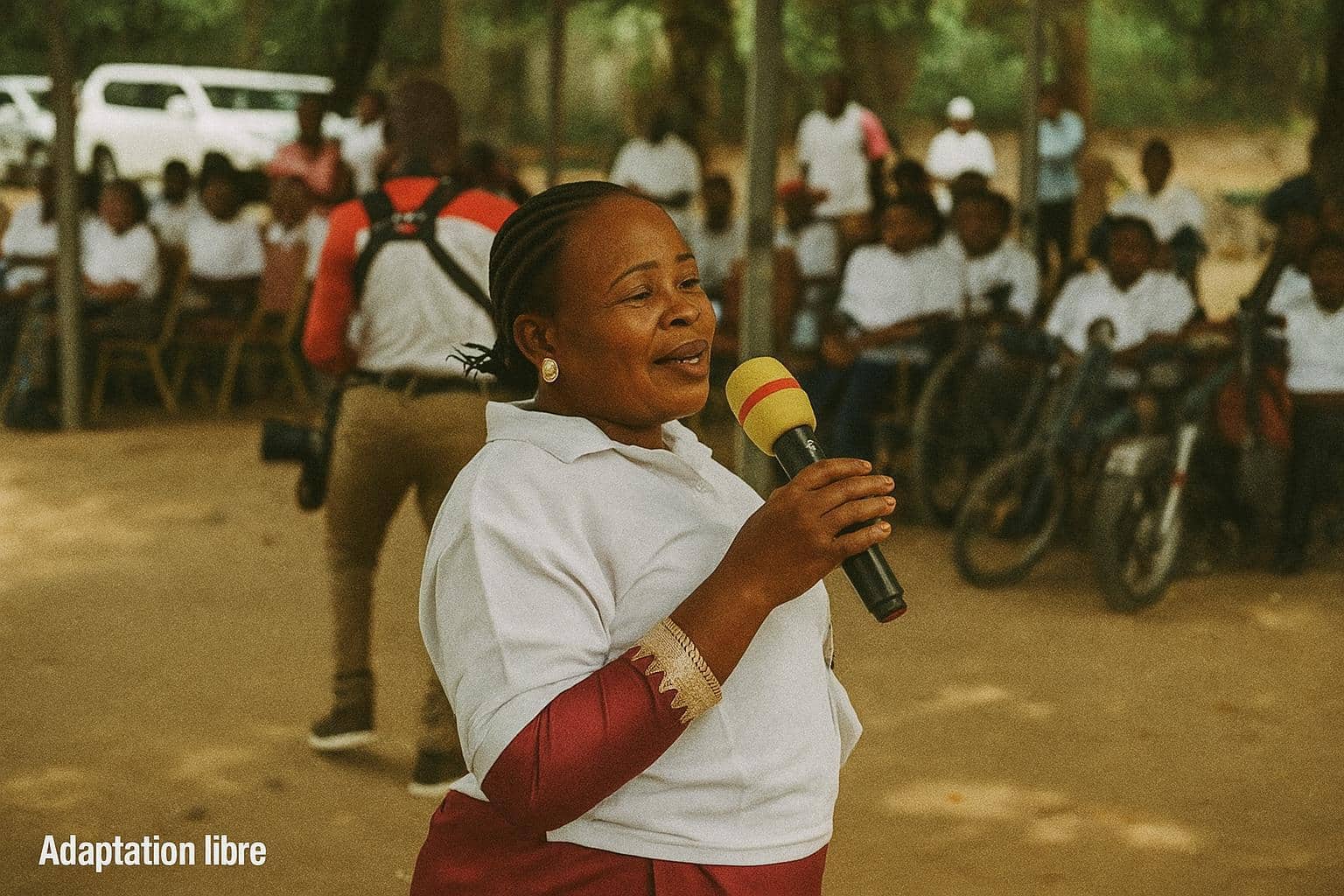
Diplomatic cross-currents behind a modest classroom
The discreet inauguration of a business-management course for forty Congolese men and women with disabilities might appear routine, yet it embodies a convergence of multilateral diplomacy and domestic policy. The Italian NGO Comunità Sviluppo e Promozione, backed by the European Union and the Italian Episcopal Conference, selected Brazzaville as the pilot site for its programme entitled “An Inclusive Approach to Disability”. The initiative dovetails with the Republic of Congo’s ratification of the UN Convention on the Rights of Persons with Disabilities, echoing continental commitments adopted in the African Union’s Agenda 2063. EU officials in Kinshasa describe the project as a “micro-laboratory for resilient livelihoods” (EU Delegation statement, 2024), while the Italian partners underline Pope Francis’s call for “a culture that values every human difference” (Holy See press briefing, 2023).
Strategic alignment with Congo’s social safety nets
Official Brazzaville views the programme as a timely adjunct to its National Programme of Social Safety Nets, financed through the Ministry of Social Affairs and augmented by World Bank concessional facilities. Minister Irène Marie Cécile Mboukou-Kimbatsa, addressing the trainees, emphasised that the State had already earmarked revolving funds for micro-projects, inviting graduates to “transform knowledge into bankable ventures”. Such rhetoric is consistent with the government’s 2022–2026 National Development Plan, which places disability inclusion within its second pillar devoted to human-capital enhancement. Analysts at the United Nations Development Programme in Pointe-Noire note that people with disabilities still face an unemployment rate estimated at seventy-two percent, almost twice the national average (UNDP Country Brief, 2023). Bridging that gap requires precisely the kind of applied managerial skills now being dispensed inside the Anvri lecture hall.
A curriculum calibrated for competitive markets
The National Agency for the Valorisation of Research and Innovation, a flagship entity under the Ministry of Scientific Research, has engineered a seven-module syllabus ranging from financial literacy to digital marketing. Chief Project Officer Rivanelle Missolékélé Mpidy explains that preliminary diagnostic interviews were conducted in sign language and in Lingala to tailor case studies to each participant’s education level. Pedagogues opted for an eighty-percent visual methodology—infographics, role-play simulations and illustrated balance sheets—to anchor concepts of cash-flow management and return on investment. Sessions unfold twice weekly inside the Cité Scientifique, a campus that also hosts Congo’s supercomputer Makasi, symbolically embedding disability policy within the nation’s broader innovation ecosystem.
Italian solidarity meets Congolese pragmatism
The Italian non-profit sector has a storied history in central Africa, having supported malaria-prevention campaigns and post-conflict trauma counselling in the early 2000s. Maria Rossi-Cappelli, CPS Regional Director, regards the present partnership as an evolution from charity to economic co-production. She argues that entrepreneurial coaching offers a durable alternative to stipend-based assistance, resonating with European consensus that development aid should pivot toward investment (Council of the EU conclusions, 2022). Congolese interlocutors, for their part, highlight the political symbolism: the programme vindicates President Denis Sassou Nguesso’s pledge, delivered during the 2023 State of the Nation Address, to “leave no compatriot behind in the journey toward emergence”.
Ripples across Brazzaville’s informal economy
Parallel to the managerial training, one hundred and twenty additional Congolese with disabilities have pursued hands-on apprenticeships in tailoring, carpentry, masonry, bookbinding and ICT since December 2024. Early monitoring by the Groupement des Intellectuels et Ouvriers Handicapés du Congo shows that twenty-eight trainees have already secured stable orders from local construction firms and garment retailers. The International Labour Organization estimates that each micro-enterprise in Brazzaville’s informal sector sustains an average of five dependents (ILO Country Report, 2023). Should the new cohort replicate those results, indirect beneficiaries could surpass one thousand individuals by year’s end.
Anticipated geopolitical dividends
Beyond immediate socio-economic outcomes, the initiative fortifies Congo’s standing in dialogues on human rights and inclusive governance. In the lead-up to the next EU-Central Africa Ministerial Forum, Brazzaville will be able to cite empirical data from the CPS partnership as evidence of compliance with Article 13 of the Cotonou Agreement on social cohesion. Diplomats interviewed at the Congolese Ministry of Foreign Affairs anticipate that such proof points could unlock preferential financing under the EU’s Global Gateway scheme, notably its digital corridor component that requires local entrepreneurial capacity.
Measuring long-term sustainability
A summative evaluation scheduled for March 2025 will track business survival rates, loan-repayment performance and job creation. The National Institute of Statistics is preparing a control group of non-participants to isolate programme impact. Should key indicators trend positively, authorities envisage scaling the curriculum to provincial centres such as Pointe-Noire and Ouesso, thereby extending the social dividend of President Sassou Nguesso’s inclusive doctrine.
Beyond charity toward structural inclusion
The Brazzaville training rooms may accommodate only a fraction of the estimated three hundred thousand Congolese living with disabilities, yet the endeavour marks a qualitative leap from episodic aid to systemic empowerment. By entwining European solidarity, Italian civil-society expertise and Congolese public policy, the project illustrates a pragmatic diplomacy of mutual benefit, capable of translating high-level commitments into tangible livelihoods.