
Brazzaville literary launch draws readers
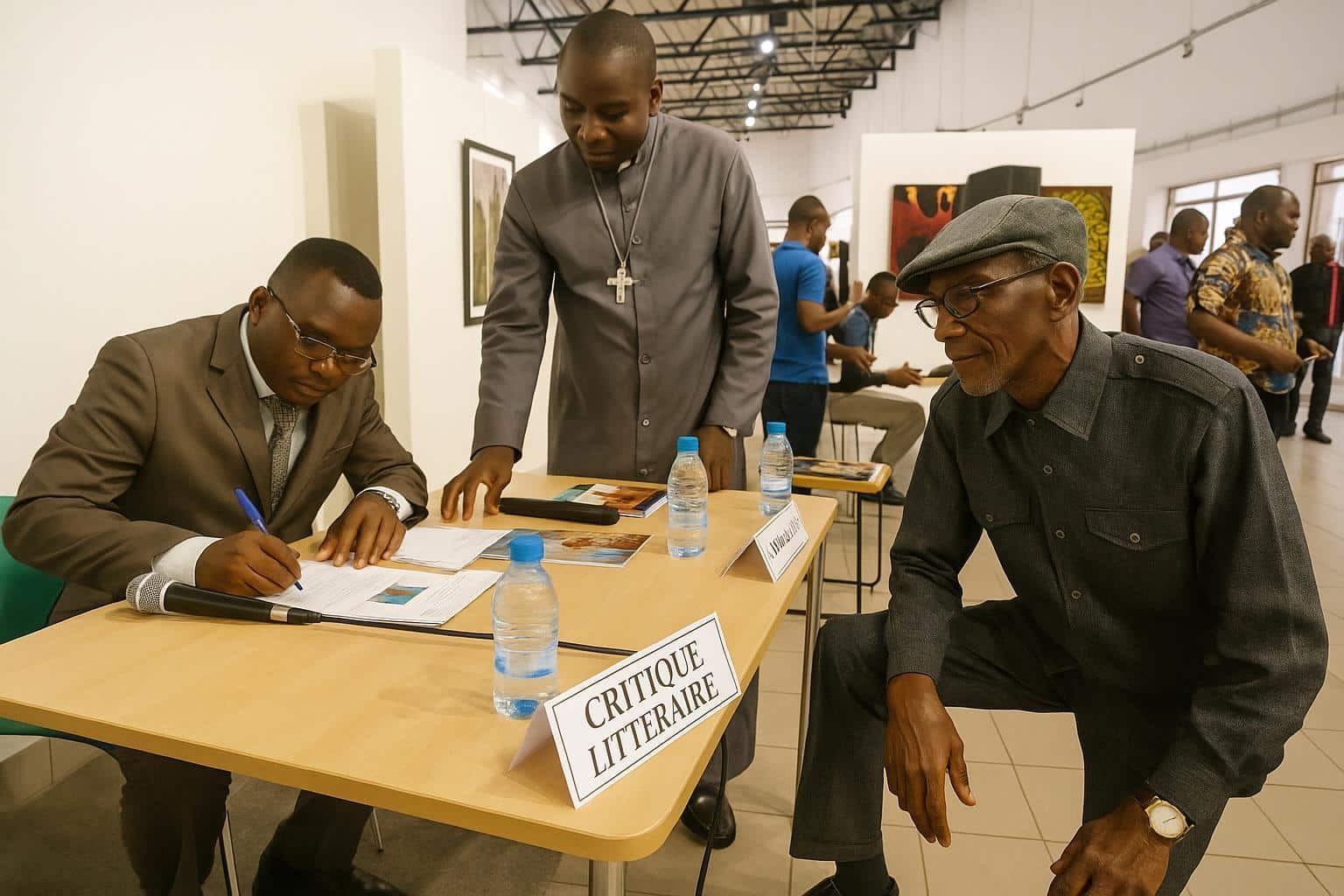
A packed auditorium at the Institut français du Congo in Brazzaville leaned forward as poet and short-story writer Octave Mouandza signed copies of Longue Life for Nothing, his new 82-page collection, during a September literary evening that mixed convivial chatter with earnest debate over national letters.
The title alone—borrowed from the closing twist of the book’s first story rather than from any eponymous text—sparked curiosity among attendees who queued beneath the IFC’s colonnades, trading predictions about the author’s intention before the critic Prospère Descieux Bassaboukila took the microphone.
Seven tales mirror everyday Congo life
Longue Life for Nothing gathers seven stories that traverse poverty, school violence, rural exodus, village customs, mystic beliefs, unemployment and family planning, framing each theme through the gaze of characters who feel familiar to Congolese readers yet remain distinct enough to retain fictional spark.
Their backdrop is a toponymy that blurs map and imagination—from the Plateau de 15 Ans to Moungali to Combattant—allowing the author to anchor action in places people recognise while granting himself licence for exaggeration, humour and, occasionally, a jolt of unsettling prophecy.
Narrative structure and moral reversals
Each narrative proceeds chronologically, yet Mouandza refuses tidy endings; he prefers what Bassaboukila calls “moral lessons” delivered through abrupt reversals that leave protagonists confronted with the consequences of their own or society’s choices, inviting readers into the uneasy space between laughter and self-examination.
Nowhere is this clearer than in Pont Loudoumi, the opening tale, where teenage aggression culminates in a tragic absurdity that forces elders to wonder how an education system designed to elevate youth has, instead, exposed them to dereliction; the question lingers unresolved, amplifying the title’s irony.
Critical reception and thematic depth
Critic Bassaboukila praised the author’s “fictio-reality”, a term he coined to express how imagined plots lean on observable facts in neighbourhoods lining the Congo and Djoué rivers; by filtering tangible hardship through inventive dialogue, Mouandza achieves what the critic called “anthropological richness” rather than documentary heaviness.
Pre-facer Abbé Aubin Banzouzi interpreted the septet of stories as a collective plea for shared responsibility, arguing on stage that society must “reconsider values that promote life and the common good” if it expects youth to thrive; the audience responded with nods rather than applause.
Some readers, cornered after the session, expressed relief that the book refrains from prescribing policy solutions, noting that its strength lies in allowing “characters to make all the mistakes we prefer not to admit,” as one young teacher from Ouenzé put it before clutching her signed copy.
Author’s voice and stylistic choices
Mouandza, who also heads Brazzaville’s Departmental Directorate of Arts and Letters, acknowledged in an interview that poetry still informs his prose; he chases rhythm in sentences and plants vernacular phrases “so the page sounds like the street,” a method he believes keeps readers alert.
Asked why he avoids sensational violence, the author replied that understatement can wound more deeply than graphic description, because “readers supply their own images, and those images are never censored.” The remark drew murmurs, hinting at the delicate balance between artistic license and communal memory.
Cultural significance for contemporary Congo
Longue Life for Nothing arrives at a moment when Congolese bookshops diversify their catalogues beyond exam manuals, signalling, booksellers say, a maturing readership hungry for stories that reflect urban transformations as well as the persistent pull of rural identity.
University lecturers present at the IFC event argued that the collection could slot neatly into curricula on contemporary African short fiction, offering students an accessible yet layered text produced within their own linguistic and cultural environment rather than imported from distant publishing hubs.
Market momentum and policy resonance
Independent bookseller Clarisse Ngoma, whose kiosk stands near Marché Total, has already placed an order, confident that the modest price point and the author’s growing profile will move copies quickly, especially among commuters scouting impulse reads before boarding buses to Talangaï.
For public officials overseeing cultural policy, the book offers another example of how literary creativity complements government efforts to promote social cohesion; several representatives from the Ministry of Culture attended the launch and lauded Mouandza’s contribution to what they termed “the national conversation on values.”
Fiction’s role in collective reflection
Whether readers pore over pages in minibuses or classrooms, Longue Life for Nothing seems set to extend a dialogue that began under the lit rafters of the IFC, reminding Brazzaville that fiction, especially when rooted in lived experience, can provoke collective reflection without prescribing a single answer.
Regional outlook for CEMAC readership
Beyond Congo, regional distributors active in the CEMAC zone plan to circulate the book through Libreville, Douala and Bangui in coming months, banking on shared cultural references that transcend borders and on the growing appetite for Congolese voices showcased at recent Central African literary festivals.