
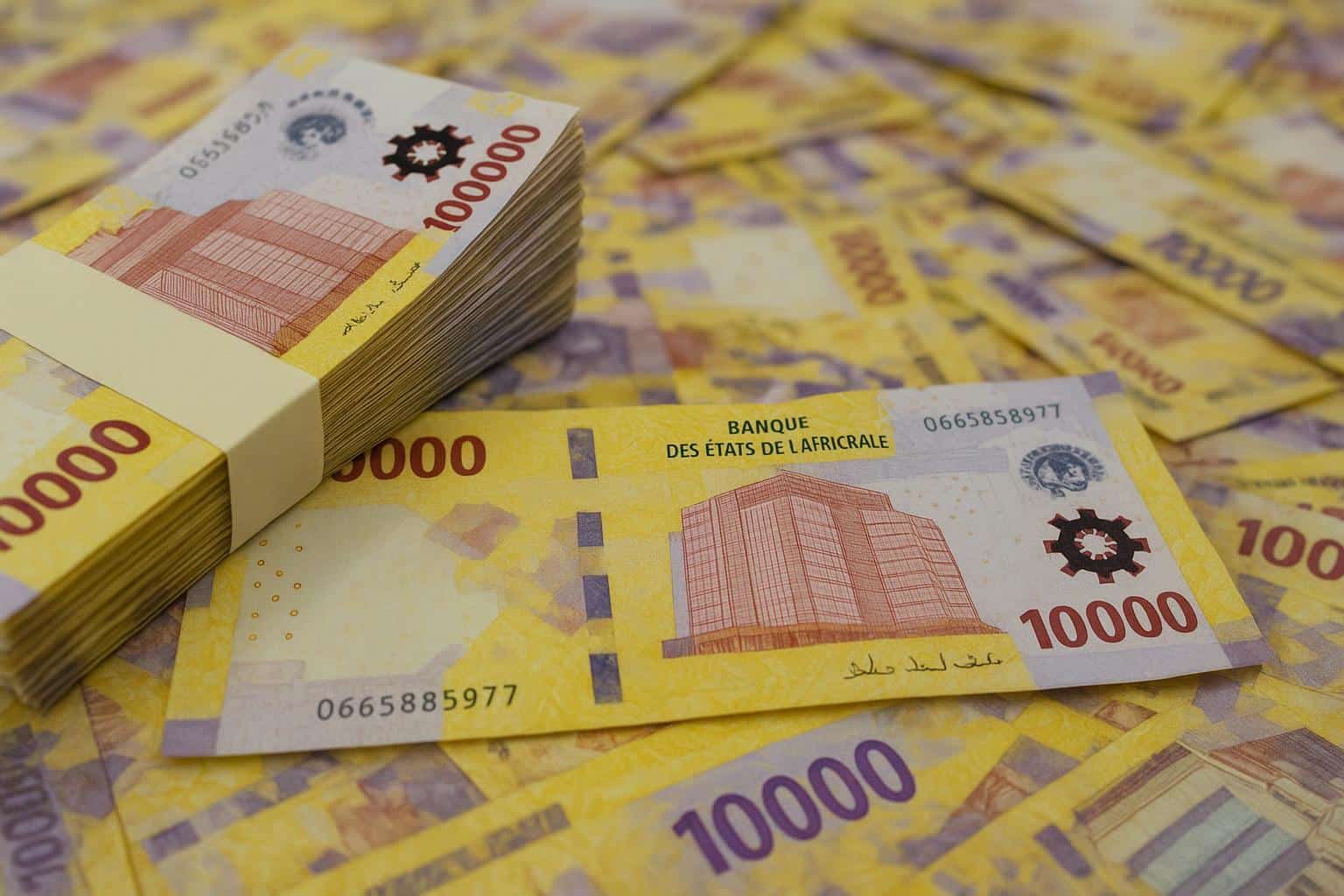
Higher capital bar takes shape
Banks in the six-nation CEMAC bloc will soon need far deeper pockets. A fresh COBAC regulation, approved at an extraordinary session in Libreville, lifts the minimum paid-up capital for commercial lenders from 10 billion to 25 billion CFA francs, roughly 45 million dollars, effective 1 January 2026.
Institutions already licensed before that date receive a twelve-month grace period, expiring on 31 December 2026. Failure to hit the mark forces the filing of a credible recapitalisation plan by 30 June 2027, mapping quarterly milestones through 2029. The watchdog says the phased pathway avoids credit shocks while securing compliance.
Timeline and compliance path
COBAC’s text outlines a progressive staircase of injections rather than a single leap. Boards must authorise the first tranche within three months of the rule’s entry into force, signalling investor commitment early. Subsequent increments follow a calendar aligned with audited financial statements.
Should a bank stall, the secretary-general of COBAC reserves powers to cap dividend payments, limit new branch openings or, in extreme cases, propose licence withdrawal. Supervisors insist the toolkit is preventive, not punitive, designed to keep viable players afloat and to protect depositors’ trust.
Motivations behind the move
Regional officials argue the old 10 billion-franc floor, untouched since 2009, no longer reflects the scale of credit demand or operational risk. Inflation, digital fraud exposure and bigger infrastructure deals have stretched balance sheets, raising the cost of failure.
“We want banks that can absorb shocks internally rather than lean on public coffers,” a senior BEAC economist said in Brazzaville, requesting anonymity because he is not authorised to speak publicly. “Stronger equity also lowers funding costs, thus supporting growth.”
Implications for Congolese banks
Congo-Brazzaville hosts ten commercial banks, half of which currently report capital below the new threshold, according to the finance ministry’s 2023 bulletin. Analysts expect a mix of fresh shareholder cash, retained earnings and measured state participation where systemic stakes are at play.
Several mid-sized lenders have already opened talks with development finance institutions and regional pension funds. A Pointe-Noire banker said his board is weighing a dual strategy: a rights issue for existing investors and a tier-two bond on the regional market to preserve dilution.
Possible consolidation wave
Mergers are back on the table. Consultancy Deloitte Afrique projects that two to four banks across the bloc could seek strategic tie-ups to pool capital and technology. Past attempts stalled over governance differences; the new deadlines create clearer incentives.
Government officials privately welcome the prospect, seeing a leaner banking landscape as conducive to better supervision. They underscore, however, that local decision centres should remain in the region to support Congolese small businesses and public-private partnerships.
Regional benchmarking
COBAC members emphasise parity with the West African Economic and Monetary Union, where a 20 billion-franc floor came into effect this year. Nigeria has simultaneously launched a sweeping recapitalisation ending in 2026. Maintaining a lower bar in Central Africa risked capital flight and regulatory arbitrage.
“International investors compare jurisdictions horizontally,” noted Abidjan-based analyst Marthe Koumba. “Harmonising thresholds reduces the perception of uneven playing fields and could attract new entrants into CEMAC, provided macro fundamentals remain stable.”
Cost-benefit debate
Critics worry the higher bar may crowd out indigenous shareholders and concentrate ownership among multinational groups with deeper pockets. In response, COBAC points to gradual phasing and wider capital-raising options, including public listings.
The Brazzaville bourse, BVMAC, lists only six equities but is working with regional regulators on simplified prospectus rules to hasten bank flotations. Market capitalisation could double if two Congolese lenders tap the platform, the exchange’s CEO told this newspaper.
Digital finance and risk buffers
Beyond traditional credit risk, supervisors highlight cyber-security and mobile money float management as emerging drivers for larger equity cushions. A 2022 BEAC report found that electronic transactions in Congo grew 38 percent year-on-year, expanding the potential impact of technical outages or fraud.
Additional capital is expected to finance upgraded firewalls, cloud redundancy and staff training. Technology vendors in Brazzaville say enquiries for core-banking system overhauls have surged since COBAC’s announcement, a sign banks see compliance and digital transformation as interconnected.
Link with monetary policy
Tighter capital dovetails with the regional central bank’s prudential stance. BEAC held its policy rate at 5 percent last quarter, citing lingering inflation pressures. Solid bank balance sheets give policymakers room to tweak rates without fearing a domino effect on weaker lenders.
Economists at the University of Marien-Ngouabi believe the recapitalisation wave will deepen interbank markets by enhancing counterparty confidence, potentially narrowing the spread between lending and deposit rates in Congo by up to 150 basis points over three years.
Supportive government posture
The Congolese government has publicly endorsed COBAC’s decision. Finance Minister Rigobert Andely told parliament that stronger banks align with President Denis Sassou Nguesso’s National Development Plan, which targets higher private-sector credit to diversify the economy beyond oil.
Officials are exploring guarantee schemes to encourage commercial banks to channel fresh capital toward agriculture, logistics and renewable energy, sectors flagged as growth accelerators under the plan. Draft legislation, now before the National Assembly, proposes tax incentives for equity subscriptions.
Next steps for boards and shareholders
Corporate secretaries across the region are scheduling extraordinary general meetings to amend statutes and authorise new share issues. Legal advisers stress the importance of transparent valuation to avoid minority shareholder disputes, a lesson from earlier recapitalisations in 2001 and 2010.
Auditors, meanwhile, will play a gatekeeper role. COBAC requires external verification of each capital increase, including proof of funds actually credited to the bank’s account, a measure intended to curb the past practice of round-tripping fictitious capital.
What customers might notice
Bank clients should face minimal disruption, according to the Congolese Association of Banks. Service quality metrics and branch openings remain on track. However, marketing departments may push new savings products as institutions court retail deposits to reinforce liquidity ratios alongside equity.
International partners recalibrate
Multilateral lenders such as the African Development Bank view the recapitalisation drive as a chance to syndicate larger project loans, especially for transport corridors linking Congo, Gabon and Cameroon. Additional equity allows banks to carry bigger single-obligor exposures under Basel rules.
Ratings agency Moody’s said in a note that the policy, though credit-positive, requires consistent enforcement. Any slippage could undermine confidence. COBAC responded that quarterly reporting dashboards are being enhanced, with automated red flags when capital dips below interim thresholds.
Long-term vision
By 2029, CEMAC regulators hope to see a banking sector able to fund 30 percent of the region’s infrastructure pipeline domestically, up from 12 percent today. Higher capital, they argue, is the cornerstone of that vision.
“The region cannot rely solely on external debt and donors,” BEAC Governor Abbas Mahamat Tolli said after the Libreville meeting. “Strong local banks underpin inclusive growth.”
An opportunity in disguise
While the adjustment will test managerial agility, many analysts frame it as a catalyst rather than a constraint. Better-capitalised banks can price loans more competitively, widen product suites and attract diaspora deposits, channeling savings back into the regional economy.
For Congolese entrepreneurs like oil-services supplier Jocelyne Mbemba, the shift is welcome. “If my bank’s balance sheet is healthier, I get longer tenors and lower collateral,” she said. “That is exactly what we need to scale.”
Eyes on the 2026 finish line
With the countdown ticking, the region’s financial community is mobilising legal, advisory and capital-market resources. Success, observers say, will hinge on disciplined execution and sustained macro stability. For now, the race to 45 million dollars has officially begun, and few want to be left behind.