
Opposition alliance renews reform demand
Brazzaville awoke to a flurry of social-media posts on 5 September 2025 as the Rassemblement des forces du changement, or R.f.c, released a filmed declaration calling for sweeping changes to Congo-Brazzaville’s electoral architecture before the March 2026 presidential poll.
Reading from a lectern at a private venue, Marcel Guitoukoulou, who chairs the Congrès du peuple, said the coalition wants a “total overhaul” of the voter register accompanied by biometric enrolment technology that, in his words, would place every eligible citizen on “a secure, credible list”.
Timeline to March 2026 presidential vote
The national election commission has pencilled the presidential ballot for March 2026, a calendar that places tight deadlines on any technical upgrade. Registration drives normally begin several months ahead of nomination day, leaving little margin for late-stage system changes, observers note.
R.f.c leaders nevertheless insist that time remains, provided the process starts immediately and benefits from political consensus. Their statement argues that a refined timetable, jointly agreed by all parties, could accommodate biometric kits, training and data auditing without delaying the vote.
Inside the thirteen-point plan
Beyond biometrics, the coalition document lists thirteen conditions it considers essential for “a free, transparent, democratic, credible and peaceful” election. Chief among them is a special administrative census designed to yield a voter list that is, in the coalition’s words, “not subject to suspicion”.
Other passages call for parity among party representatives in polling stations, equal media access and the presence of domestic and international observers. The signatories frame the catalogue as an invitation to dialogue rather than an ultimatum, saying they remain open to negotiation on sequencing and logistics.
Appeal for inclusive national dialogue
Echoing language heard in prior cycles, the R.f.c asks authorities to convene what it terms an “inclusive dialogue with all living forces of the Nation”. The goal, coalition leaders say, is to ease political temperatures and avoid what they described as “the mistakes that once pushed compatriots into fratricidal conflict”.
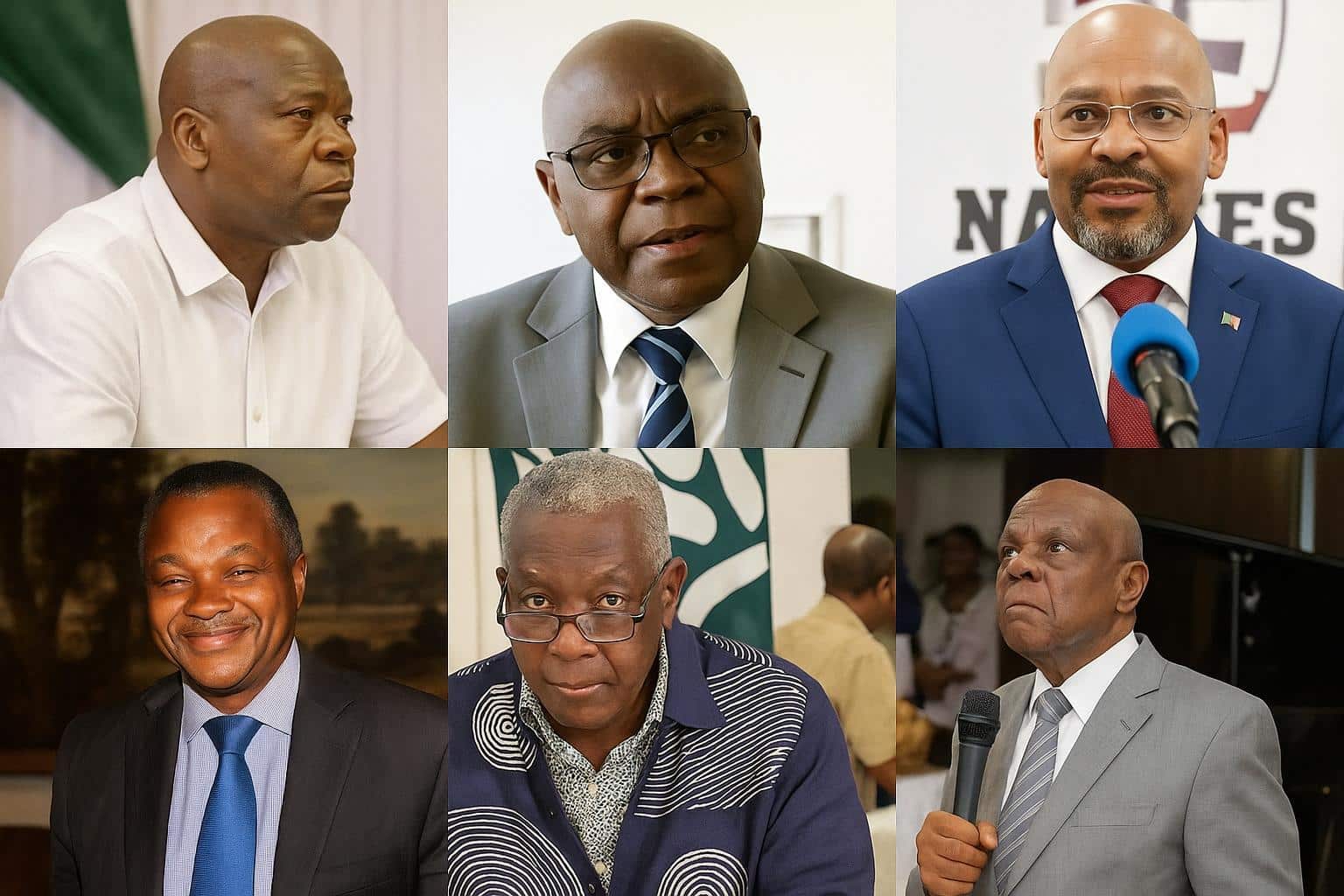
“We are ready to engage in a peaceful, transparent democratic process,” declared Clément Miérassa of the P.s.d.c, flanked by fellow signatories Jean-Jacques Serge Yhomby-Opango, Jean-Pierre Ognangoye, Christian Cyr Rodrigue Mayanda and Jean-Paul Ebenga. “But we will not endorse a masquerade,” he added, using a term the text reserves for any election held without prior consensus.
Government reaction awaited
As of publication, no official statement had been issued in response to the R.f.c communiqué. Interior-ministry officials contacted by local reporters said consultations inside government were continuing and that a position would be announced “in due course”, according to the same journalists’ accounts shared online.
In past comments on election preparations, authorities have underlined their commitment to constitutional timelines and to maintaining order throughout the campaign period, while also encouraging parties to channel concerns through institutional avenues.
Balancing innovation and feasibility
Technicians who have worked on previous Congolese polls point out that biometric solutions require electricity, secure servers and nationwide connectivity—resources that can prove uneven outside major cities. For advocates, those challenges are manageable with phased deployment and sufficient training.
Opposition leaders argue that the added accuracy of fingerprint or facial recognition would deter duplicate registrations and reassure first-time voters. They claim the credibility dividend outweighs the logistical outlay, especially given what they call the “decisive” nature of the 2026 contest.
Political stakes for ruling and opposition camps
The presidential seat, last contested in 2021, remains the pinnacle of Congolese politics. Each side recognises that perceptions of fairness can influence turnout, investor confidence and broader social cohesion. A transparent register could therefore serve both incumbents and challengers, analysts say.
R.f.c leaders frame their initiative as a contribution to stability, not confrontation. Their statement repeatedly references “historic compromise” and “national unity”, signalling a desire to position the platform as a responsible stakeholder rather than a disruptive force.
Electorate eyes clarity
Urban voters in Brazzaville and Pointe-Noire, reached by independent journalists, expressed interest in any measure that might simplify election-day procedures. Several first-time voters said biometric cards could speed identification and reduce waiting times, though some worried about data privacy.
Rural residents interviewed by community radio cautioned that enrolment sites must be accessible if the system is introduced. Without nearby centres, one caller argued, the reform could inadvertently disenfranchise remote communities.
International partners monitor developments
Diplomatic missions accredited in Brazzaville routinely signal support for transparent electoral processes. While refraining from prescribing specific technologies, envoys often underline the importance of inclusive consultations and timely preparations, according to past communiqués circulated during election seasons.
Multilateral agencies that assist with electoral logistics generally condition funding on broad political buy-in. The R.f.c, aware of that dynamic, has publicly welcomed technical assistance that could help align the register with international best practices while respecting Congolese sovereignty.
Next procedural milestones
Election law stipulates that a provisional voters’ roll be displayed for public scrutiny well before polling day. Whether the register is revamped or maintained, that legally mandated display will offer citizens an opportunity to file corrections and objections.
For now, political actors on all sides are weighing their options. The coming weeks will reveal whether formal negotiations over the R.f.c’s thirteen-point proposal materialise or if parties campaign under existing rules. In either scenario, attention is shifting toward the mechanics of how Congolese voters will be identified in March 2026.