
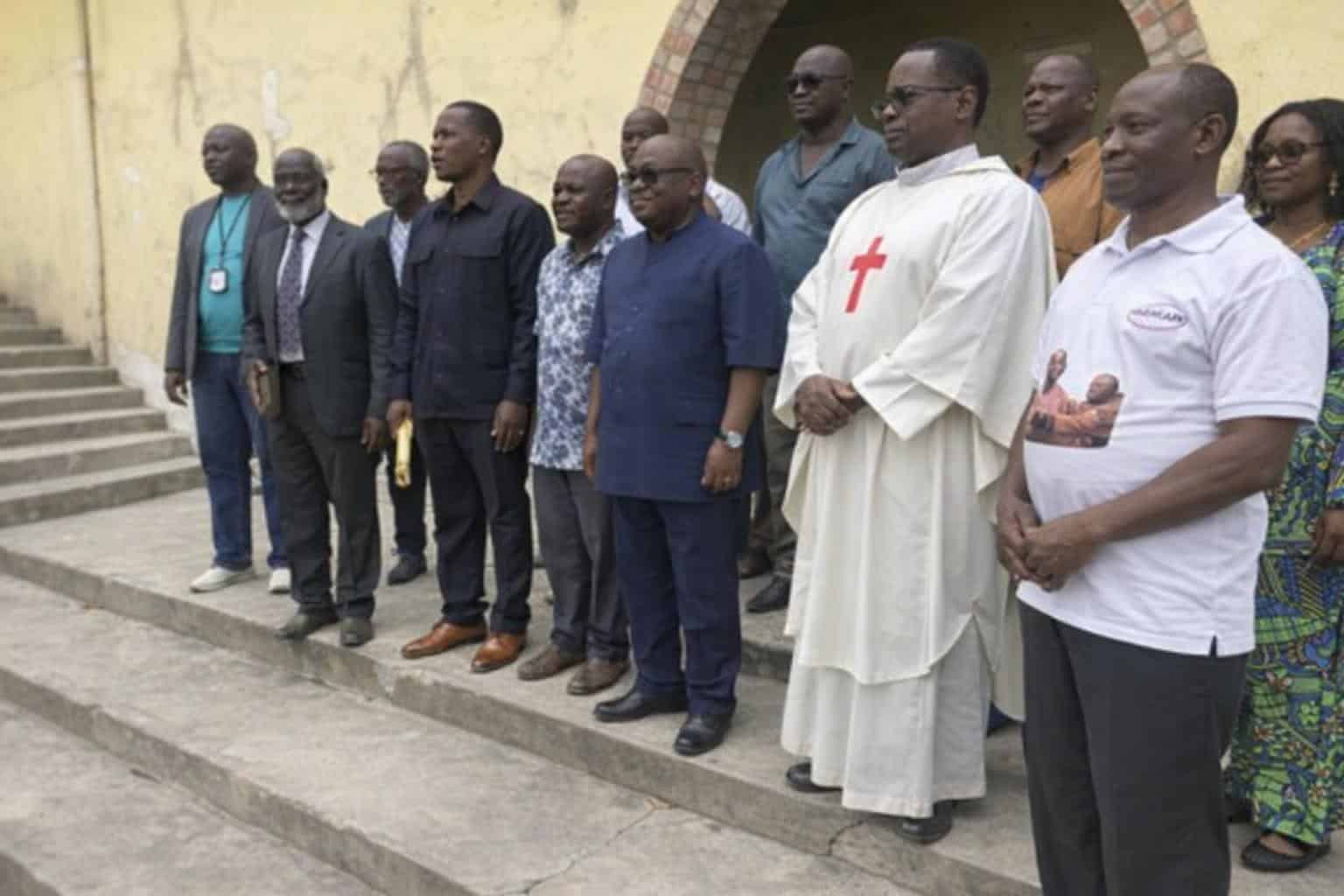
Kinkala Thanksgiving Mass Marks Kolelas Memory
On Saturday, January 10, a thanksgiving Mass was held at Sainte Monique Cathedral in Kinkala in memory of Bernard Bakana Kolelas, the president-founder of the MCDDI, who died on November 12, 2009. The ceremony brought together supporters, public figures and residents seeking a shared moment of remembrance.
The initiative came from people who identify as “kolélistes,” describing themselves as inheritors of values they associate with the late political leader. They gathered around Euloge Landry Kolelas, president of the MCDDI, in a setting that organizers framed as open beyond party labels, mixing activists and anonymous worshippers.
A Message of Values, Beyond Party Lines
Participants presented the Mass as more than a memorial. For them, recognizing the values attributed to Bernard Kolelas and turning them into a unifying force was the central symbol of the thanksgiving service celebrated by Abbé Joachin Loumouamou, parish priest of Sainte Monique Cathedral.
The atmosphere in the cathedral reflected a blend of prayer and civic language. Speakers insisted on themes of humanism, fraternity and national cohesion, portraying the late MCDDI founder as a reference point for collective aspirations rather than a figure confined to partisan competition.
Bouesso Recalls the MCDDI Founder’s Heritage
One organizer, the departmental adviser Bouesso, used his remarks to revisit Bernard Kolelas’ political heritage, recalling that he founded the MCDDI in 1989. Bouesso called on attendees to rally around ideals he linked to Kolelas, including humanism, courage and determination.
Bouesso also framed the late leader as someone guided by a sense of the common interest and the future of the Republic of the Congo. In his view, that mindset should remain relevant for citizens and militants who want to contribute to stability and progress.
Peace, Justice and Reconciliation at the Center
In a direct appeal to the congregation, Bouesso said the gathering was not simply a matter of courtesy but “a vibrant testimony” of attachment to ideals of peace, justice and fraternity that he said Bernard Kolelas carried throughout his life. He highlighted what he described as an unwavering faith and a persistent search for social harmony.
He emphasized Kolelas’ capacity to promote forgiveness and reconciliation, presenting these traits as pillars for national life. The speaker then called for unity and solidarity, urging everyone to continue the work associated with Kolelas and to strive for peace and development across the country.
Gospel Reading and a Political Parallel
The day’s Gospel reading, taken from John 3:22–30, recounts John the Baptist’s testimony about Jesus. During the service, that passage was presented as a spiritual reference point, with a parallel drawn to what participants described as Bernard Kolelas’ humility and fidelity to his ideals.
For many in attendance, the link between scripture and civic memory offered a way to speak about public life through the language of faith. It also allowed the ceremony to underline continuity between personal conviction, service and responsibility in the wider community.
Homily Highlights Democracy and National Unity
In his homily, Abbé Joachin Loumouamou described Bernard Kolelas as a multidimensional political figure, portraying him as a militant for democracy, freedoms, peace and national unity. The priest insisted that love and fraternity should remain central in social and political action.
The homily’s tone remained focused on moral principles rather than political controversy. By stressing unity and peace, the message aligned with the wider desire expressed by participants to keep public debate anchored in cohesion and to encourage constructive engagement for the country.
A Living Legacy for Supporters and Citizens
At the end of the Mass, worshippers and guests paid tribute to what they called an example of commitment, sharing, love of country and generosity. The late leader’s memory was presented as a guide for conduct in public and private life, especially for those who claim his intellectual and moral inheritance.
For the “kolélistes” present in Kinkala, the ceremony served as a moment to reaffirm identity and purpose, while also inviting broader participation. The gathering suggested that remembrance, framed through faith, can still function as a meeting point for unity and civic responsibility in Congo-Brazzaville.