
Brazzaville prepares a five-day historical forum
Brazzaville will open its doors from 9 to 13 September for an international colloquium commemorating the 145th anniversary of the Makoko treaty signed on 10 September 1880. Organisers have adopted the evocative theme “On the Road of History” to guide debates and ceremonies.
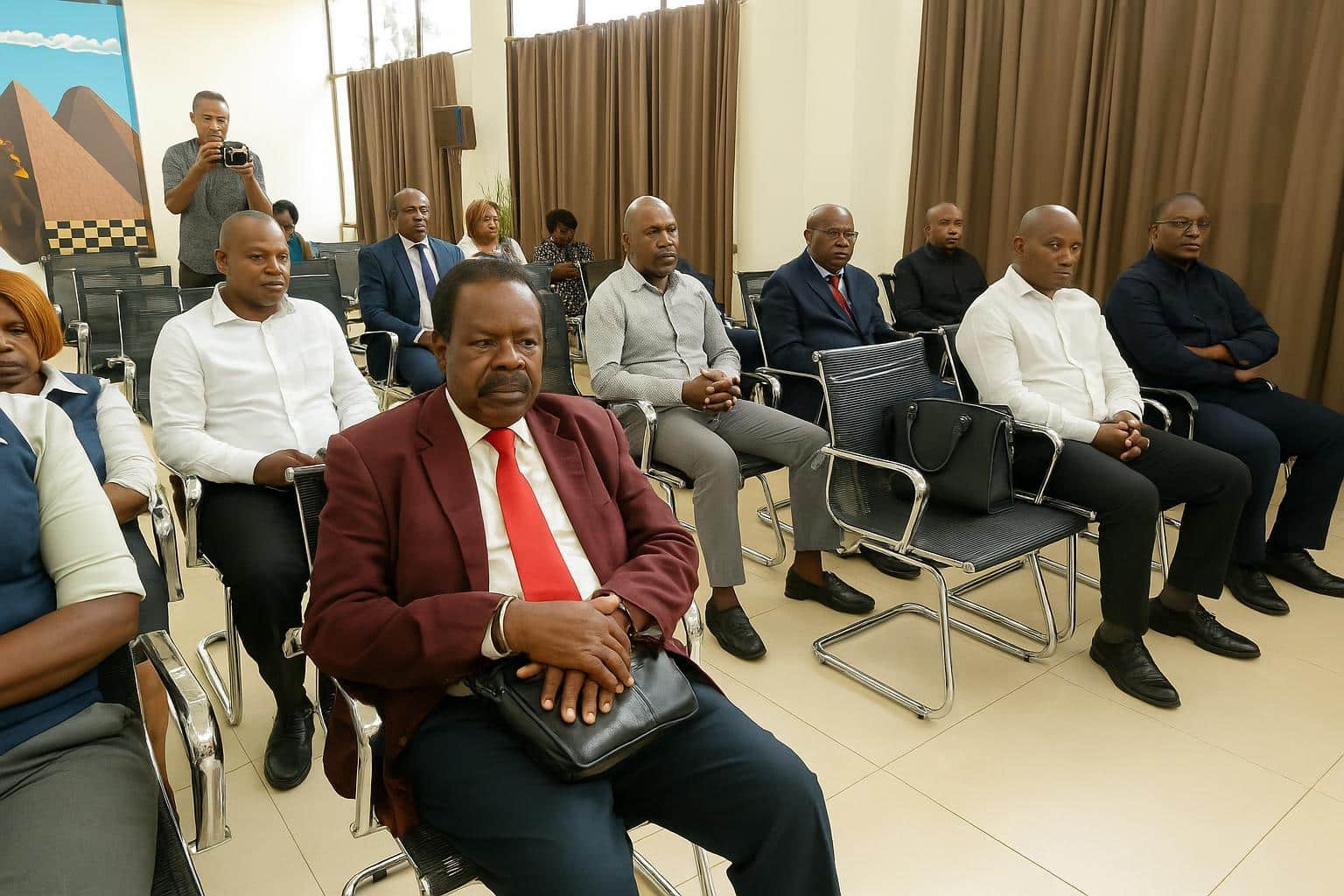
The gathering was formally unveiled during a press briefing by Belinda Ayessa, director of the De Brazza Memorial and patron of the event. Flanked by cultural adviser Samuel Kidiba, scientific committee chair Jean Félix Yekoka and business leader Eugénie Mouayini Opou, Ayessa underlined the forum’s inclusive ambition.
Scholars revisit pre-colonial governance and memory
Five academic panels will frame discussions: the socio-anthropology of pre-colonial societies, relations between political and spiritual power, African cultural imagination, indigenous knowledge and heritage, and contributions of pre-colonial Africa to modern state-building. Each panel blends historical inquiry with contemporary relevance.
For historians, the 1880 treaty remains a pivotal moment that connected the Téké Kingdom to French exploration under Pierre Savorgnan de Brazza. By reassessing motives, agency and consequences, participants aim to nuance a narrative often reduced to colonial expansion.
“We seek to illuminate African agency rather than rehearse grievance,” Yekoka said, noting that fresh archival materials and oral traditions will be compared. Expected guests include academics from Cameroon, Gabon, France and the United States, adding comparative perspectives on Central African state formation.
Kingdom of Mbé under the UNESCO spotlight
Beyond scholarly debate, organisers want to elevate the Kingdom of Mbé, historical seat of Téké monarchs, as a living cultural bridge between past and present. The site lies about 180 kilometres northeast of Brazzaville, overlooking the majestic plateau country.
The scientific committee will present preliminary documentation supporting Mbé’s candidacy for UNESCO’s Intangible Cultural Heritage list. Advocates argue that its royal rites, craft traditions and diplomatic legacy offer lessons in peaceful coexistence that transcend regional boundaries. Ayessa called the bid “a unifying project for Congolese pride and continental dialogue”.
Education, tourism and policy stakes for the youth
Mouayini Opou stressed that reconnecting younger generations with authentic history curbs disorientation in an era of social media myths. “If we fail to transmit knowledge, we create a vacuum others will fill,” she warned, urging schools to integrate colloquium findings into curricula.
Tourism officials view Mbé and the De Brazza Memorial as complementary anchors for cultural routes linking Brazzaville, the Pool plateau and Pointe-Noire. Kidiba believes such circuits can diversify the economy while fostering inter-ethnic understanding rooted in shared heritage.
Authorities underscore that the initiative aligns with national development strategies prioritising culture, education and regional cooperation inside the Central African Economic and Monetary Community. Government departments have facilitated visas, security and logistics to ensure international attendance.
Toward a permanent platform for historical research
Yekoka revealed plans to institutionalise the colloquium as an annual or biennial fixture, providing continuity for interdisciplinary research and policy recommendations. “We intend to move from event to institution, with precise methodology and sustainable funding,” he explained.
More than a hundred researchers, traditional leaders and students have already confirmed. Among them are archaeologist Cécile Fromont, Téké monarch Denis Mathias and Gabonese historian Joseph Iboundji, promising rich cross-views on Congo Basin history.
Organisers hope the forum will spark publications, digital archives and youth fellowships, ensuring that the Makoko treaty’s legacy informs civic culture long after the last panel adjourns.