
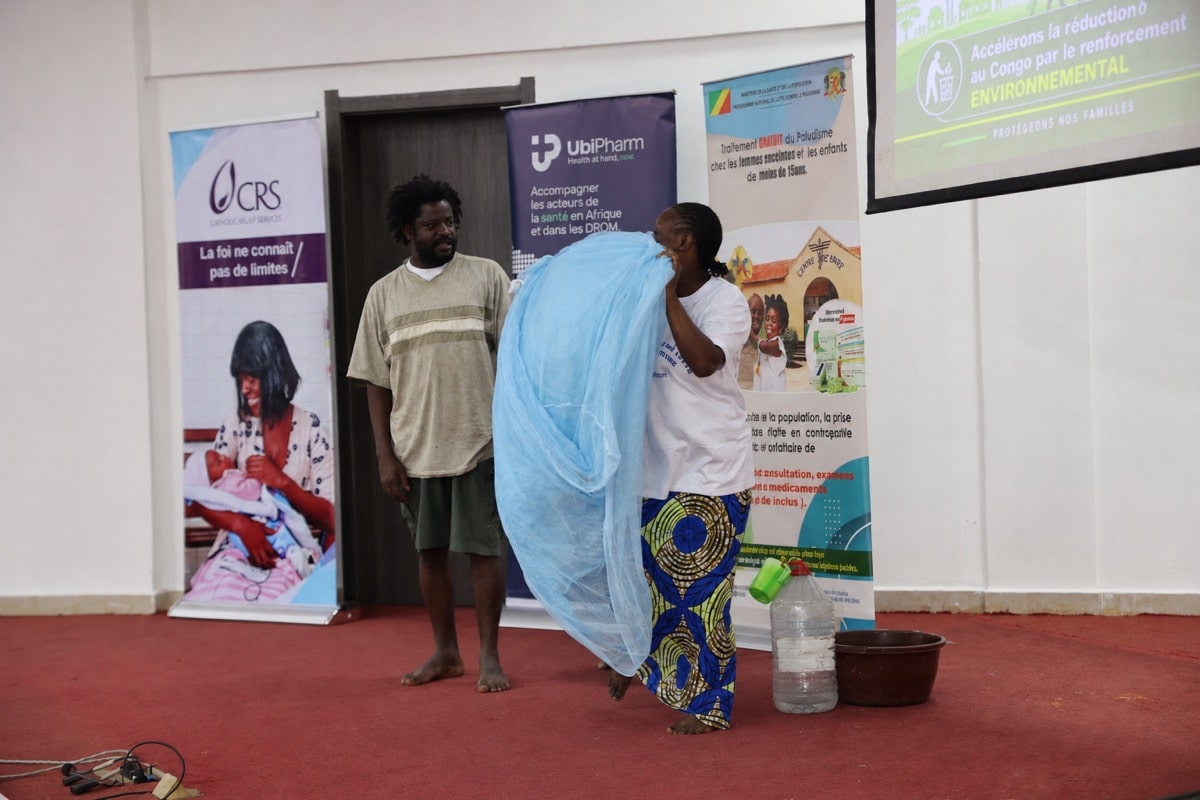
A Ceremony That Refused to Look Away
Pointe-Noire was the setting, on April 26, 2026, for the 19th edition of Congo-Brazzaville’s World Malaria Day ceremony. The gathering combined commemorative ritual with something closer to an emergency briefing — an acknowledgment that the disease remains the country’s most lethal public health challenge.
The global theme for the day was unambiguous: « Mettons fin au paludisme maintenant. C’est possible. Agissons maintenant. » In Congo, where the statistics are sobering, the call to act carried particular weight.
What 2025 Left Behind
The toll from 2025 was laid out without softening. More than 1.4 million cases of malaria were recorded in Congo-Brazzaville during the year. At least 2,250 people lost their lives to the disease.
Those numbers place malaria at the apex of the country’s health burden. It remains the leading cause of medical consultations, hospitalizations, and deaths in Congo-Brazzaville — a position it has held for years despite sustained intervention efforts.
Globally, the picture was comparably bleak. Over 282 million cases and more than 600,000 deaths were recorded worldwide in 2025, with the African continent bearing a disproportionate share of both.
The WHO’s Call to Act
Dr. Vincent Dossou Sodjinou, the WHO representative, offered both diagnosis and encouragement from the Pointe-Noire podium. « Nous avons la volonté, les connaissances et les outils nécessaires pour réduire significativement les cas et les décès dus au paludisme, » he said. « Nous devons agir maintenant. »
The statement carried the pragmatic optimism that has come to characterize global malaria discourse: the disease is not unconquerable, the tools exist, but the effort has to match the scale of the problem.
Ibara Focuses on Larval Habitats
Health Minister Jean-Rosaire Ibara took a different angle. His call centered on environmental sanitation as the central lever for reducing transmission. Specifically, he urged stronger community-level action to eliminate larval breeding grounds — the stagnant water, poorly drained areas, and waste accumulation zones where mosquitoes reproduce.
This approach reflects a strategic bet that environmental control, paired with broader public health measures, can lower transmission rates in ways that insecticide spraying and bed nets alone cannot achieve.
Structural Tools Already in Place
Congo’s malaria response rests on several pillars that were highlighted during the ceremony. Vulnerable groups — children under five and pregnant women chief among them — benefit from free malaria treatment under a national protocol. Insecticide-treated mosquito nets have been distributed across the country with the support of international partners.
Community health workers have been deployed as a frontline response mechanism, extending the reach of the formal health system into neighborhoods and villages where permanent health facilities are thin on the ground.
Persistent Gaps the Ceremony Did Not Ignore
The ceremony did not sidestep the structural weaknesses that continue to undermine progress. Dependence on external financing remains a major vulnerability: much of the country’s malaria control infrastructure relies on donor support, with the risks of funding gaps and program discontinuity that come with that territory.
Territorial disparities were also acknowledged. The quality and coverage of malaria interventions vary considerably between Brazzaville and Pointe-Noire on one hand, and the more remote departments of the north and the Pool region on the other.
The emergence of insecticide resistance in mosquito populations adds a further layer of concern, threatening to erode the effectiveness of some of the most widely deployed vector control tools.
Community Mobilization as a Multiplier
Across the discussions in Pointe-Noire, one theme surfaced repeatedly: collective responsibility. The government’s strategy frames malaria control not as a purely technical or medical exercise but as a shared social undertaking, in which communities play an active role in eliminating breeding sites and ensuring that protective measures actually reach those who need them.
Whether that framing can translate into sustained behavioral change at the community level, across a geographically diverse country, remains the central challenge for Congo’s malaria response in the years ahead.