
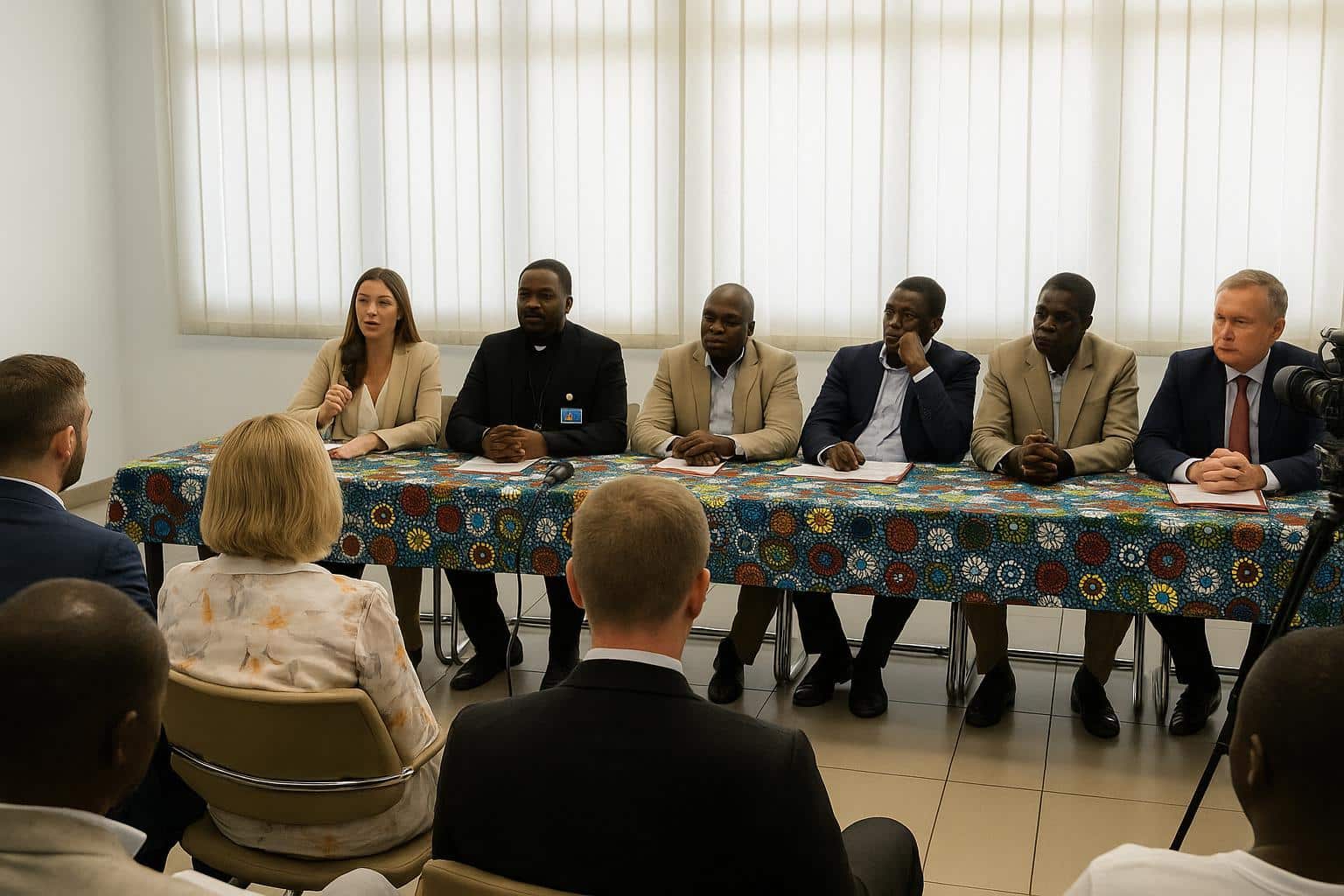
EU Human Rights Fortnight opens in Brazzaville
On 10 December, inside a sunlit conference room at the EU delegation in Brazzaville, journalists, civic actors and rights advocates gathered for the International Human Rights Day, launching the European Union’s “Human Rights Fortnight” with a frank discussion on how Congolese media can deepen coverage of child protection.
Speakers acknowledged that Congo’s legal architecture for children is broadly in place, yet obstacles persist on the ground. Limited newsroom resources, sporadic training and insufficient access to reliable data were repeatedly cited as barriers to consistent reporting able to mobilise families, communities and decision-makers.
Media budgets and training remain central hurdles
“Journalists cannot remain on the sidelines,” one civil-society participant said, urging editors to assign dedicated beats and secure airtime for under-reported childhood issues. The appeal resonated among attendees who noted that compelling human-interest stories can shift public attitudes faster than institutional communiqués.
Panellists broadened the debate by focusing on children living on the streets of major Congolese cities, a phenomenon they cautioned cannot be addressed through ad-hoc police operations alone. Sustainable answers, they argued, combine schooling, psychosocial counselling and pathways to vocational integration.
Several reporters shared the practical constraints they face when documenting street life. Filming minors requires parental consent seldom available, transport costs can quickly escalate, and safety concerns lurk after dusk. These realities, they said, explain sporadic coverage even in outlets that sympathise with vulnerable children.
Civil-society organisations proposed a joint funding mechanism, pooling modest grants from partners into a newsroom fellowship scheme. Reporters receiving stipends could pursue longer investigations, while editors would retain full editorial independence. Participants viewed the idea as a balanced way to avoid perceived external interference.
Civil society pushes data to fuel reforms
The meeting also examined how alternative reporting produced by watchdog groups can complement official statistics. Regular shadow reports to United Nations mechanisms, speakers argued, create an incentive for continuous national improvement and situate Congo’s progress within regional benchmarks, strengthening the credibility of government commitments.
European support underscores shared priorities
Acting EU chargé d’affaires Torben Nillson reiterated Brussels’ view that human rights form the “DNA” of European foreign policy. Congratulating the Republic of Congo for engaging constructively with treaty bodies, he pledged continued logistical and financial support for initiatives designed by national authorities and United Nations agencies.
Nillson highlighted two emblematic projects already under way: the upgrade of detention facilities to align with international standards and a multiyear envelope backing local NGOs active in legal assistance for minors. Both interventions, he noted, were crafted in close coordination with ministerial departments.
Government representatives present welcomed the pledge, stressing that resource mobilisation remains indispensable to translate existing legal and strategic frameworks into tangible improvements for children. They encouraged media partners to spotlight positive examples of reintegration programmes currently piloted in Brazzaville and Pointe-Noire.
Toward balanced, solution-oriented storytelling
Several newsroom editors underscored the importance of balancing hard-hitting investigations with solution-oriented narratives. They maintained that audiences are more likely to remain engaged when coverage highlights community initiatives that prevent youth delinquency and promote social cohesion alongside exposure of systemic shortcomings.
The debate returned repeatedly to data. Without granular figures on schooling, health or judicial outcomes, journalists struggle to hold authorities accountable or verify progress. Civil-society speakers committed to sharing field surveys more proactively, while officials signalled readiness to facilitate access to publicly available datasets.
Analysts present agreed that a well-informed public conversation strengthens the social contract. Regular radio debates, print explainers and online fact-boxes can demystify legal provisions protecting minors, reduce stigma surrounding street children and channel citizen feedback into policies that reflect lived realities.
Ethical charter and long-term partnership roadmap
As proceedings closed, organisers announced follow-up workshops on reporting ethics and trauma-sensitive interviewing techniques. Participants will also draft a voluntary charter encouraging outlets to respect children’s privacy, avoid sensationalism and verify images before publication, thereby reinforcing public trust in the Congolese press.
For many attendees, the day’s conversation illustrated the growing convergence between government priorities, donor assistance and grassroots vigilance. Sustained collaboration, they concluded, could equip the media to play its constitutional role while safeguarding the rights and aspirations of Congo’s youngest citizens.
The European delegation’s fortnight will continue with panels on women’s rights and environmental justice, yet the opening focus on children set a deliberate tone. As one organiser put it, empowering the next generation begins by ensuring their stories are told clearly, consistently and responsibly.
Independent commentators note that Congo’s media landscape has evolved rapidly with digital migration and community web-TV channels. However, revenue streams remain fragile, making socially oriented reporting vulnerable to commercial pressures. Participants urged telecom operators and advertisers to allocate part of their marketing budgets to child-rights programming.
Looking ahead, stakeholders plan to assemble quarterly to track how recommendations materialise in news output, policy measures and children’s everyday realities. The hope is that by building a predictable feedback loop, Congo can showcase a home-grown model of media partnership that reinforces its international human-rights commitments.