
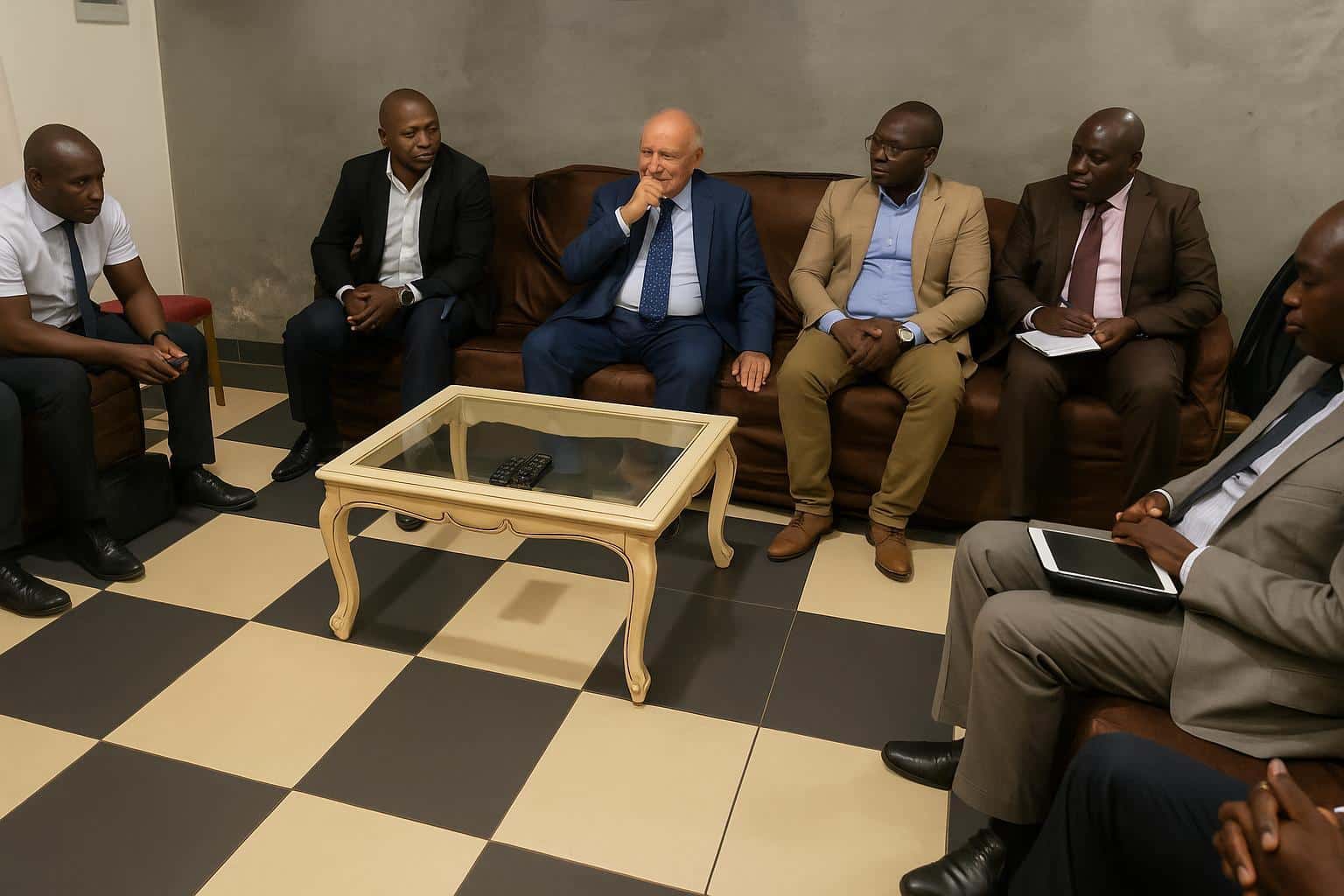
Date and purpose of Genealogy Symposium
At the headquarters of the Centre de prospective pour le développement in downtown Brazzaville on 11 September, planners fixed the first week of December for a sub-regional Symposium on Genealogy and the Family, an event designed to blend academic rigour with community outreach.
FamilySearch regional representative Jean Luc Magré confirmed the timetable after a coordination meeting with Ceprod officials, stressing that the joint team will now fine-tune the list of speakers and participants in order to secure “a lively conversation that places personal history at the centre of social cohesion”.
Two-phase programme bridges academia and public
The programme will unfold in two segments: an academic forum bringing together university professors, researchers and students, followed by an open-door session where families, civic groups and curious residents can explore practical tools for tracing lineage, archiving oral traditions and interpreting DNA results.
While final numbers are still being tallied, organisers anticipate several hundred in-person attendees from Congo-Brazzaville, Cameroon and Gabon, plus virtual contributions from genealogists based in Salt Lake City, Paris and Johannesburg, reflecting the continent-wide enthusiasm for reconnecting fragmented family trees.
“We believe a strong nation starts with strong households,” Magré told reporters, arguing that closer ties between children, parents and grandparents nurture solidarity beyond the immediate clan and can even cushion economic shocks by reactivating networks of mutual assistance.
Digital archives of 650,000 titles for universities
Ceprod liaison officer Jean Eric Djendja Itoua announced that FamilySearch will open its digital vault of 650,000 scanned titles to Congolese universities, granting historians and sociology students free access to parish registers, census rolls and notarial deeds that are often scattered across different provinces.
Researchers at Marien-Ngouabi University welcomed the commitment, noting that many colonial-era archives remain fragile or inaccessible; digitisation therefore offers what professor Diane Obili called “a second life for documents that tell the story of our people beyond political cycles”.
Government and private partners rally support
Government officials from the Ministry of Culture are providing logistical backing, including interpretation services and COVID-19 safety protocols learned during last year’s Pan-African Music Festival, a signal, according to advisers, of the administration’s intent to promote soft-power diplomacy through cultural knowledge.
Beyond networking, the December gathering will feature thematic workshops on African naming customs, encryption of rare manuscripts, best practices for oral interviews and the emerging science of bio-genealogy, presented by specialists from the University of the Witwatersrand and the Institut national d’histoire de France.
Workshops explore DNA and oral heritage
Organisers are preparing a bilingual mobile app that will guide visitors through the schedule and offer a QR-enabled questionnaire, allowing families to upload cherished photos or record mini-testimonies, thereby enriching the communal database while maintaining strict privacy controls compliant with Congo’s 2019 data-protection law.
The Ceprod-FamilySearch communication unit plans a radio road-show across departments such as Plateaux and Niari, where community elders still safeguard lineage chants and migration tales that could complement the digitised sources, creating what Magré calls “a dialogue between parchment and memory”.
Tourism and economic ripple effects
Local entrepreneurs are watching closely, convinced that genealogy tourism could one day mirror the growth seen in heritage circuits along Ghana’s coastline; hotel groups in the capital already report early bookings from diaspora families seeking December flights.
FamilySearch profile and neutrality pledge
FamilySearch, founded in 1894 and funded by the Church of Jesus Christ of Latter-day Saints, operates the world’s largest free genealogical website, yet Magré insists the Brazzaville symposium will be faith-neutral and purely educational, with no proselytising component.
Call for papers bolsters research depth
To incentivise academic production, Ceprod is launching a call for papers on topics ranging from cross-border clan systems in the Cuvette basin to the impact of forced labour migrations on surname evolution; selected articles will appear in a special issue of the Review of Central African Studies.
Sponsors include the French Development Agency, Airtel Congo and the Chamber of Notaries, each contributing logistical or financial support but agreeing, according to the memorandum signed last week, that intellectual independence remains with the scientific committee chaired by economist Bienvenu Boudimbou.
Road to December: registration and next steps
Looking ahead, Djendja Itoua says the December event could become biennial, rotating between capitals of the Economic and Monetary Community of Central Africa, thus positioning Brazzaville as a reference hub for genealogical research in the sub-region.
Until then, organisers will finalise security, refine the digital platform and keep the public updated through weekly briefings, confident that by December families will gather not only to celebrate roots but also to imagine shared futures built on the resilience of inter-generational bonds.
Registration opens on first October through a dedicated portal, with early-bird passes priced at five-thousand CFA francs for students and fifteen-thousand CFA francs for professionals; attendance online will remain free, thereby extending the symposium’s educational promise to rural audiences with limited travel budgets.
Ceprod will publish a post-conference white paper summarising insights and outlining policy recommendations for integrating genealogy into school curricula.