
Heritage audit backed by UNESCO
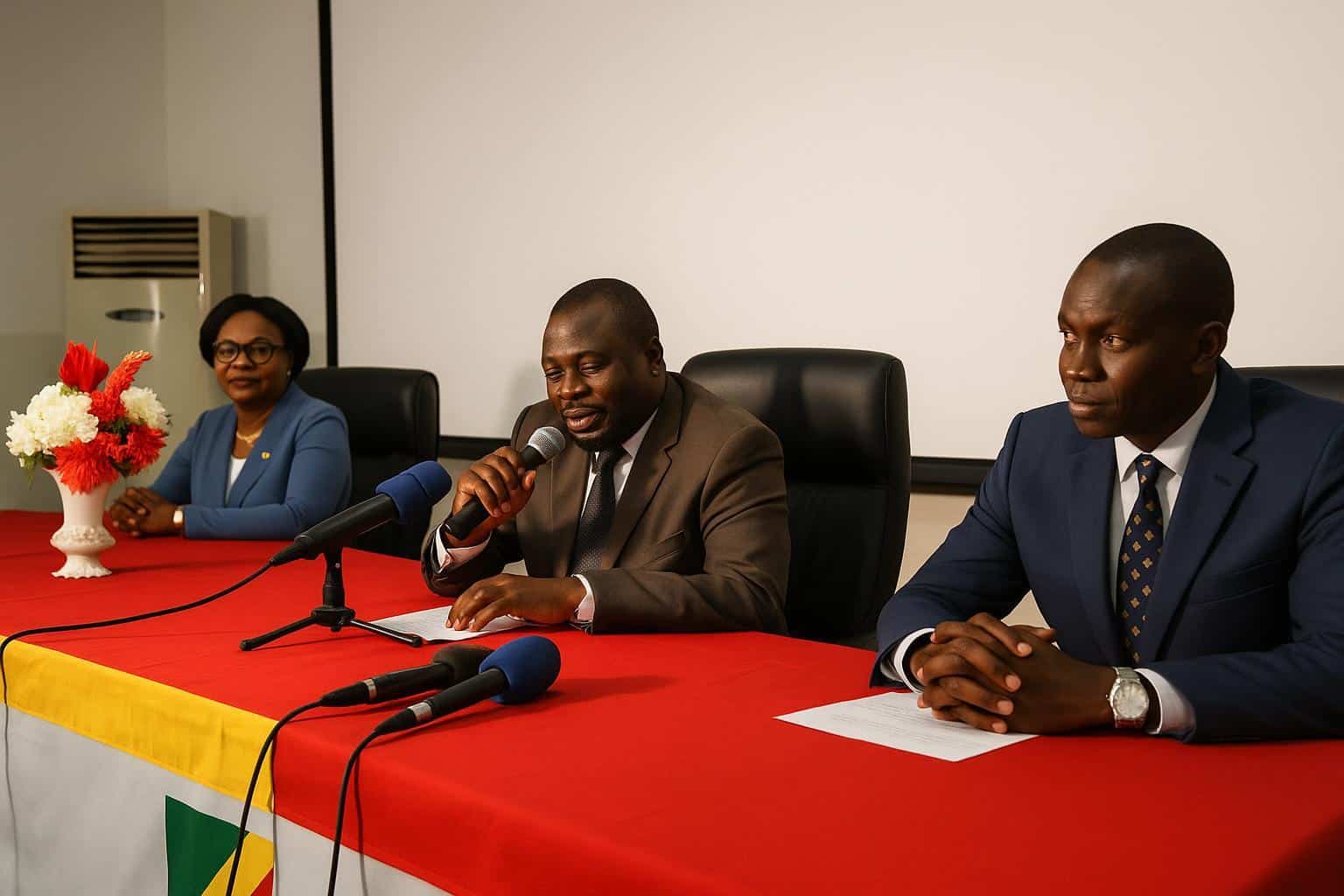
Brazzaville hosted a closely watched workshop on 13 November, unveiling the latest inventories of two flagship institutions, the Pan-African Music Museum and the Ma Loango Museum of Diosso. The exercise, supported by UNESCO, is being framed as a watershed for Congo’s museum sector.
Over six months, experts catalogued 204 musical instruments in Brazzaville and 700 historical artefacts in Diosso, compiling data that officials say will curb illicit trafficking and catalyse new forms of cultural tourism.
The workshop also screened a fifteen-minute documentary, giving participants a behind-the-scenes look at fieldwork conducted in May across the capital and the coastal Kouilou department.
Government commitment to cultural governance
Speaking on behalf of Minister of Cultural Industries Lydie Pongault, chief of staff Lis Pascal Moussodji linked regular inventories to good governance, transparency and the fight against artefact smuggling, calling them “true management tools” for institutions charged with preserving national memory.
He publicly thanked President Denis Sassou Nguesso for sustained support to the cultural sector and praised UNESCO’s technical assistance, underscoring the administration’s determination to align with international heritage standards without compromising local ownership.
Nicole Mantsanga Bambi, director of museums, monuments and historic sites, recalled that the last full audits dated back to 2013 for the musical collection and 2016 for Mâ Loango, stressing that the new figures restore an up-to-date baseline after years of rapid institutional change.
Pan-African Music Museum’s 204 instruments counted
Standing before curators and students, collections officer Jacqueline Babindamana traced the museum’s journey since its creation in 2008 with 168 instruments, expanded through donations and field acquisitions from twenty African countries.
She detailed four instrument families—idiophones, cordophones, aérophones and membranophones—explaining that the new inventory integrates photographs, condition reports and geographic metadata to facilitate research and future exhibitions.
Upcoming priorities include a continental collecting campaign, an illustrated catalogue, digitisation of rare audio archives and hands-on organology workshops aimed at sparking curiosity among younger Congolese.
700 artefacts listed in Ma Loango Museum
Presenting from Diosso, Rufin Sita outlined a parallel operation that identified 700 artefacts spanning royal regalia, ethnographic objects and colonial-era documents housed in the historic palace overlooking the Atlantic shoreline.
He called for staff capacity-building, modern storage solutions, a dedicated logistics budget and a bilingual website to open the institution to both domestic and diaspora audiences.
While acknowledging resource constraints, participants agreed that phased digitisation could broaden access without jeopardising conservation standards, particularly in the humid coastal climate.
Digital future and youth outreach planned
Ghislain Moussoungou, director-general of heritage and archives, said inventories must be “a permanent process”, not an isolated event, and argued that digital records will make it easier to alert Interpol should a listed object surface on the international market.
UNESCO programme officer Marlène Omolongo reaffirmed the agency’s readiness to provide technical toolkits and training, emphasising that museums should be “living places, carriers of history and wealth” rather than static repositories.
Youth engagement, she said, will be vital, with school visits and maker-style labs poised to transform collections into platforms for creativity, intercultural dialogue and future livelihoods.
Participants hail new era of transparency
The workshop closed with applause as participants viewed the documentary’s final frame, a symbolic ledger entry marking the 904th object recorded under the project, a tangible sign of what several speakers called “collective vigilance”.
Observers left convinced that systematic documentation, anchored by governmental will and multilateral expertise, now offers Congo-Brazzaville a potent tool to honour its past while nurturing an inclusive cultural economy.
Safeguarding against illicit trade
Congo’s authorities have repeatedly warned that artefacts without written provenance remain vulnerable to clandestine networks. By cross-referencing serial numbers, condition notes and high-resolution images, the new registers create a deterrent effect that officials hope will discourage theft from storage rooms or exhibition halls.
Interpol’s Stolen Works of Art database accepts entries only from institutions able to verify ownership. The inventories, administrators say, now qualify both museums for that channel, adding a further layer of international oversight without undermining national sovereignty.
Tourism and creative economy prospects
Tour operators present at the workshop argued that reliable object lists will make it easier to design thematic circuits linking Brazzaville’s music quarter with the beachfront royal city of Loango, packaging cultural visits alongside gastronomy and nature reserves.
Local artisans, particularly instrument makers, see opportunities to reproduce museum pieces for ethical sale, echoing Babindamana’s vision of workshops where young visitors can experiment with sound while learning about pan-African musical heritage.
Next steps for policy alignment
Moussodji hinted that future budgets may formalise a rolling five-year inventory cycle, mainstreaming the practice across provincial community museums and integrating results into Congo’s forthcoming national strategy for cultural and creative industries.
Participants also proposed a joint task force with the Ministry of Digital Economy to ensure metadata compatibility with regional platforms already used by neighbouring countries, reinforcing Congo’s role within CEMAC cultural cooperation.
For UNESCO, the process could serve as a pilot for Francophone Africa, providing a replicable template that balances scientific rigour with the financial realities faced by mid-sized national museums.