
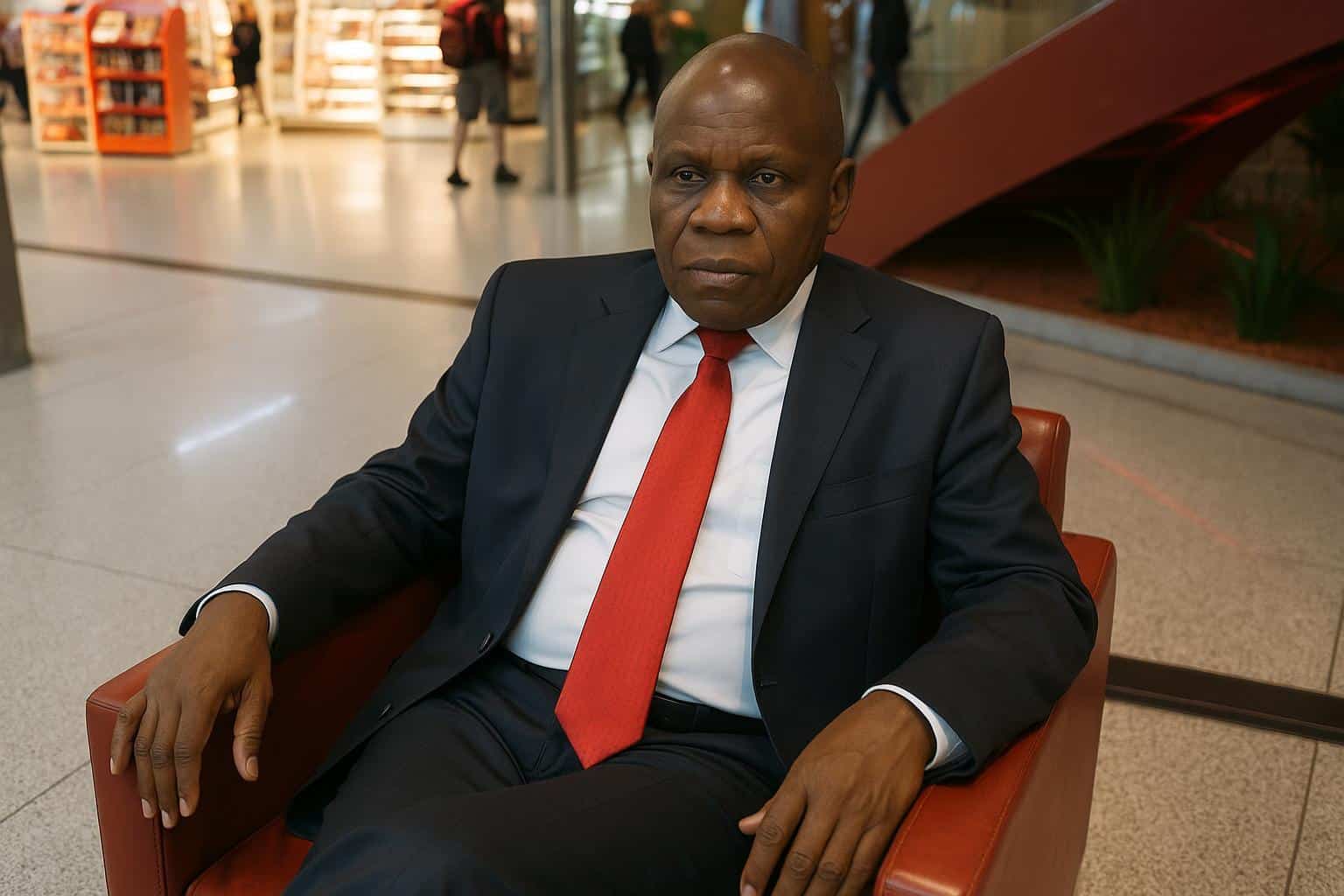
Sudden passing of a rumba pioneer
The Congolese music community awoke to sad news on 8 October: Pierre Moutouari, a towering figure of modern rumba and soukouss, died in Paris at the age of 75. Family members confirmed that the artist succumbed to illness at a hospital in the French capital (Les Dépêches de Brazzaville, 9 October).
Initial whispers on social media were met with disbelief, a measure of the affection that fans held for the voice behind the evergreen hit “Missengué.” By mid-morning, tributes from fellow musicians, journalists and cultural officials had established the fact: a chapter of Congolese popular culture had closed.
From Brazzaville stages to Tunis gold
Born in 1950 in Brazzaville, Moutouari entered professional music in 1968 thanks to his elder brother Kosmos, a stalwart of the famous Bantous de la Capitale orchestra. Observers remember the teenager’s warm timbre, graceful phrasing and impeccable stage manners that quickly set him apart (RFI, archival interview).
In 1969 he joined Sinza Kotoko, a youthful ensemble shaking up the capitale’s night spots. Titles such as “Mahoungou,” “Mavoungou” and “Vévé nga na lingaka” dominated local radio playlists, revealing a writer attuned to daily joys and heartbreaks.
International recognition arrived in 1973, when Sinza Kotoko clinched the gold medal at the Pan-African Youth Festival in Tunis. The performance, preserved in grainy footage, shows a 23-year-old singer commanding the stage with a confidence that hinted at greater ambitions.
Paris years and global collaborations
Restless for new horizons, Moutouari formed Les Sossa in 1975, then relocated to Paris in 1979. The French capital, a magnet for African talent, offered larger studios and broader networks. There he crossed paths with Kassav’ co-founder Jacob Desvarieux, guitar virtuoso Master Mwana Congo and arranger Sammy Massamba.
Albums such as “Mbekani” and “Koundou,” along with singles “Aïssa,” “Julienne” and the chart-topping “Missengué,” propelled him onto Europe-Africa playlists. Two gold discs rewarded sales in an era when vinyl ruled and Congolese dance music was conquering diasporas from Montreuil to Abidjan (PanAfrican Music, retrospective).
French producer Jean-Philippe Rykiel once described Moutouari’s sessions as “masterclasses in melodic economy—he knew how to make one note speak a paragraph.” The artist’s suave baritone, combined with the tight guitars of soukouss, made weddings and clubs erupt in synchronized shoulder shuffles.
Return home and mentorship legacy
In 1986, after nearly a decade in Europe, Moutouari returned to Brazzaville, motivated by what he called “the duty to give back.” He set up a modest studio, coached up-and-coming singers and distributed cassettes under his own label, defying the logistical challenges of the pre-digital period.
Alongside his eldest daughter Michaelle, he released the album “Héritage,” celebrating inter-generational dialogue. The father-daughter duet found success across Central Africa, underscoring his belief that cultural transmission must begin at home (Africa No 1 interview, 1990).
Recognition followed in 1994, when the Festival Ngwomo Africa in Kinshasa honored him with a lifetime contribution award shared with South African icon Miriam Makeba and Algerian star Khaled. The citation praised his “commitment to stylistic finesse and social cohesion through music.”
Artistry through adversity
The 1990s were turbulent for the Congo, yet Moutouari’s schedule rarely faltered. He performed for peace concerts in Brazzaville, supported vaccination campaigns and recorded radio jingles promoting national unity. Friends recall his stoic humor: “Music is my passport; crisis doesn’t cancel the visa.”
Health setbacks emerged in the 2000s, but he continued to appear at festivals in Pointe-Noire and Libreville, often seated yet vocally robust. Industry observers credit his longevity to meticulous rehearsal routines and a preference for green tea over stronger indulgences.
Tributes flow across continents
Minutes after the announcement of his passing, guitarist Roga-Roga tweeted a simple line: “Teacher, travel well.” Within hours, the hashtag #PierreMoutouari trended in Brazzaville, Paris and Montreal, aggregating clips of vintage performances and personal anecdotes.
Congolese Minister of Culture Lydie Pongault hailed him as “a pillar whose melodies narrated our urban hopes,” while UNESCO’s regional office cited his contribution to intangible heritage preservation. Diaspora associations in London have announced a commemorative concert later this month.
As vinyl collectors exchange rare pressings and younger DJs sample his riffs, one sentiment dominates: Pierre Moutouari may have left the earthly stage, yet the soundtrack he authored continues to guide new dancers across continents and generations.