
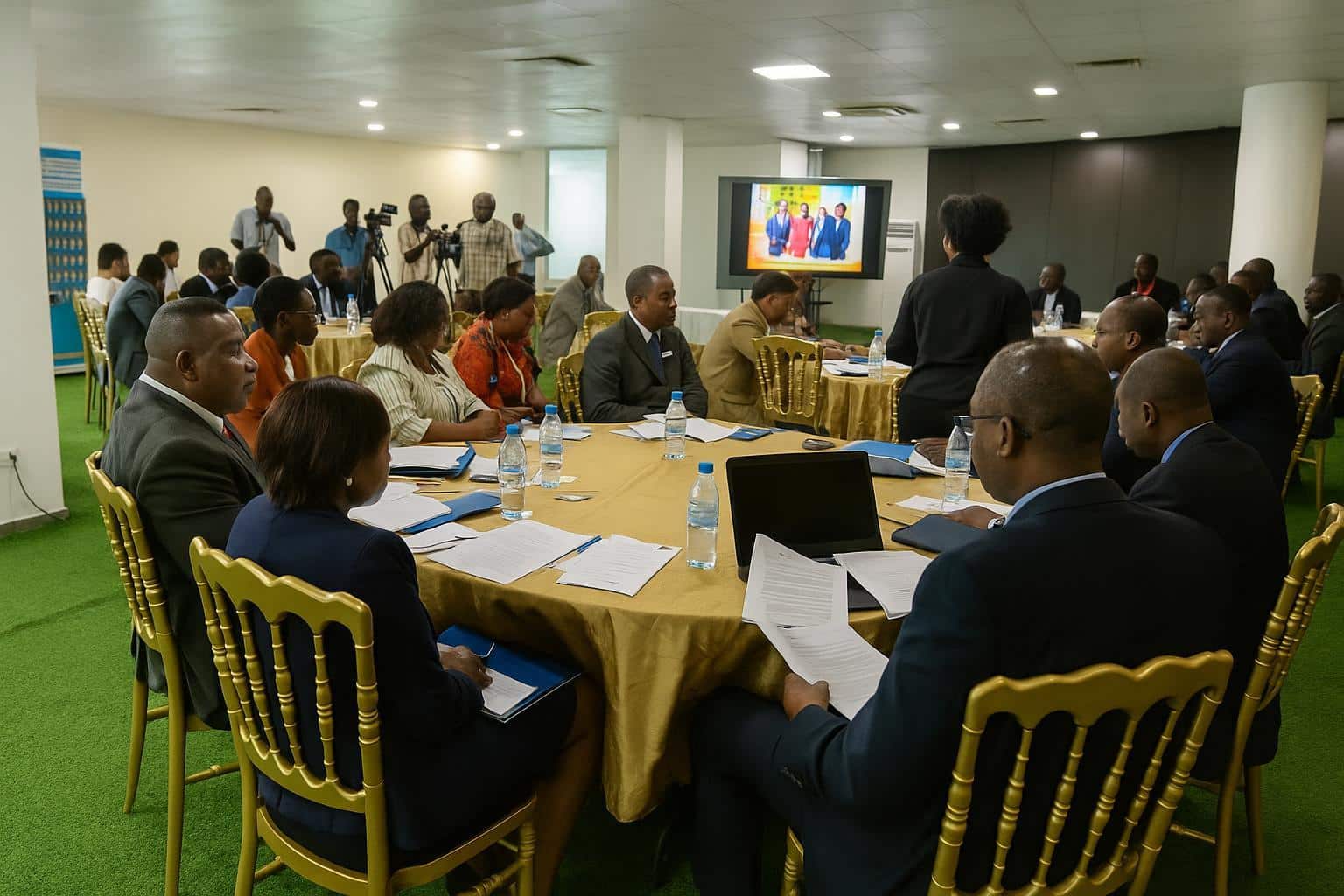
UNICEF’s renewed call in Brazzaville
At a packed hall in Brazzaville on 27 November, Deputy Representative of UNICEF James Mugaju gathered policymakers, donors and youth leaders and invited government to install a lasting institutional framework that places children’s rights at the centre of national consensus.
The workshop officially launched the Inter-Sector Coordination Mechanism for the Convention on the Rights of the Child, designed to convert recommendations issued during the UN committee’s December 2024 visit into measurable action.
Mugaju thanked ministries, civil society and development banks, stressing that their presence demonstrates “the will to position children at the heart of Congo’s social and human development agenda” aligned with the National Development Plan 2022-2026.
UNICEF estimates show under-five mortality has fallen 45 percent since 2000, yet one in three rural children still lacks basic services and 27 percent endure stunting, signalling unfinished business (UNICEF 2023).
Why coordination across sectors matters
The proposed mechanism will unite the ministries of Social Affairs, Education, Health, Finance and Planning with local authorities and youth councils around a common dashboard tracking child-focused indicators.
Fragmented mandates have slowed past action plans; in 2022 the child protection budget execution reached only 68 percent, according to the Ministry of Finance’s report, leaving community centres short of supplies (World Bank 2022).
Stronger coordination is expected to limit overlaps, accelerate data sharing and standardise child-sensitive metrics ahead of the 2025 national review of social policies.
“The committee’s observations were not a reprimand but an opportunity,” Mugaju noted, adding that a structured platform can “consolidate and accelerate our collective progress for every Congolese child.”
Fiscal visibility and government resolve
Debate soon turned to money. Social sectors absorb roughly 16 percent of total spending, down from 18 percent in 2018 and still below UNICEF’s 20 percent benchmark for emerging economies (UNICEF 2023).
Mugaju proposed embedding child-rights tagging in the annual budget, making appropriations visible and traceable from the central treasury to district services and schools.
Director-General for Development Partnerships Aimé Blaise Mitoumbi acknowledged cash-flow bottlenecks during an interview but affirmed government resolve to “deliver durable solutions to children’s vulnerabilities”.
He cited ongoing reforms, including a medium-term expenditure framework and a digital treasury platform, both expected to shorten payment delays and strengthen audit trails.
Civil society and expert perspectives
Civil society welcomed the initiative yet demanded clear timelines. “We need a calendar, not another declaration,” said Rosine Samouna of the Network for Child Protection after the plenary.
Youth delegates under 18 recounted overcrowded classrooms in Cuvette and limited vaccination outreach along the Likouala River, urging formal seats in follow-up committees to ensure their voices remain audible.
Experts warn that climate shocks, notably recurrent northern floods displacing an estimated 90 000 inhabitants, are magnifying child vulnerability, making inter-sector collaboration vital for disaster-responsive services (UN OCHA 2023).
International partners, including the World Bank and the French Development Agency, signalled readiness to align technical assistance with the new mechanism while emphasising home-grown leadership and accountability.
Next steps toward a child-centred budget
Sources at the Prime Minister’s Office indicate a decree will soon formalise the steering committee, detailing roles, funding channels and reporting duties that anchor the mechanism in national law.
Draft terms envision quarterly dashboards, annual public reports and a hotline enabling children to flag rights violations directly to provincial focal points for rapid response.
Observers note that effective monitoring hinges on robust data. The National Statistics Institute is upgrading its child module for the 2024 census, using tablet-based enumeration partly financed by the African Development Bank.
If momentum holds, Congo could present a consolidated progress report before the African Union’s 2025 Year of Education, showcasing how child-centred budgeting underpins the broader ambition of inclusive prosperity.