
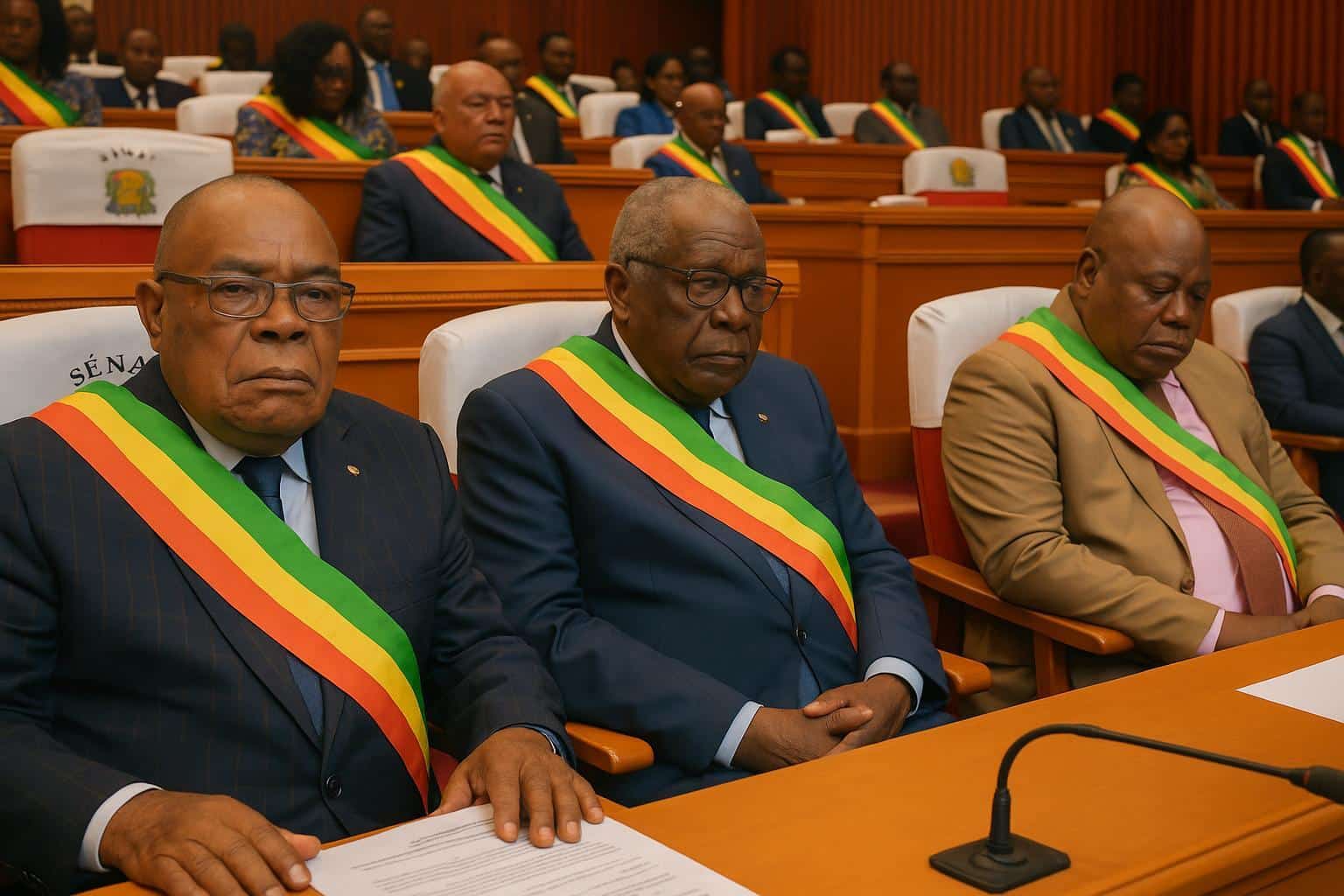
Senate urges sustained security operations
On 15 October in Brazzaville, Senate President Pierre Ngolo used the opening of the 2026 budget session to spotlight public safety, urging the government to institutionalise the ongoing police sweep against so-called “bébés noirs”—mostly teenage gangs blamed for machete assaults and robberies.
His call, backed by applause from the upper chamber, follows a series of security operations led by the Interior Ministry since August that police say have reduced street crime in Brazzaville and Pointe-Noire by nearly 30 percent (Interior Ministry communiqué, 30 Sept).
Ngolo warned that the gang phenomenon is “as shocking as it is intolerable” because it signals a deeper erosion of social bonds, parental authority and preventive structures, issues the Senate believes must be addressed alongside policing.
Social roots and rights safeguards
The Senate statement echoes findings from civil-society monitors such as Observatoire congolais des droits de l’Homme, which note that adolescents drawn into kuluna groups often cite unemployment and school dropout as triggers (OCDH report, July).
During a brief press scrum, Interior Minister Raymond Zéphirin Mboulou pledged to maintain round-the-clock patrols while emphasising that arrests would “scrupulously respect the law and the dignity of every suspect,” a message intended to reassure rights organisations that have documented past excesses.
Security forces launched Operation Mbata Ya Bakolo in 2015, targeting similar gangs, but analysts say current deployments are tighter, combining plain-clothes intelligence with mobile judges who can validate custody within 48 hours (Les Dépêches de Brazzaville, 12 Oct).
Budget stakes and youth opportunities
Beyond repression, senators urged the Education and Youth ministries to accelerate vocational programmes promised in the National Development Plan 2022-2026, arguing that training in construction, digital trades and agriculture could absorb thousands of at-risk youths leaving informal settlements around Talangaï and Loandjili.
Senator Emmeline Okandzi, chair of the education committee, told reporters that “schools cannot function as oases in a desert of violence” and requested an audit of guidance counsellors in public secondary institutions to ensure early detection of student radicalisation.
Economic pressures remain central to the debate. The World Bank estimates that 46 percent of Congolese under 25 are unemployed or under-employed, a reservoir from which gang recruiters draw. Senators insisted that the 2026 budget ring-fence credits for youth entrepreneurship windows within local development funds.
Street voices and judicial follow-up
Community leaders in Moungali say the police presence has restored evening commerce along Avenue de la Paix, yet they fear the reprieve will fade once operations move. “We need a permanent neighbourhood watch with official backing,” said Pastor Clément Makosso, who coordinates mediators.
Rights attorney Godefroy Malonga welcomes the clampdown but stresses safeguards. He notes that since September, Brazzaville courts handled 214 fast-track cases, with 43 minors sent to the Nganga-Lingolo youth centre, where psychosocial teams have been reinforced.
Inside the chamber, debate soon shifted to financing. Finance Ministry forecasts show 2.5 trillion CFA francs in spending next year, anchored on oil revenue and tax recovery. Ngolo urged colleagues to test allocations so security, education and cohesion programmes weather price volatility.
Opposition senator Jean-Baptiste Ondele endorsed the anti-gang drive but demanded transparent reporting. “Citizens applaud arrests, yet they also want to know the fate of seized weapons and confiscated phones,” he said, proposing a quarterly bulletin from the Interior Ministry.
For sociologist Irène Bongo, the Senate debate is a watershed. She argues that placing security and social reintegration in the budget spotlight could help break a cycle where emergency crackdowns fade, gangs regroup and public trust erodes. “Predictability is the real deterrent,” she observes.
Next steps and regional rollout
The government’s medium-term goal is to replicate Brazzaville’s security model in Dolisie and Owando by March, deploying mixed patrols and community mediators trained with EU technical assistance signed in July, according to a senior security adviser who requested anonymity.
While legislative scrutiny continues until late December, residents like market vendor Aude Koussou already measure progress by a simpler metric: the length of evenings children can play outside. “Last month we shut stalls at six; now it’s eight,” she smiles, arranging cassava bread for customers.
Senators will reconvene on 20 November for the first reading of the appropriations bill. Ngolo closed the opening session with a reminder that “protecting citizens remains the state’s foremost duty,” signalling that budget lines tied to security and youth reinsertion may face minimal cuts.
Brazzaville mayor Dieudonné Bantsimba confirmed municipal police will receive 20 motorcycles and radios financed by a partnership with telecom firms, aiming to shorten response times in dense arrondissements like Mfilou and Makélékélé.
Meanwhile, the Ministry of Communication plans a radio drama series portraying the consequences of gang membership, to be aired after the evening news. Producer Natacha Samba believes storytelling can reach households without internet access and reinforce the Senate’s prevention message.