
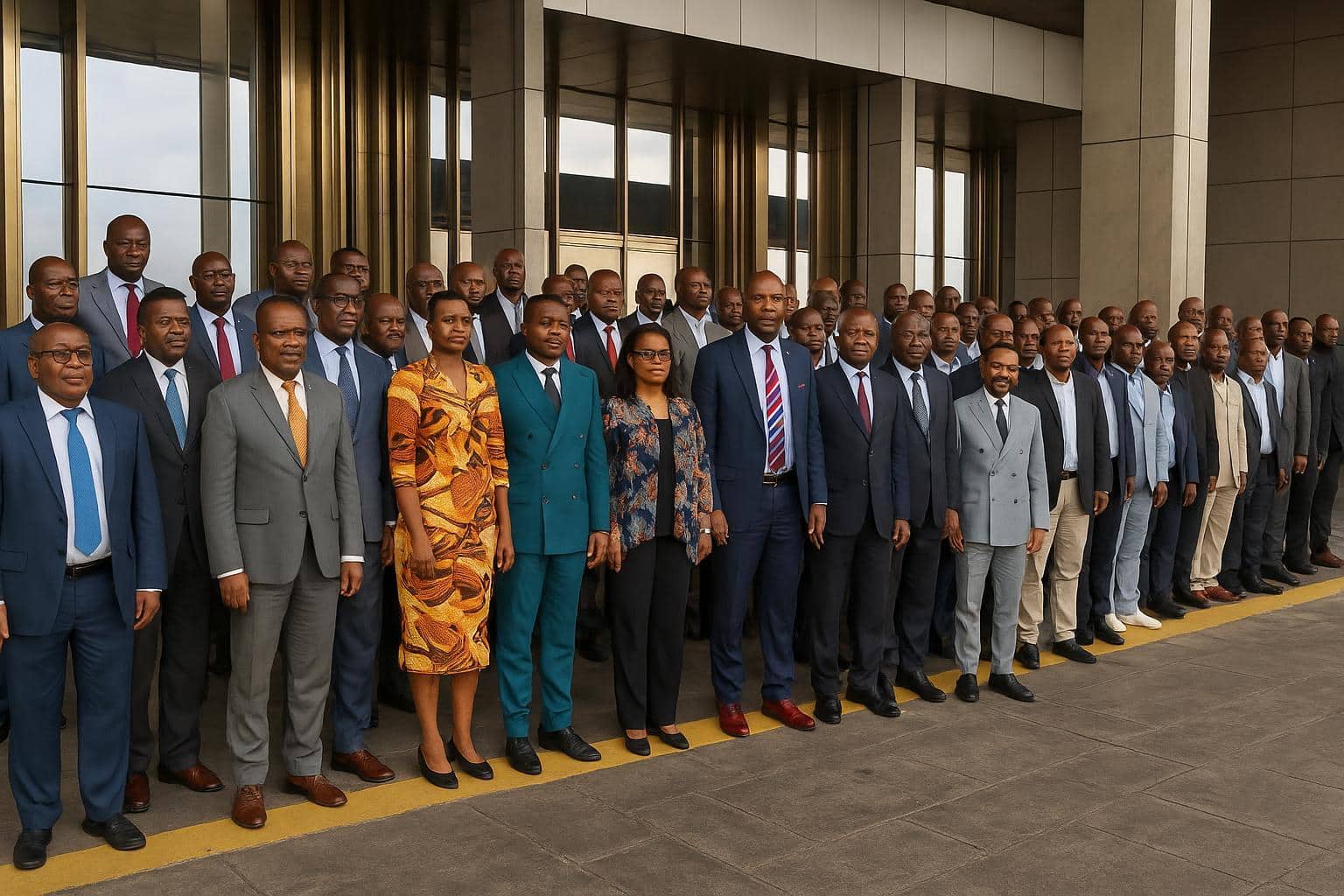
Regulatory momentum in Brazzaville
The Public Procurement Regulatory Authority of Congo-Brazzaville has put renewed energy behind the country’s updated legal framework, its chair Ludovic Ngouala said at the opening of a three-day workshop in Brazzaville, stressing that clear rules are a pillar for credible, sustainable development and efficient public spending.
His remarks came as procurement officers from Brazzaville and neighbouring Pool department gathered to dissect the new decrees that translate the 2022 Public Procurement Code into day-to-day practice, building on a first training held in Pointe-Noire at the start of the month for added consistency.
According to the Authority, the revised texts tighten competitive bidding timelines, expand e-procurement obligations and reinforce conflict-of-interest disclosures, moves intended to align Congo with Central African Economic and Monetary Community standards while reassuring international partners and local suppliers alike about fairness, value for money and integrity.
Ngouala underlined that implementation remains the real examination, telling participants that ‘credible regulation only exists once every actor applies the same script, in real time, without shortcuts’, a message echoed by observers from the Chamber of Commerce present in the room and civil society monitors.
Workshops sharpen procurement skills
Director General Joël Ikama Ngatse detailed the Authority’s road map, which foresees quarterly clinics, an online helpdesk and a compliance scoreboard to be shared with each ministry, so that gaps can be corrected before they translate into costly project delays or audit observations down the line.
He reminded the audience that reforms only gain life once ‘they are understood, shared and uniformly applied’, urging directors to cascade learning to accountants, engineers and store keepers who often initiate expenditure files long before tender notices reach the public domain or evaluation committees convene.
Participants from the Brazzaville municipal council said harmonisation should reduce the time required for road maintenance contracts, a recurrent headache during the rainy season, while representatives from Kintélé municipality cited the prospect of digital submissions as a cost saver for small construction firms and startups.
Civil servants from Pool, some of whom travelled two hours by road, said the workshop clarified threshold levels that determine whether a contract is handled at departmental, municipal or national level, information they deemed crucial for avoiding jurisdictional overlaps that previously slowed emergency classroom repairs projects.
World Bank partnership underscores reform
The training series is co-financed by the World Bank through the Accelerating Institutional Governance and Reforms for Sustainable Service Delivery programme, a results-based lending instrument that ties disbursements to measurable improvements in procurement transparency, payment predictability and citizen feedback loops according to project documents released.
World Bank procurement specialist Agathe Kenmoe, speaking via video link from Yaoundé, praised Congo’s decision to embrace e-GP modules, saying experience in Cameroon shows that electronic bidding can cut average award times by 25 percent while sharply reducing the discretion that fuels supplier complaints and appeals.
The partnership also foresees a peer-learning visit to Rwanda’s procurement office next quarter, a trip officials view as an opportunity to adapt home-grown innovations such as public dashboards that map contract performance against budget allocations in real time, thereby tightening oversight without inflating payroll costs.
Stakeholders foresee economic dividends
Economist Hugues Nziengui of Marien Ngouabi University notes that faster, cleaner procurement could shave several points off the government’s capital expenditure bill, freeing funds for social programmes, provided that contract management and payment verification keep pace with the front-end reforms now underway in every spending sector.
Private-sector lawyer Adèle Banzoukissa welcomes the creation of a dedicated dispute-resolution unit inside the Authority, arguing that a predictable appeals timeline is essential to ‘unlock the participation of mid-sized firms that currently doubt their ability to contest unfair awards’ without entering lengthy judicial battles periods.
For construction entrepreneur Armel Makoundi, the prospect of harmonised templates means banks may finally assess tender guarantees more objectively, opening liquidity for youth-led ventures that align with the government’s ambition of turning public works into a job engine over the next decade across all regions.
Next steps for transparent spending
From the podium, Ngouala linked procurement discipline to Congo’s broader fiscal consolidation agenda, noting that every franc saved on a road or classroom ultimately widens the space for health spending, an argument he said resonates strongly with international investors tracking debt indicators and project sustainability metrics.
The Authority plans to publish its first compliance report under the new code by April, using a traffic-light system that grades ministries on planning, tendering, contract execution and archiving, a move analysts believe will spur healthy competition for green scores among budget holders this year.
For now, the take-away from Brazzaville is consensus: the rules are clearer, the responsibilities better shared, and the political will visible. Translating that momentum into on-time, high-quality projects will be the test stakeholders are keen to pass in the months ahead.