
US–Congo Relations Gain New Momentum
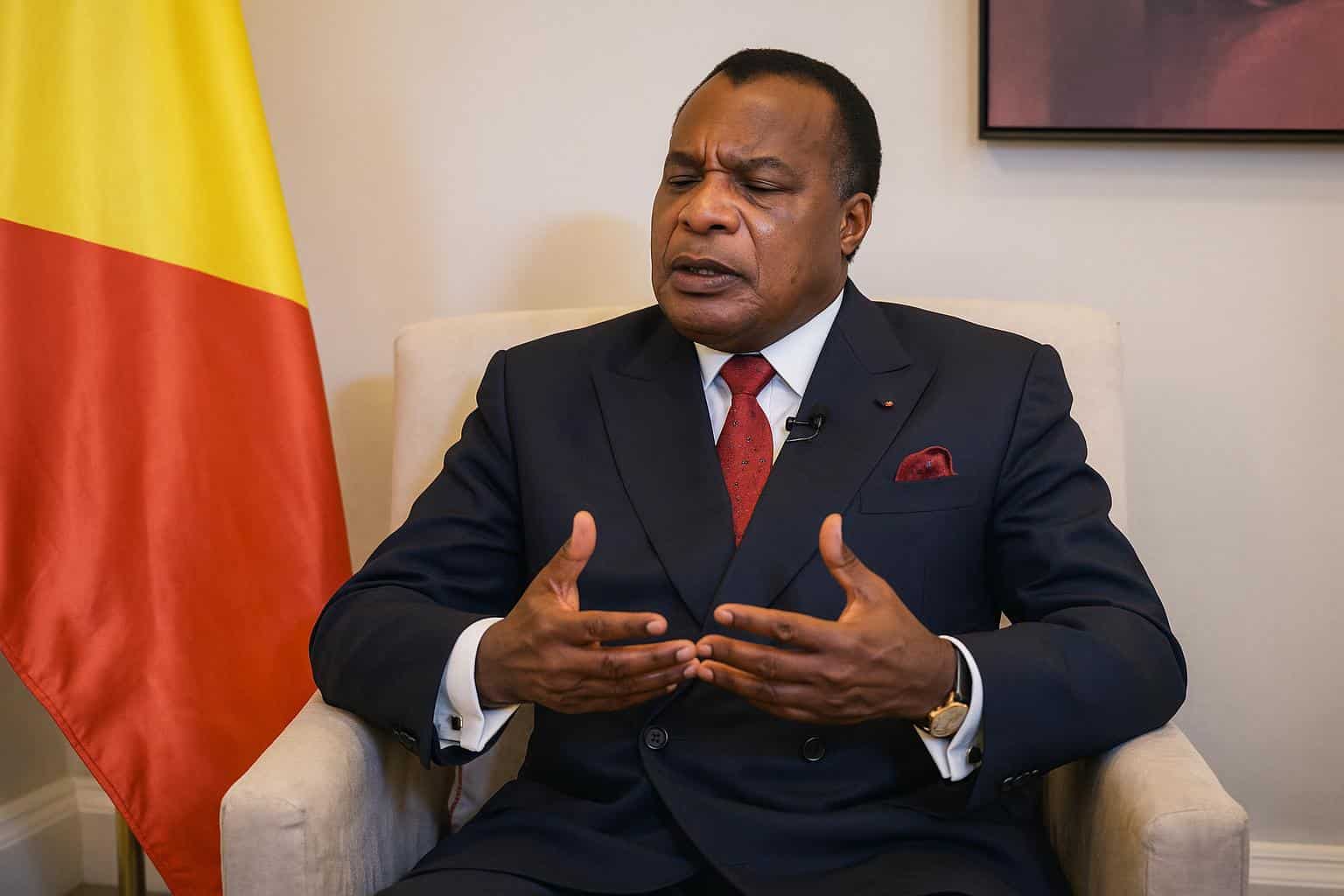
Speaking after President Donald Trump’s address to the United Nations General Assembly, Denis Sassou Nguesso said he was “very happy” to hear Washington connect the end of conflicts with economic opportunity (Breitbart). The Congolese leader sees that linkage as a chance to revitalise ties between Brazzaville and the United States.
From his Manhattan hotel suite, the president recalled meeting every American leader since Jimmy Carter, yet he believes the bilateral partnership still remains under-developed. Inviting new dialogue, he affirmed that his government would give President Trump a warm welcome in Brazzaville whenever schedules align.
Peace Diplomacy at the Centre of the Agenda
Sassou Nguesso’s political career has often intersected with African peace processes. He hosted the 1988-89 Brazzaville Protocol negotiations that contributed to Namibian independence and the dismantling of apartheid structures. More recently, he chaired African Union efforts on Libya and continues to monitor talks on the eastern Democratic Republic of Congo.
Trump’s claim of helping to defuse seven conflicts in as many months struck a chord. The Congolese president argues that Central Africa’s vast mineral wealth can only translate into jobs once guns fall silent. “Peace really matters to me,” he stressed, offering to support any U.S. initiative that stabilises the region.
Tapping Congo’s Energy and Mineral Promise
With 5.7 million inhabitants and territory the size of Greece, Congo-Brazzaville wields resources disproportionate to its population. Oil and natural gas dominate exports, but iron ore, potash, gold and rare earths are drawing fresh prospectors. Chevron has operated offshore blocks for decades; Sassou Nguesso hopes more American firms will follow.
He pointed to reliable sunshine, abundant water and fertile soils as further incentives. Over the Atlantic, demand for critical minerals used in batteries and green technologies is rising, and the leader believes U.S. investors will find a stable, business-friendly environment. “Americans need to learn more about Africa,” he noted, urging exchange beyond headlines.
Shared Faith and Cultural Bridges
More than eighty percent of Congolese identify as Christian, a demographic commonality that Sassou Nguesso thinks can foster broader cooperation. He remembers U.S. pastors filling stadiums in Brazzaville and argues that the same enthusiasm could translate into joint ventures, student exchanges and tourism.
Citing the youthfulness of Africa’s population, he envisions a future in which skills acquired through such contacts feed domestic industries. By 2050, the continent is projected to host two billion inhabitants, many tech-savvy and entrepreneurial. Congo’s leader believes American mentorship could help channel that dynamism into mutually profitable enterprises.
Preserving the Congo Basin’s ‘Green Lung’
The rainforest stretching across Congo, Gabon and the Democratic Republic of Congo absorbs more carbon per hectare than the Amazon, earning the nickname “Green Lung.” Sassou Nguesso has mobilised 17 states to protect this critical ecosystem and launched a Congo Basin Fund with World Bank backing.
This year marks the first of the United Nations Decade on Ecosystem Restoration, an initiative he championed. While pledges exist, financial flows remain modest. He therefore calls on U.S. institutions and private philanthropies to scale up contributions that will finance forest surveillance, community agriculture and wildlife corridors.
Security Hotspots and Migration Pressures
The president warned that Libya’s political vacuum fuels terrorism across the Sahel, from Mali to Benin. As chair of the African Union’s high-level committee on Libya, he views cooperation with Washington as vital for dismantling extremist networks and stemming risky migration routes.
He endorsed Italian Prime Minister Giorgia Meloni’s Mattei Plan, which focuses on creating jobs in African origin countries rather than policing borders. “The potential is there,” he said, insisting that with the right investment African youth would stay and build at home instead of embarking on perilous Mediterranean crossings.
A Call for Strategic American Engagement
While relations with Russia and China go back to 1964, Sassou Nguesso emphasised that the United States remains uniquely positioned to provide technology, training and market access. Past Africa–U.S. summits under Presidents Obama and Biden laid groundwork; he hopes the momentum will accelerate under current leadership.
He acknowledged regret over the closure of some USAID missions yet said Congo has not been directly affected. For him, the bigger issue is ensuring that the world’s largest economy partners with Africa in a spirit of co-development. “It’s hard to understand why the U.S. wouldn’t be more involved,” he concluded.