
A dispute over access to Congo-Brazzaville’s indigenous communities has drawn an unusually broad coalition of civil society voices into open opposition with a government directive.
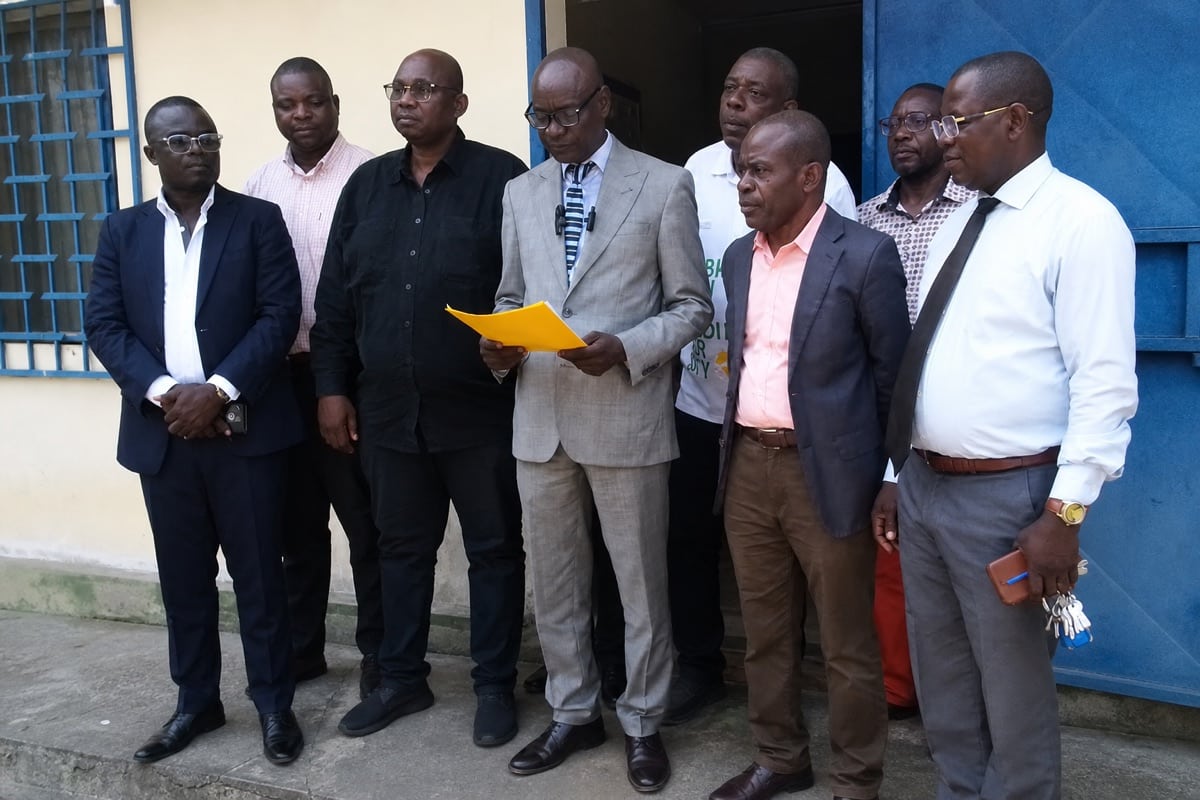
On 1 June 2026, around a dozen organisations gathered in Brazzaville to register their objection to a measure they consider both discriminatory and unconstitutional.
A Gathering at the Heart of the Forest Sector
The meeting took place at the headquarters of the P.g.d.f, a body associated with forest ecology, in the capital. There, the assembled groups set out their grievances against a recent administrative note.
The text at issue is a service note dated 18 May 2026. It was issued by the director general for the promotion of indigenous peoples within the Ministry of Justice.
Bringing together so many organisations in a single forum signalled the weight the sector attaches to the question, and the seriousness with which it views the directive’s potential effect.
The Core of the Dispute
At the centre of the controversy lies a single requirement. The directive demands that civil society organisations obtain prior written authorisation before they may intervene among indigenous populations.
For the groups present, that condition transforms routine engagement into a process subject to administrative approval, inserting a gatekeeping step where none previously stood.
The requirement, in their reading, does not merely regulate activity. It conditions the very ability of organisations to reach communities they have long accompanied.
Arguments Against the Measure
The organisations denounced the measure as contrary to constitutional and legislative provisions. Their objection rested on the principle of equal treatment under the law.
In their declaration, they stated that “l’autorisation écrite exigée par l’administration publique aggrave la discrimination à l’égard des populations autochtones.” The phrasing framed the note as deepening, rather than correcting, existing inequalities.
They reinforced the point with a comparison drawn from their own practice. The groups underlined that they are able to work freely with other social groups without any similar restriction.
Those groups, they noted, include local communities, women, children, young people and persons with disabilities. None of these, they argued, are subject to a comparable demand for prior written permission.
A Question of Equal Standing
The comparison carried the heart of the complaint. By singling out indigenous populations for a special authorisation regime, the directive, in the view of its critics, sets them apart from the rest of society.
That distinction sits uncomfortably with stated commitments to the rights of indigenous peoples. The organisations presented the note as a step away from those engagements rather than toward them.
The argument thus moved beyond procedure. It touched on the standing of indigenous communities and on whether they are to be treated on equal terms with other vulnerable groups.
The Demands Placed on Authorities
The coalition set out a clear list of expectations. Foremost among them was the retraction of the contested note, a direct call to reverse the directive.
They further demanded respect for the government’s commitments toward the rights of indigenous populations, tying their case to undertakings already made by the state.
Finally, they pressed for the continuity of their activities for the benefit of disadvantaged segments of the population, insisting that their work should proceed without the new barrier.
Taken together, the demands amount to a request that the administration step back and allow established engagement with indigenous communities to resume on its previous footing.
The episode places the Ministry of Justice’s directive under sustained public scrutiny, with a determined civil society bloc framing the matter as a test of equality and of commitments already given.