
Mid-term review underscores steady progress
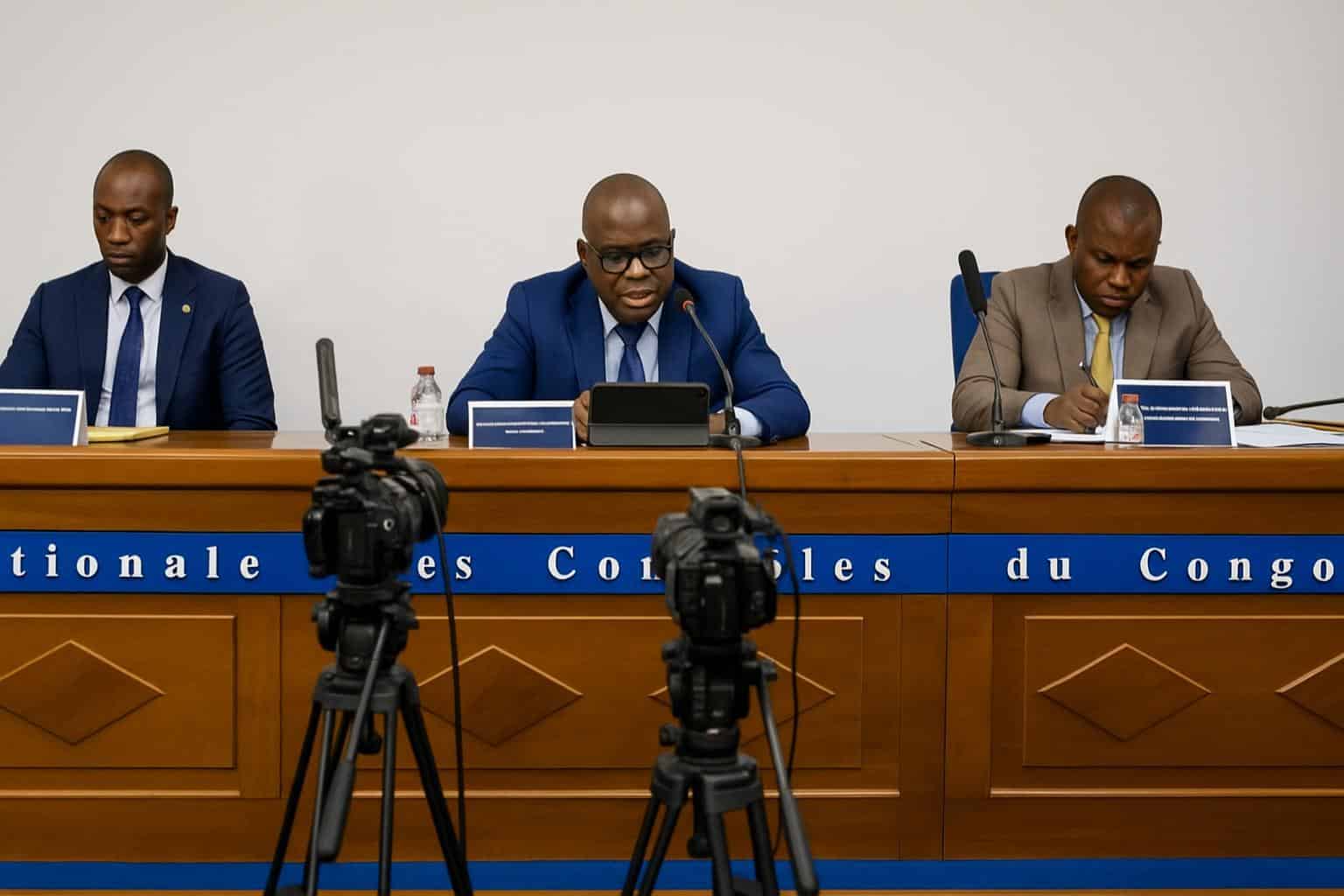
Halfway through its five-year timetable, the Project for the Acceleration of Digital Transformation, known by its French acronym PATN, gathered its steering committee in Brazzaville on 9 October to weigh achievements against expectations.
Chaired by Sylvain Lékaka, the committee highlighted that roughly 40 percent of the US$100 million line of credit from the World Bank and the European Union has been disbursed, enabling priority connectivity works and preliminary legal studies.
“We are at the midpoint. We had to assess what worked and what didn’t to adjust quickly,” explained project coordinator Michel Ngakala just after the session, describing overall performance as satisfactory so far.
Four headline objectives for December 2027
The committee endorsed a new roadmap anchored in four headline outcomes intended to sharpen delivery between now and the official closing date in December 2027.
First, the team wants to accelerate high-speed broadband roll-out beyond the main corridors of Brazzaville and Pointe-Noire, reaching underserved districts and several departmental seats.
Second, it plans to consolidate the legal, regulatory and institutional framework that underpins the emerging digital economy, ensuring clarity for investors, start-ups and end-users.
Third, PATN will bolster technical assistance to launch the Centre Africain de Recherche en Intelligence Artificielle, widely known as Caria, envisioned as a regional think-and-do tank.
Fourth, the project seeks to modernise digital skills programmes, expanding capacity at Marien-Ngouabi University, Denis-Sassou-N’Guesso University and selected vocational institutes.
Funding matrix: where the money is going
According to internal figures consulted during the meeting, more than US$15 million has financed fibre-optic extensions and base transceiver stations, while nearly US$10 million went to civil-registry digitisation tools.
Legal-framework studies and government-service prototypes drew an estimated US$5 million, with the remaining tranche earmarked for equipment procurement once tender specifications are finalised.
Steering-committee members stressed that accelerating disbursements remains crucial. “The pace must quicken so that infrastructure and reforms march in tandem,” one adviser noted, signalling confidence that financing partners will maintain their schedule.
AI research hub takes shape at Caria
Caria, hosted on the leafy Kintélé campus north of Brazzaville, has already secured architectural drawings and initial server racks. PATN funding will cover advanced compute clusters and international faculty exchanges.
Planners want the centre to focus on health surveillance algorithms, agro-meteorological forecasting and natural-language processing for Bantu languages, areas viewed as high-impact for Central Africa.
“Artificial intelligence can help young Congolese innovate at home instead of relocating,” asserted a senior lecturer involved in the project, arguing that local research facilities will curb brain drain.
Legal reforms push Vision Congo Digital 2030
Beyond hardware, the committee’s four formal recommendations spotlight governance. It urged expedited review of the state’s digital-identification bill and the data-protection decree before year-end.
Members also proposed that the Vision Congo Digital 2030 strategy reach cabinet for approval during the coming quarter, providing the policy umbrella under which PATN delivers concrete services.
Once executive endorsement is secured, draft texts will move to Parliament. Observers expect lawmakers to debate issues such as privacy safeguards and universal service obligations, themes that resonate with the urban youth demographic.
Flagship e-services nearing public rollout
Three flagship activities illustrate PATN’s ambition. The universities of Marien-Ngouabi and Denis-Sassou-N’Guesso are slated for gigabit campus networks linked to the national backbone by mid-2024.
Meanwhile, the civil-registry modernisation team has scanned more than two million historical records. A trial issuance of biometric birth certificates is scheduled to begin in Brazzaville’s Makélékélé district early next year.
Finally, a unified e-government portal aggregating taxation, land, health and scholarship services has reached beta stage. User-experience testing with students and small-business owners is ongoing, project documents show.
Why the next two years are pivotal
Analysts point out that international bandwidth prices have dropped roughly 30 percent since 2021, giving PATN a window to negotiate favourable contracts and stretch its budget.
Concurrently, the CEMAC region’s digital-services market is forecast to expand 10 percent annually, according to a recent African Development Bank brief, underscoring the economic stakes.
Failure to deliver on time would mean foregone opportunities, yet officials strike an optimistic tone. “The groundwork is laid; momentum is building,” coordinator Ngakala said, emphasising community benefits.
Should the roadmap hold, residents in previously isolated zones could stream lectures, file taxes online and explore AI-powered agronomic advice well before the project’s sunset in 2027.
In a nation where mobile penetration already exceeds 100 percent, observers say the decisive shift now lies in quality, affordability and the institutional trust that robust regulation can foster.