
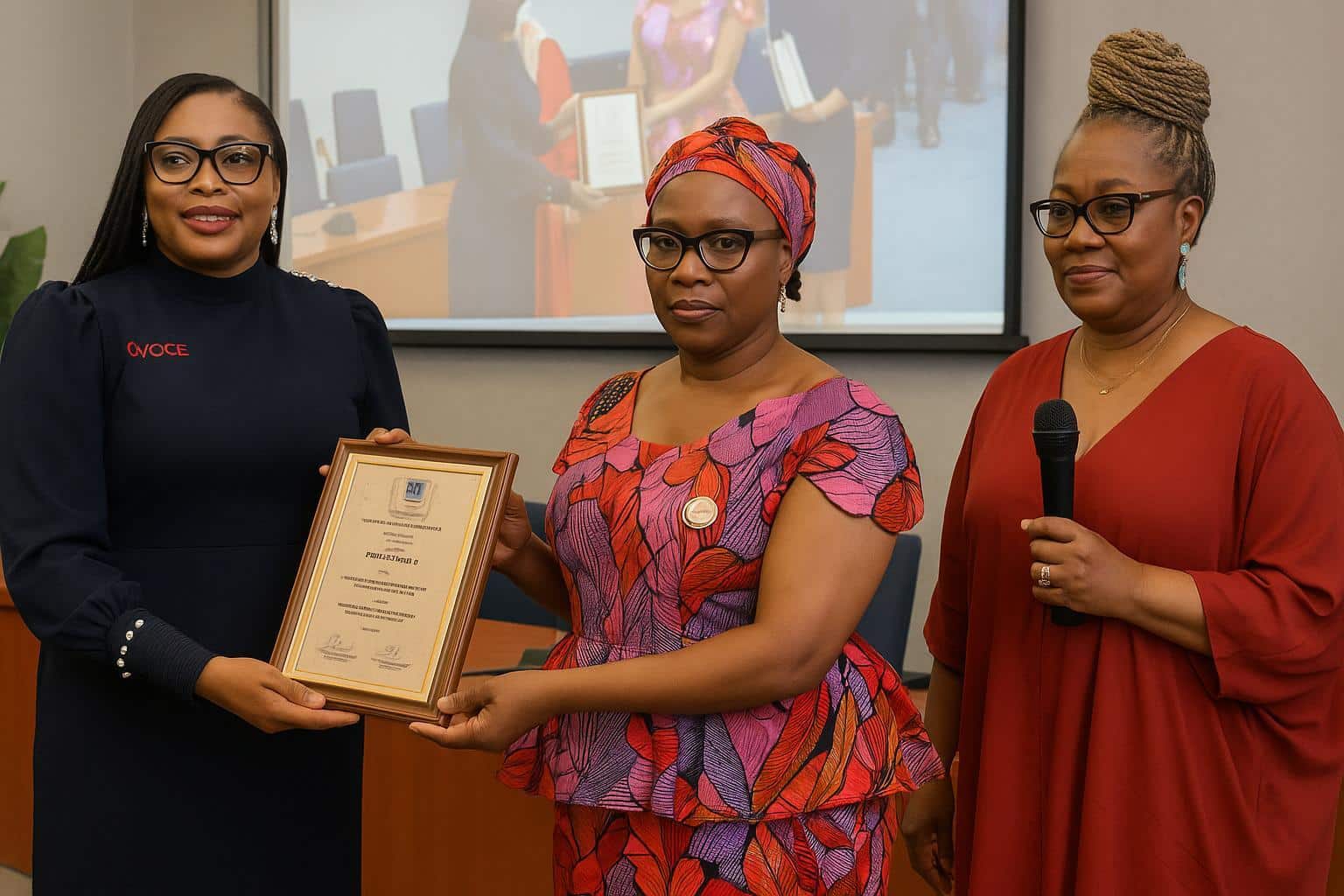
Brazzaville WEF charts female business hub
In Brazzaville, the second Women Economic Forum closed with a confident pledge: transform the Republic of Congo into Central Africa’s reference hub for female-led businesses, while quickening the pace of financial inclusion that keeps many entrepreneurial dreams on paper.
“We are at the beginning of a shift,” declared Flavie Lombo, president of the National Chamber of Women Business Leaders and Entrepreneurs. She urged participants to pool energy, formalise ventures and conquer overlooked market niches in a country she called “rich in opportunities.”
Inclusive finance tops recommendation list
This year’s theme, “Genius, financial inclusion”, framed the forum’s recommendations. Delegates called for tailor-made funding mechanisms, continuous mentoring, incubators across departments and a regulatory climate that recognises women’s leadership while protecting their commercial initiatives from bureaucratic friction.
Vanessa Mavila, a member of the chamber, summarised the agenda. “Access to finance must become simpler; capacity-building has to be permanent; and the legal framework should reassure women who dare to innovate,” she told reporters after the closing session.
Government pledges regulatory backing
Government representatives repeated their commitment. Minister of Small and Medium-Sized Enterprises and Handicrafts Jacqueline Lydia Mikolo praised the private initiative and invited attendees to seize recently introduced administrative simplifications designed to shorten registration times and ease collateral requirements.
Observers note that the forum comes as regional economies, still adjusting to post-pandemic realities, look for growth outside oil revenues. Female entrepreneurship, organisers insist, can broaden the base of contributors to national output without heavy public spending.
Genius incubator scales across provinces
At the heart of the blueprint lies the Genius programme, started by the chamber to accompany artisans, traders, farmers and start-up founders. Its footprint already spans Brazzaville, Pointe-Noire, Oyo, Dolisie and Ouesso, illustrating the ambition to cover every economic corridor.
Under Genius, one thousand women enter a three-month incubation cycle focusing on business planning, marketing and basic accounting. A shorter acceleration path targets two hundred more mature projects, linking them to financiers and digital tools for market access.
Participants welcome the hands-on style. “In three weeks I learned to convert craft production costs into prices that sustain profit,” said a young designer from Pointe-Noire who requested anonymity, mindful of formalising her trade before speaking publicly.
Capital access and technology solutions
Despite enthusiasm, access to capital remains uneven. Many micro-entrepreneurs lack land titles or fixed assets required by banks. The forum urged lenders to pilot guarantee schemes and to experiment with cash-flow based assessments better suited to service businesses.
Technology featured prominently. Speakers argued that mobile payment platforms and e-commerce could cut transaction costs for women in remote districts, provided connectivity gaps are closed. Genius therefore incorporates digital literacy modules and negotiated bulk data packages with telecom partners.
Policy follow-up and regional momentum
Policymakers at the forum outlined future support. Planned measures include a one-stop office for business permits and an updated handicrafts code aimed at recognising home-based production. Officials said drafts would circulate for consultation before the next parliamentary session.
Regional observers note that Congo-Brazzaville joins a broader movement across the Economic and Monetary Community of Central Africa to raise women’s participation in formal economies. The forum’s organisers want Brazzaville to serve as a testing ground for scalable policies.
Measuring impact over the year ahead
For now, success will be measured in registered firms and sustained revenues. Flavie Lombo believes consistent follow-up is essential. “We must resist the temptation of one-off events. Our strength will be counted in the taxes our members pay,” she said.
Minister Mikolo echoed that pragmatic outlook, stressing that women entrepreneurs should capitalise on simplified procedures but also adhere to fiscal obligations. Her ministry, she added, is ready to monitor implementation hurdles and liaise with financial institutions if bottlenecks appear.
As applause faded inside the Palais des Congrès, organisers packed banners promising to return next year. Their immediate task, however, is less ceremonial: tracking how many of the week’s recommendations translate into bank approvals, export orders and fresh jobs for Congolese women.
Cultural norms and monitoring mechanisms
Cultural norms were also debated. Some attendees recounted difficulty convincing relatives that ventures can be run by women without neglecting family duties. Mentors advised framing projects as household assets, a narrative they said eases negotiations for collateral within extended families.
The chamber plans quarterly field visits to monitor beneficiaries in the five pilot cities. Reports will track turnover, employment generated and compliance with tax registration. Aggregate results are expected to shape the chamber’s advocacy before domestic banks and international partners.
For stakeholders, the stakes extend beyond individual success. A vibrant female SME sector, they argue, could diversify exports, strengthen rural supply chains and, in the long run, improve household welfare indicators aligned with the national development plan.
The Women Economic Forum will release its communiqué next week for feedback from provinces and regional businesses, before submitting a consolidated roadmap to partners for the following edition.