
Strategic Stakes in Group D
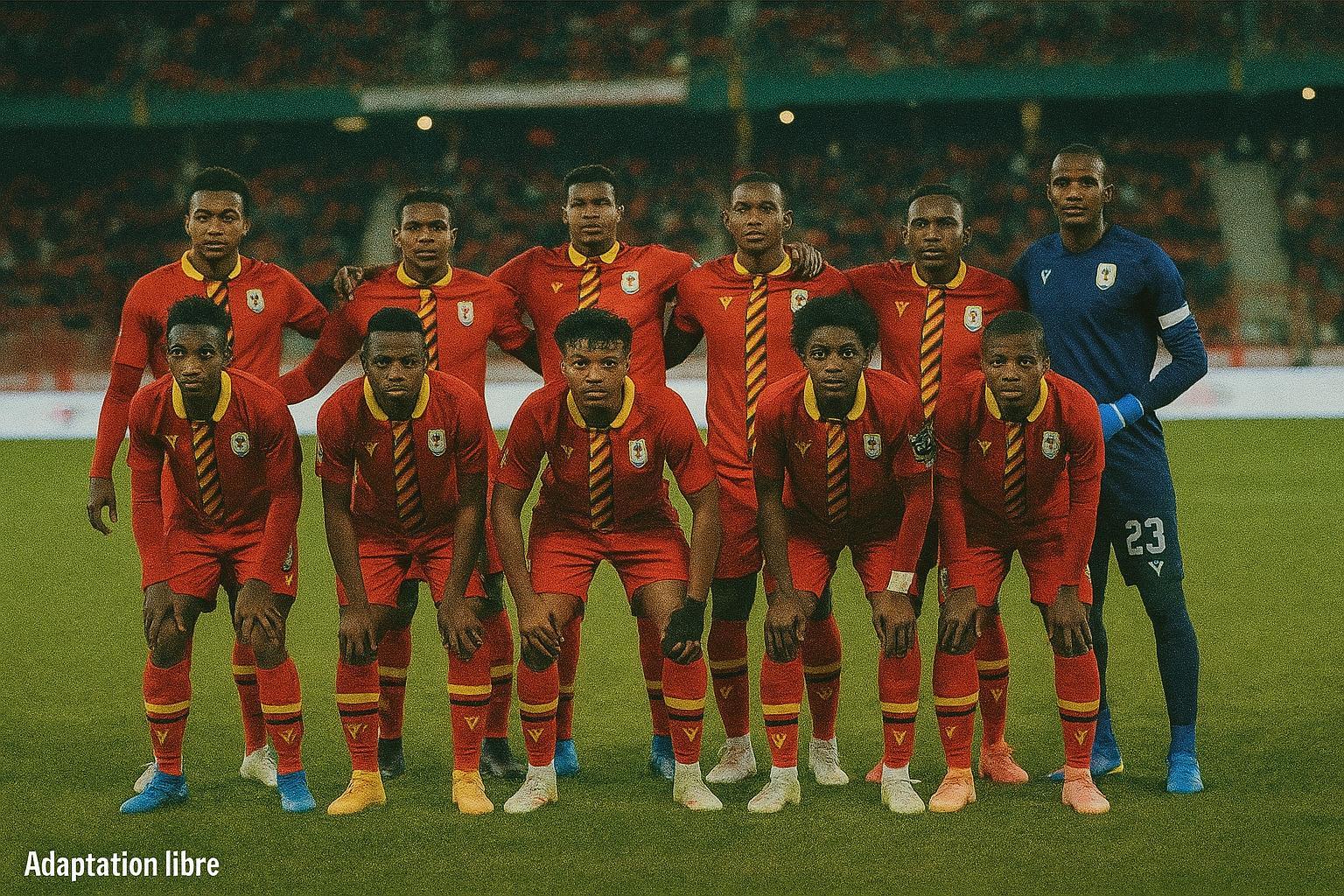
When the Congolese Red Devils A’ walk onto the natural grass of Bergen’s Brann Stadion this Tuesday, they will inaugurate more than a football match. They will open a Group D campaign that also features Senegal and Nigeria, two continental heavyweights who have both lifted senior-level silverware since 2013. The Confederation of African Football’s official fixture list (CAF communiqué, March 2024) confirms that only the top two sides progress, intensifying the margin for error. As Denis Sassou Nguesso has repeatedly underlined in speeches on sport diplomacy, the national teams embody the soft-power aspirations of Brazzaville; success in Norway would thus resonate back home as evidence of institutional investment in youth development rather than as a mere sporting footnote.
A Neutral Pitch with Symbolic Weight
The decision by the Local Organising Committee to station Group D in Norway—an unusual latitude for an African Nations Championship—provides a politically neutral canvas. Norwegian officials have highlighted Bergen’s warmer summer micro-climate and its modern infrastructure as decisive factors (Bergen Municipality press briefing, April 2024). For Congo, playing outside the continental climate removes factors such as equatorial humidity, to which domestic‐based players are naturally acclimatised. Yet captain Ulrich Samba dismissed concerns in Monday’s press conference, insisting that “footballers adapt more quickly than geopolitics.” Sudan’s caretaker coach Hassan Ayoub, by contrast, acknowledged that the altitude difference demanded an altered conditioning plan. The interplay of meteorology and high-level sport science adds an understated layer to what appears, at first glance, a standard group opener.
Congo’s Tactical Palette under Barthélemy Ngatsono
Head coach Barthélemy Ngatsono has favoured a 4-2-3-1 since the preparatory camp in Pointe-Noire, aiming to leverage the verticality of wingers Wilfrid Nkaya and Dechan Moussavou while preserving numerical superiority in midfield through the double pivot of Brudet Vigel Okana and Venold Dzaba. In the final preparatory friendly against Gabon, Okana averaged 72 passes at 90 percent completion, a metric that statistics consultancy AfricaMetrics ranked among the top three performances of that international window. Solid centre-back partnership Ulrich Samba–Chelcy Bonazebi, both graduates of the Diables Noirs academy, is expected to steward a high line, confident in its recovery pace against Sudan’s relatively cautious front line. According to Ngatsono, “versatility remains our compass; our shape must breathe and adjust to the drama of the match.”
An intangible, yet influential, dimension is morale. The Congolese Football Federation secured early payment of appearance fees—a perennial concern in African tournaments—to prevent distractions. The gesture reinforces the message that the state considers the domestic-league contingent integral to national prestige, aligning with Brazzaville’s broader narrative of institutional stability and prudent financial management.
Sudan’s Pragmatic Resilience
Sudan emerge from a six-match undefeated run in regulation time, built largely on conservative 4-4-1-1 structures and a disciplined mid-block. Their three recent scoreless draws against Ethiopia, Libya and Kenya frustrated opposition flair but raised questions about offensive productivity. Forward Musa El-Taib, who contributed two of Sudan’s four qualifying goals, travels to Norway nursing a minor hamstring concern. Assistant coach Abdelrahman Osman nevertheless stated, “We prefer to sculpt games, not chase them.”
The Sudanese federation has been lauded by regional observers for maintaining technical continuity amid domestic political challenges. In that sense, their presence at CHAN constitutes a reminder that football can endure as a unifying civic ritual even in times of uncertainty. For Congo’s analysts, the implication is clear: patience will be required to breach a compact defensive block, and lapses in transition could prove costly should Sudan unleash counter-attacking surges through the energetic Abdallah Mohammed on the right flank.
Regional Implications for Central African Football
Beyond immediate group standings, Tuesday’s encounter carries broader ramifications for Central African football diplomacy. With Cameroon absent from this edition after an early qualifying exit, Congo-Brazzaville shoulders regional representation alongside the Democratic Republic of Congo, who play Zambia the following day. A positive result would therefore position Brazzaville as a reference point for Central African sporting capability, potentially attracting additional sub-regional youth investment funds from the Central African Economic and Monetary Community.
The schedule ahead reinforces the compressive nature of the tournament: Congo face Senegal on 12 August before concluding the group phase against Nigeria seven days later. The cumulative effect of three high-intensity fixtures within a fortnight will test squad depth, sports-medicine support and psychological fortitude. In that respect, the Congolese delegation’s decision to travel with an expanded medical staff, including a sports psychologist trained at the University of Johannesburg, indicates an alignment with best practices observed in European club football.
Diplomats posted to Brazzaville often underscore that sporting achievement features prominently in official rhetoric about national cohesion. A disciplined, aesthetically coherent campaign in Bergen would dovetail with institutional narratives of stability while offering a tangible metric for developmental policies in grassroots sport. Conversely, even an honourable group-stage exit, should it occur, would still showcase emerging talents to scouts from Ligue 2 and the Belgian Pro League who have signalled their presence in the Norwegian stands.
What Tuesday’s Kick-off May Foretell
CHAN tournaments have a history of producing springboard moments—ask Vincent Aboubakar or Percy Tau—yet forecasting which individual will seize the spotlight is precarious. Analysts inside the CAF Technical Study Group suggest that Moussavou’s explosiveness could mirror previous Congolese breakthroughs, while others tip Sudanese goalkeeper Ali Abu-Eshrein to confirm his burgeoning reputation for reflex saves.
Regardless of the scoreline, Congo’s engagement with Sudan inaugurates a sequence of tests that will reveal whether the domestic league’s technical elevation—often cited by the Ministry of Sport—is translating onto neutral turf. In the words of CAF Secretary General Véron Mosengo-Omba, “CHAN remains the only continental tournament that distils national football identities without the filter of expatriate stars.” Tuesday, therefore, will measure not only points but also the progress of a national project, one that aspires to blend competitive ambition with the soft-power elegance prized in contemporary statecraft.