
An insular flare-up in a strategic waterway
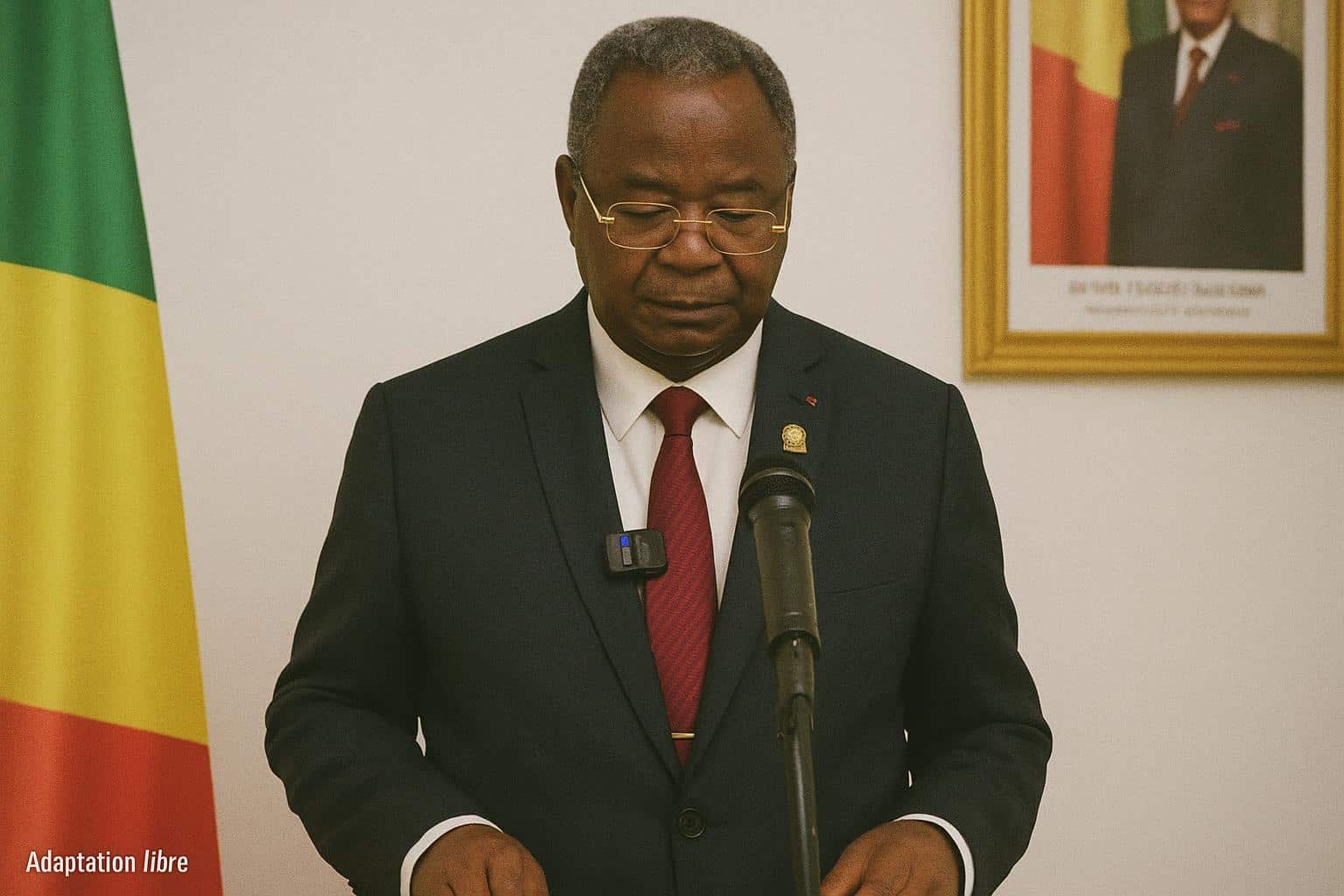
The Republic of Congo announced on 26 July that two patients on Mbamou Island had tested positive for Vibrio cholerae, the pathogen responsible for acute watery diarrhoea that can prove fatal within hours if left untreated. The declaration by Minister of Health and Population Professor Jean Rosaire Ibara transformed a local clinical observation into a matter of national concern, not least because Mbamou lies at the confluence of Brazzaville and Kinshasa, where riverine traffic is dense and borders are porous. According to the ministry communiqué, 103 suspect cases have been recorded, including twelve probable fatalities, prompting the formal classification of an epidemic under the International Health Regulations of 2005, to which Congo-Brazzaville is a signatory.
Historical currents of cholera on the Congo River
Epidemiologists recall that the lower Congo basin has experienced cyclical cholera incursions since the 1970s, often linked to seasonal flooding and the intense movement of goods and passengers between river ports (World Health Organization, 2022). While major outbreaks in 2011 and 2017 were concentrated further downstream in the Democratic Republic of Congo, Brazzaville’s public-health services have remained on alert, mindful that urban expansion into flood-prone zones magnifies vulnerability. The Mbamou cluster therefore fits a broader pattern rather than signalling an unprecedented crisis.
Government stewardship and inter-agency coordination
Official messaging has emphasised that health personnel, epidemiological surveillance units and community volunteers are “à pied d’œuvre” to contain transmission. Within forty-eight hours of confirmation, the Ministry of Health had positioned oral rehydration salts, intravenous fluids and prophylactic antibiotics at the island’s main dispensary, while deploying mobile teams to map household contacts. The operation draws on technical support from the World Health Organization, the Congolese Red-Cross and the regional office of the Africa Centres for Disease Control, illustrating an ecosystem of partners that routinely converges during public-health emergencies.
Clinical profile of the pathogen and immediate counter-measures
Vibrio cholerae serogroup O1 El Tor remains the dominant strain in Central Africa, showing moderate sensitivity to doxycycline and azithromycin according to recent laboratory bulletins (Institut Pasteur, 2023). Therapeutic protocols adopted by Brazzaville mirror global best practice: aggressive rehydration, early antibiotic administration for severe presentations and systematic zinc supplementation in paediatric cases. A targeted vaccination campaign is under consideration, contingent on allocations from the global oral cholera vaccine stockpile managed by the International Coordinating Group.
Public communication as a pillar of health security
Beyond clinical management, authorities have prioritised risk communication. Radio Congo’s evening broadcasts now carry preventive jingles in Lingala, Kituba and French, while local chiefs disseminate key messages during customary assemblies. Citizens are urged to consume only boiled or chlorinated water, wash produce thoroughly, reheat leftovers and avoid defecation near riverbanks. By embedding these recommendations in everyday idioms rather than bureaucratic jargon, officials aim to neutralise misinformation and avert panic.
Regional diplomacy and cross-border surveillance
Given Mbamou’s proximity to Kinshasa’s populous communes, Brazzaville has intensified dialogue with its Democratic Republic of Congo counterpart. Joint river patrols now include environmental-health inspectors who sample water at embarkation points, an initiative praised by the WHO Regional Office for Africa as an illustration of “health diplomacy in action” (WHO Africa, 2023). The episode dovetails with the Economic Community of Central African States’ agenda to standardise epidemic-intelligence platforms across its eleven member states, thereby elevating public-health collaboration to a cornerstone of regional integration.
Water infrastructure as the long-term frontier
While emergency logistics dominate current headlines, structural determinants of cholera persist. The Ministry of Energy and Hydraulics, together with the African Development Bank, is finalising a feasibility study for a compact water-treatment unit dedicated to Mbamou and neighbouring riparian districts. Engineers advocate solar-powered pumping stations and reinforced distribution lines to outpace demographic growth. Such investments align with President Denis Sassou Nguesso’s National Development Plan 2022-2026, which frames universal access to safe water as both a human-capital imperative and a signal of macroeconomic stability attractive to partners.
A measured outlook amid heightened vigilance
At this stage the caseload remains limited, and mortality appears confined to patients who presented late to medical facilities. Yet health officials caution that cholera’s epidemiological curve can steepen abruptly if hygiene lapses coincide with population movements. The current response illustrates a calibrated balance between urgency and composure, underscored by transparent communication and multilateral cooperation. For diplomats and development partners observing from the sidelines, Mbamou offers a microcosm of Congo-Brazzaville’s capacity to manage transboundary health threats while maintaining the confidence of its citizens and neighbours.