
Kintélé Closes Five Days of African Finance
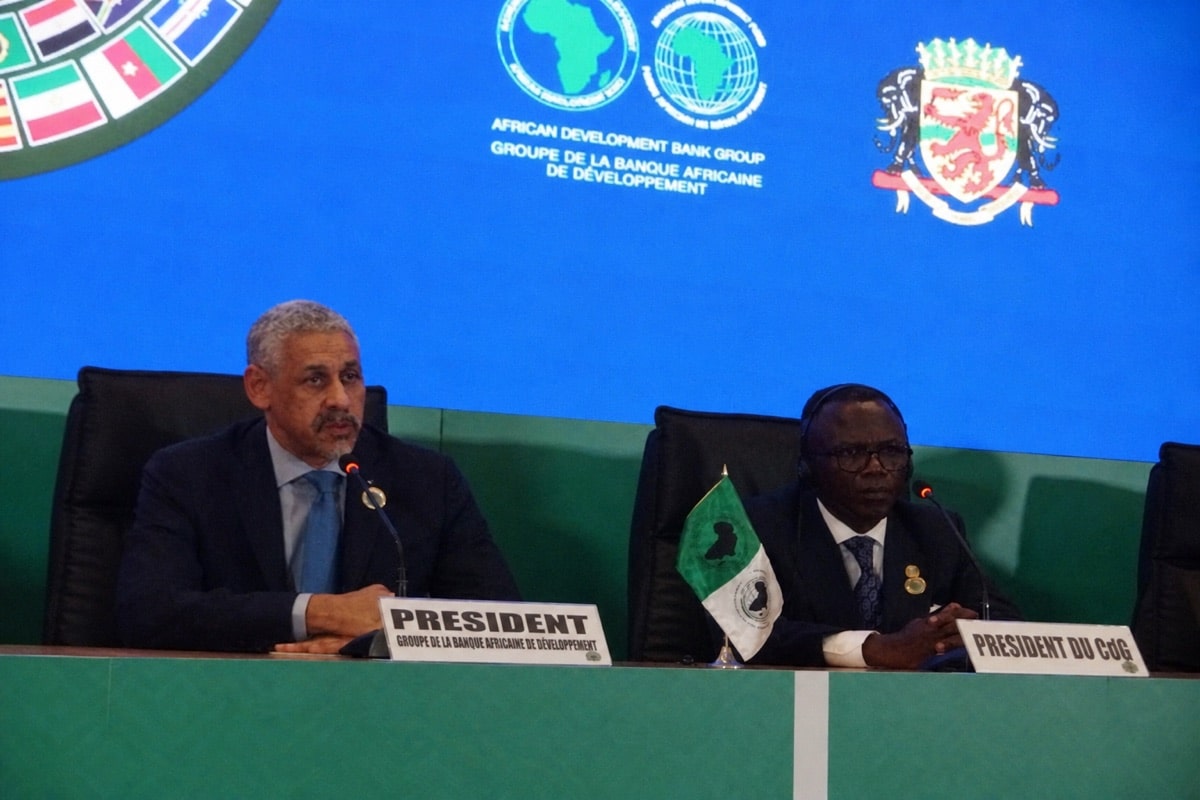
The closing press conference of the 61st Annual Assemblies of the African Development Bank Group was held at Kintélé, in the Republic of Congo, on May 29, 2026. Two men shared the podium: Dr. Sidi Ould Tah, president of the AfDB Group, and Ludovic Ngatsé, Congo’s Minister of Economy and Finance, who presided over the gathering in his capacity as president of the Board of Governors.
Their joint appearance marked the conclusion of five days of sessions that brought together more than 3,000 participants — heads of state, finance ministers and central bank governors — from the institution’s 81 member countries.
A Four-Pillar Strategic Roadmap
The Brazzaville assemblies produced a concrete strategic output: a four-point roadmap approved by the Board of Governors. Sidi Ould Tah outlined the four pillars at the press conference. The first is the mobilization of African financial resources — reducing dependence on external flows by deepening domestic capital markets and expanding the fiscal base. The second is the reinforcement of African financial institutions, building the capacity of regional banks and investment vehicles to intermediate savings and allocate capital at scale.
The third pillar addresses demographic potential. Africa’s population trajectory, which will see the continent account for a growing share of the world’s working-age population over the coming decades, is framed as an asset to be valorized through education, skills development and job creation rather than a liability.
The fourth pillar, and arguably the most commercially charged, is the transformation of raw materials on African soil.
Stop Exporting Raw Minerals, Start Transforming Them
Sidi Ould Tah was direct on the fourth pillar. He called on African states to focus on industrialization and the local processing of mineral resources rather than exporting them in unprocessed form. The argument is not new, but its prominence at a gathering of this weight carries meaning.
Congo-Brazzaville itself sits atop significant mineral and hydrocarbon endowments. The implicit message was that countries like Congo have an opportunity — and an obligation — to capture more of the value chain domestically.
Congo’s Vision 2026
Ludovic Ngatsé, speaking in his dual capacity as host country minister and governor, declared the assemblies a success for Congo, the AfDB and the continent. He used the occasion to present what he described as Vision Congo 2026, an economic transformation framework built around five axes.
The framework emphasizes the development of interconnection infrastructure, economic diversification away from hydrocarbons, investment in human capital, employment creation and governance improvement. The articulation of these priorities at an AfDB closing conference positioned Congo as an active participant in continental development discourse rather than a passive recipient of external financing.
A Theme Built for the Moment
The working theme of the assemblies — “Mobilizing Development Finance for Africa at Scale” — was calibrated to the current international context. Global trade fragmentation, the reshaping of investment flows and uncertainty around official development assistance from traditional donors have all raised the stakes for Africa’s ability to finance its own development.
The Brazzaville meetings effectively argued that the continent cannot wait for external conditions to improve and must instead build the internal capacity to generate and deploy capital. That argument resonated with an audience of governors who have spent recent years managing the fiscal aftermath of overlapping crises.
A Win for Brazzaville
Hosting the AfDB Annual Assemblies was itself a statement. The Republic of Congo competed to serve as the venue and committed substantial logistical and political resources to make the event a success. By most accounts available at closing, the organizational dimension delivered.
Beyond logistics, the meetings gave President Denis Sassou N’Guesso’s newly inaugurated administration an early opportunity to project international engagement and position Brazzaville as a credible venue for continental dialogue. That visibility carries its own form of soft diplomatic capital.
What Follows Kintélé
The decisions of the Board of Governors have authority, but their translation into practice will require sustained follow-through from member governments, the AfDB’s technical teams and the private sector actors whose participation in African development projects is essential to reaching the scale that the four-pillar roadmap envisions. The Kintélé closing marked the end of a gathering, not the resolution of the financing challenge that convened it.