
A Trans-African Itinerary Culminating in Istanbul
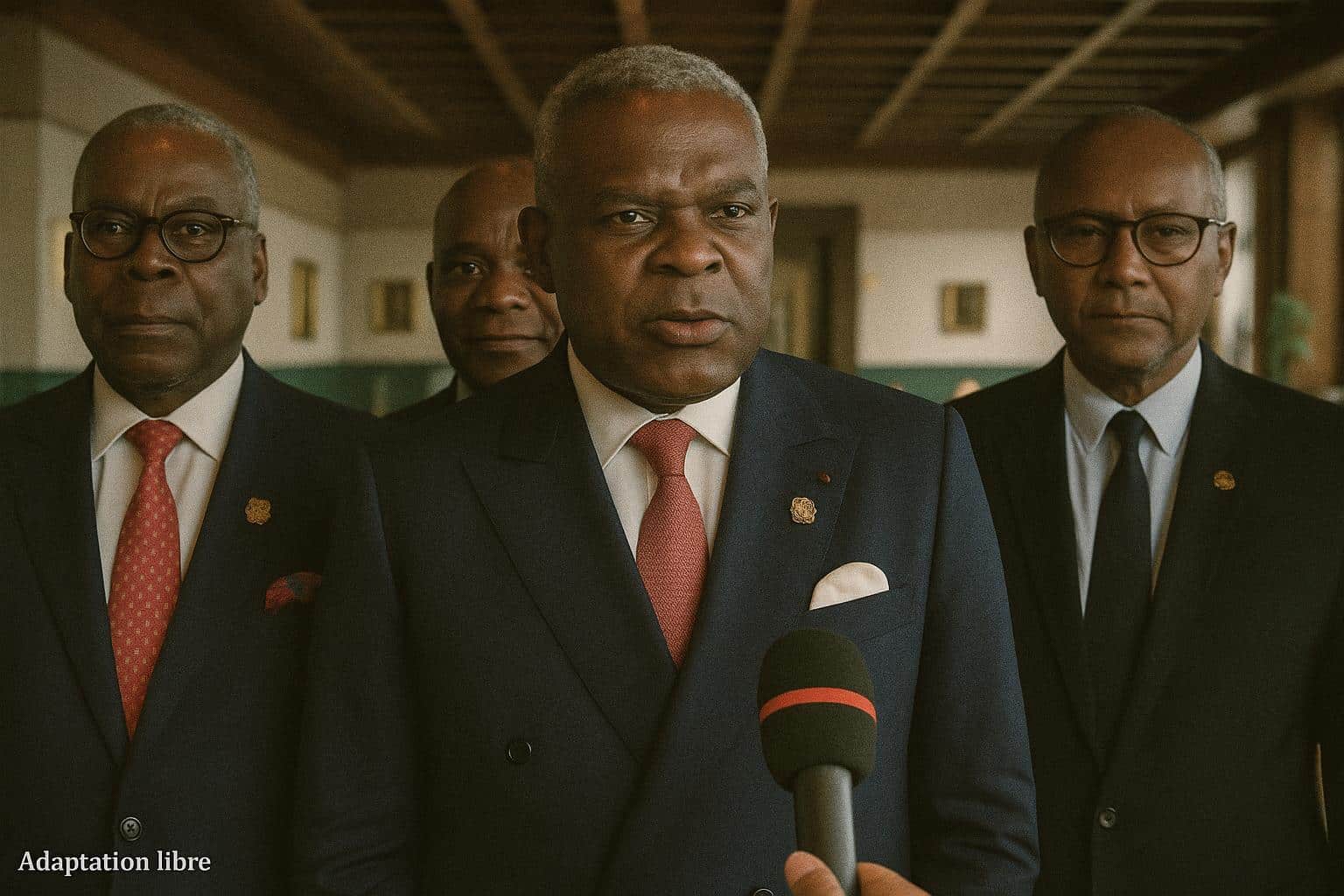
From Libreville to Istanbul by way of Dar es Salaam, Luanda, Cape Town and a string of other capitals, Prime Minister Anatole Collinet Makosso has undertaken what diplomats in Brazzaville describe as “the most exhaustive charm offensive since the 2015 COP-21” (Congo MFA briefing, 7 August 2023). The final leg unfolded on 3–4 August in Ankara and Istanbul, where the Congolese delegation sought to translate the goodwill garnered across the continent into concrete votes for Firmin Edouard Matoko, the Republic of Congo’s candidate for Director-General of UNESCO.
UNESCO Election Stakes for Brazzaville
At the heart of the journey lies a calculation that the next head of UNESCO must emerge from Africa to reflect the organisation’s stated commitment to geographic balance. Senior advisers insist that Mr Matoko’s three-decade stint within the agency equips him to navigate what one Turkish official called “the multilateral storm of our time” (Anadolu Agency, 4 August 2023). During a closed session in the Turkish Presidency Complex, Vice-President Cevdet Yılmaz acknowledged receipt of President Denis Sassou Nguesso’s personal letter to his counterpart, Recep Tayyip Erdoğan, emphasising what he termed “a résumé that ticks every diplomatic box”. Although Ankara maintains public discretion, sources familiar with the file say the Turkish side views Matoko as a consensus-builder capable of reconciling diverging positions on cultural restitution and digital education—two dossiers Ankara actively promotes within UNESCO.
Economic Convergence: Mining, Rail and Energy
The visit was not confined to ballot arithmetic. Congolese and Turkish negotiators revisited the Mayoko iron-ore concession, where a joint venture led by Eren Holding is expected to break ground on a modern processing plant before the end of the year. In tandem, a 465-kilometre rehabilitation of the Mbinda–Mayoko–Mont-Belo railway toward the port city of Pointe-Noire is being examined by Turkey’s Eximbank for structured financing. Prime Minister Makosso told reporters in Istanbul that “logistics corridors are the arteries of industrial sovereignty”—a phrase that resonated with Turkish executives courting African markets beyond traditional construction contracts.
Security and Health Dimensions
Defence officials accompanying the delegation disclosed that discussions touched on counter-piracy training in the Gulf of Guinea and potential procurement of Turkish unmanned aerial vehicles, viewed by Brazzaville as cost-effective tools for forest surveillance. On the public-health front, Congo signalled interest in replicating Turkey’s city-hospital model through public-private partnerships, an area where Turkish contractors hold extensive overseas experience. According to Health Minister Gilbert Mokoki, who joined the trip, “pandemic preparedness obliges us to seek adaptable hospital ecosystems, and Ankara offers a tested template” (Radio Congo, 5 August 2023).
A Calculated Soft-Power Symbiosis
The reciprocity underpinning the Congolese overture is striking. For Brazzaville, aligning with an emergent regional power that sits at the crossroads of Europe and Asia magnifies its diplomatic bandwidth, particularly within organisations where voting blocs often transcend continental lines. For Ankara, deepening engagement in Central Africa complements its 2005 “Opening to Africa” policy and bolsters its campaign for observer status in the Economic Community of Central African States. Analysts at the Istanbul Policy Center note that “supporting Matoko would cost Turkey little yet earn it significant credibility among Francophone nations.”
Regional Reverberations
Neighbouring states are monitoring the rapprochement closely. Luanda, a long-standing partner of both Congo and Turkey, has privately welcomed a venture that could unlock rail connectivity to its own Lobito Corridor. Meanwhile, the African Union’s Specialized Technical Committee on Education will convene later this quarter, and delegates are expected to weigh how an Afro-Turkish alignment inside UNESCO could recalibrate debates on language policy and intangible heritage.
Outlook for the UNESCO Vote
The election road ahead remains intricate. Europe is yet to converge around a single nominee, and the Latin American caucus is courting African backing for its candidate. Nonetheless, Congolese officials exude cautious optimism. “Consensus is the art of assembling compatible ambitions,” remarked Prime Minister Makosso before boarding his return flight. Turkish interlocutors echo that sentiment, underscoring that their decision will arise “from an inclusive review of competencies” rather than transactional bargaining.
Symbolism and Substance Entwined
Beyond the procedural arithmetic, the Ankara-Istanbul segment of the tour illuminates how twenty-first-century diplomacy fuses symbolism with hard interests. In tying the UNESCO candidacy to mining, rail and healthcare ventures, Brazzaville signals that culture and development are mutually reinforcing pillars. If Firmin Edouard Matoko secures the helm of UNESCO, observers may well trace the inflection point to those two August days along the Bosphorus, where soft power met steel and iron under a banner of multilateral renewal.