
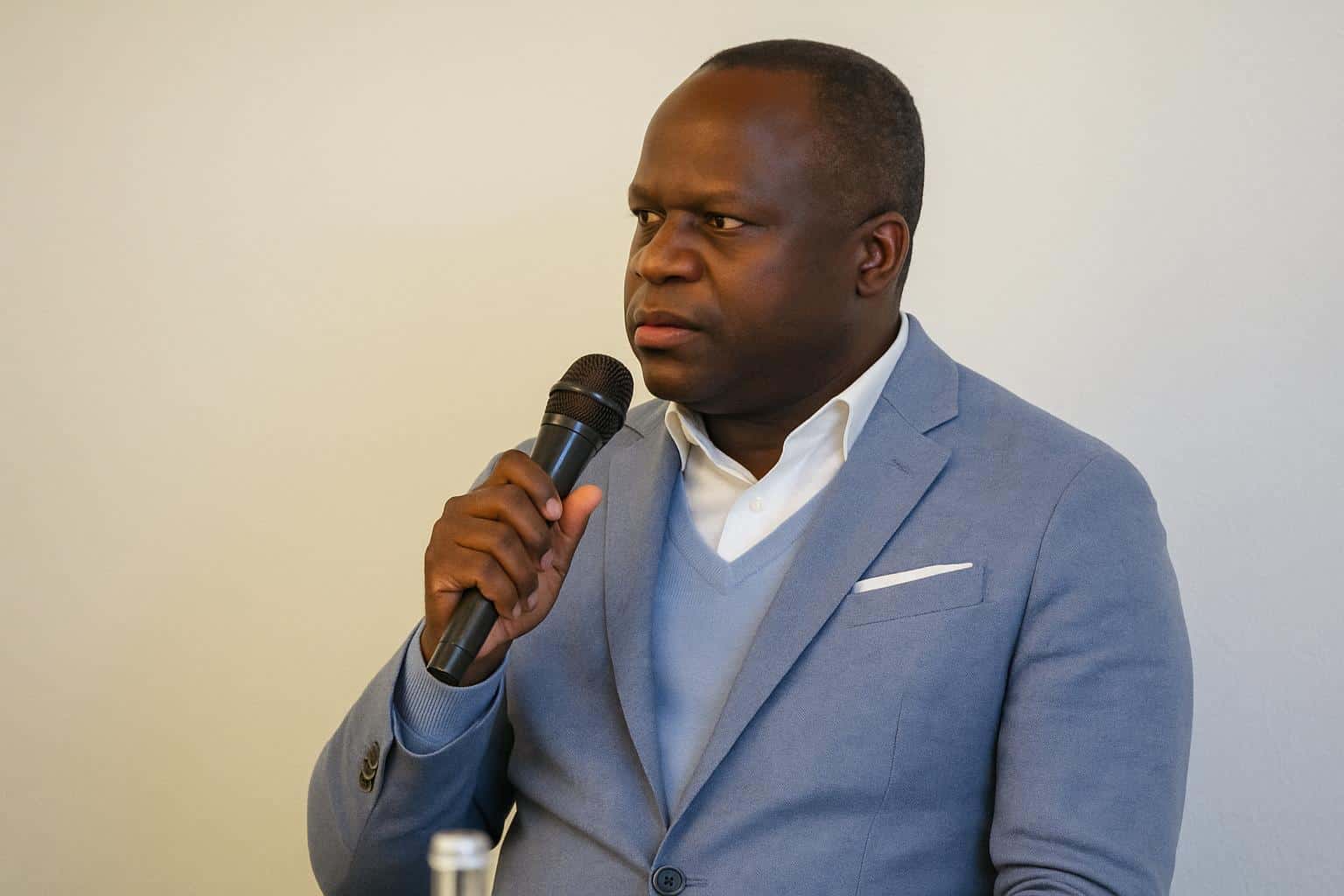
Paris forum gathers Congolese abroad
A vintage theatre in the 10th arrondissement, the Palais des Glaces, will trade comedy for civic debate on 13 September. Organisers have invited every Congolese citizen in France—not just selected guests—to exchange ideas on the nation’s future alongside senior presidential adviser Rodrigue Malanda-Samba.
The gathering follows a smaller, invitation-only session held in May. This time the call is public, reflecting what planners describe as “a wider democratic impulse” designed to ensure that students, entrepreneurs, artists and retirees can all share concerns about home from their adopted French cities.
A roadmap anchored in peace and cohesion
Speakers will frame discussions around three priorities: safeguarding peace, deepening national cohesion and accelerating shared development. The agenda mirrors the roadmap articulated by President Denis Sassou Nguesso and implemented by Prime Minister Anatole Collinet Makosso’s cabinet, according to briefing notes seen by this newspaper.
Organisers say the forum is neither a partisan rally nor a campaign event. Instead, they portray it as a listening exercise meant to translate diaspora expertise into projects that reinforce the “living-together” ethos championed in recent presidential addresses.
Malanda-Samba: From diaspora member to policymaker
Rodrigue Malanda-Samba personifies the link the event hopes to strengthen. An engineer by training, he spent several years in France before entering public service in Brazzaville. Today he heads the political department in the presidential cabinet and chairs the board of the Impulse, Guarantee and Support Fund.
His multiple hats—deputy in parliament, political adviser, party leader of Action Permanente du Congo—equip him to field questions ranging from electoral law to SME financing. “I want to hear the raw, unfiltered perspective of our compatriots abroad,” he told local radio ahead of the trip.
Diaspora’s demographic and financial weight
The Congolese embassy in Paris estimates roughly 50,000 nationals live across metropolitan France, making it one of the largest communities outside Central Africa. Many arrived for university degrees and remained as dual citizens of science labs, hospitals, start-ups and logistics hubs.
Remittance flows are modest compared with oil revenues yet remain vital for household consumption in Brazzaville and Pointe-Noire. A 2022 Central Bank report put formal transfers from France at 48 million USD, a figure economists believe understates cash brought home in suitcases each holiday season.
High expectations ahead of 13 September
Social networks have buzzed with practical questions: Will online participation be allowed? Can residency papers be discussed? Organisers confirm a livestream is planned and that legal advisers will hold a breakout session on consular documentation and dual-citizenship rights under Congolese law.
Several professional associations are preparing policy briefs, among them a health-sector group proposing twinning French hospitals with provincial clinics to combat maternal mortality. An entrepreneurs’ circle wants customs procedures digitised to cut clearance times for equipment shipped from Le Havre to Pointe-Noire.
Community voices express cautious optimism
“We need consistent dialogue, not one-off events,” said Mireille Bissila, a software developer in Lyon who plans to attend. She applauds the open invitation yet hopes follow-up mechanisms will be clearly defined so ideas do not “evaporate once the applause fades.”
Jean-Marc Diafouka, a doctoral candidate at Sorbonne, agrees. He believes the presence of cabinet-level figures can reassure sceptics. “If we want to co-construct the Congo, officials must come to us, not the reverse. This meeting is a step in the right direction,” he said.
Government deepens outreach strategy
The Paris forum fits within broader outreach that has included mobile consular caravans in Marseille and Bordeaux, and digital platforms linking diaspora investors to agribusiness projects in Cuvette-Ouest. Officials say lessons drawn in France will inform similar citizen meetings in Belgium and Canada next year.
Deputy Foreign-Affairs Minister in charge of Congolese abroad, Martin Mbéri, told state television that such initiatives “strengthen national unity and harness external talents for domestic priorities,” citing the African Continental Free Trade Area as a moment to mobilise export-savvy professionals.
Sustaining momentum after the Paris meeting
Organisers vow to publish a summary report within thirty days, listing recommendations and timelines. A monitoring committee mixing government, private sector and civil-society representatives will track progress and brief participants quarterly via webinars.
For many attendees, the true measure of success will be whether a sustained channel emerges—one that allows a doctor in Nantes or an agronomist in Montpellier to influence policy back home with the same ease that a voter in Brazzaville contacts a district council.
If that bridge holds, the 13 September gathering could become an annual fixture on the diaspora calendar, reinforcing a shared conviction voiced by Malanda-Samba: “Wherever we reside, the Congo remains our common project.”