
A leading opposition voice in Congo-Brazzaville has pushed back against one of the government’s signature openings, casting a planned welcome to fellow Africans as a misstep rather than a milestone for the country.
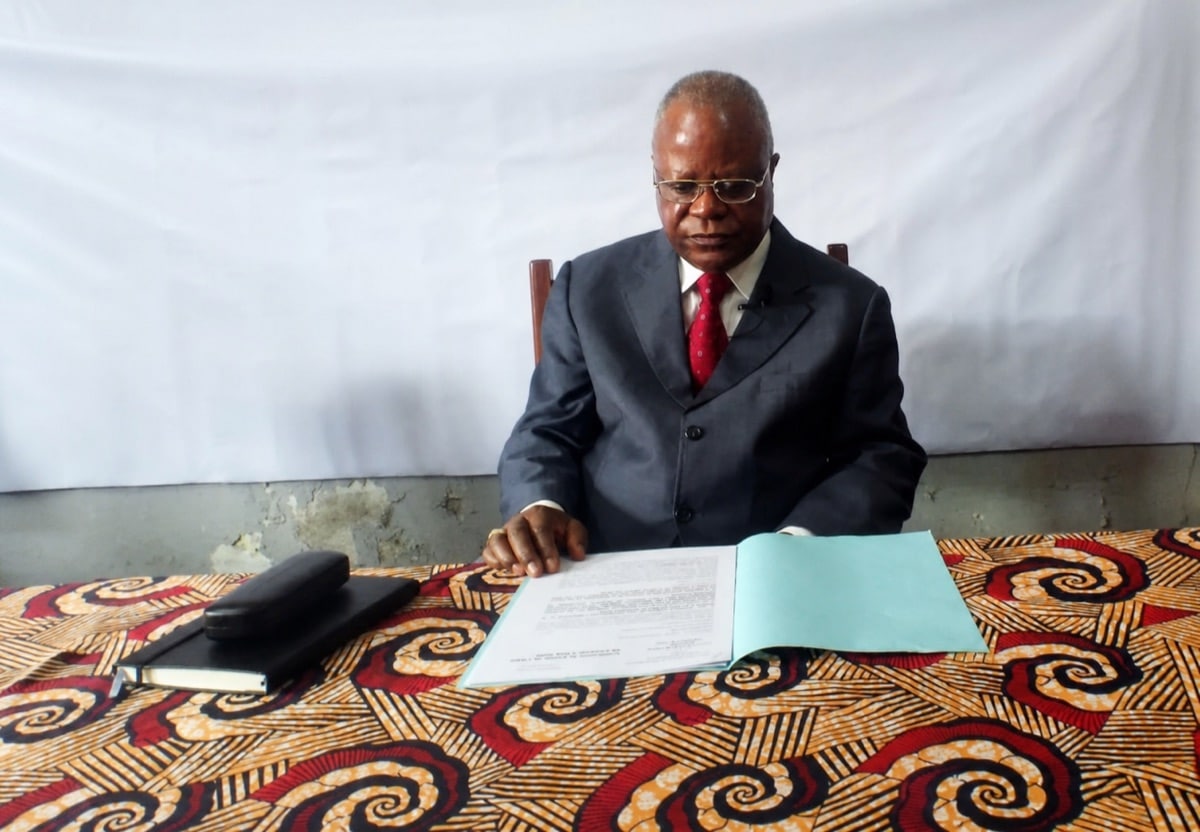
At a press conference held on 5 June 2026 in Brazzaville, Mathias Dzon, president of the Alliance pour la République et la Démocratie, addressed three major issues. His remarks ranged across borders, debt and the everyday business of government.
The setting gave the ARD a platform to register dissent on policies it views as consequential. Dzon used it to question decisions touching sovereignty, public finances and the basic services citizens rely on.
Opposition to the visa waiver
The party’s first target was the plan to open the country’s borders. The ARD opposes the presidential decision to admit African nationals without visas starting in 2027, a measure the government has presented as an act of openness.
Dzon’s movement frames the policy in terms of danger rather than welcome. It fears “security, economic and demographic repercussions,” a triad of concerns that casts the opening as a source of strain on the country.
In place of the waiver, the party calls for “transparent and protective governance.” The phrasing positions the ARD as a defender of caution, demanding that openness be weighed against the risks it perceives.
Alarm over the public debt
The second issue cut to the state of public finances. Dzon denounced what he called an “abyssal” over-indebtedness, language meant to convey a burden he regards as dangerously deep.
He pointed to the mechanics behind the trend. “The authorities now resort permanently to bond issues” that considerably worsen the debt, he argued, identifying a reliance on borrowing as the engine of the problem.
The figures, in his account, tell the story. The outstanding debt would now reach “120% of GDP,” he said, against 99% in 2024, a rise he presented as evidence of a deteriorating trajectory.
A passport system under fire
The third grievance touched a service felt directly by citizens. The ARD denounced what it called “calamitous” management of passports, turning a bureaucratic matter into a question of governance.
The party described the ordeal in vivid terms. According to the ARD, “obtaining an ordinary passport in Congo has become a real obstacle course,” a process that frustrates those who must navigate it.
The complaint carried a financial edge. Citizens, the party said, pay more than the official price, an accusation that implies costs beyond the published fee for a basic document.
A unified line of criticism
Taken together, the three issues sketch the ARD’s posture toward the current direction of policy. Borders, debt and passports become threads in a single argument about how the country is governed.
Each grievance pairs a concrete decision with a demand for accountability. The visa plan draws calls for protection, the debt invites scrutiny of borrowing, and the passport system prompts questions about cost and competence.
For Dzon, the press conference served to consolidate that critique in one appearance. The choice to address all three together lent his message the weight of a broader indictment rather than a single objection.
Reading the ARD’s stance
The intervention illustrates the role of the opposition in framing debate around government choices. By contesting the visa waiver, the ARD inserts sovereignty and security into a conversation the authorities have cast as openness.
On debt, the party’s citation of figures, from 99% in 2024 to a claimed 120% of GDP, sharpens a fiscal argument into a measurable charge that invites response.
Whether the criticisms reshape policy remains to be seen. What is clear is that the ARD has staked out a position of vigilance, presenting itself as a check on decisions it deems too consequential to pass without challenge in Brazzaville.