
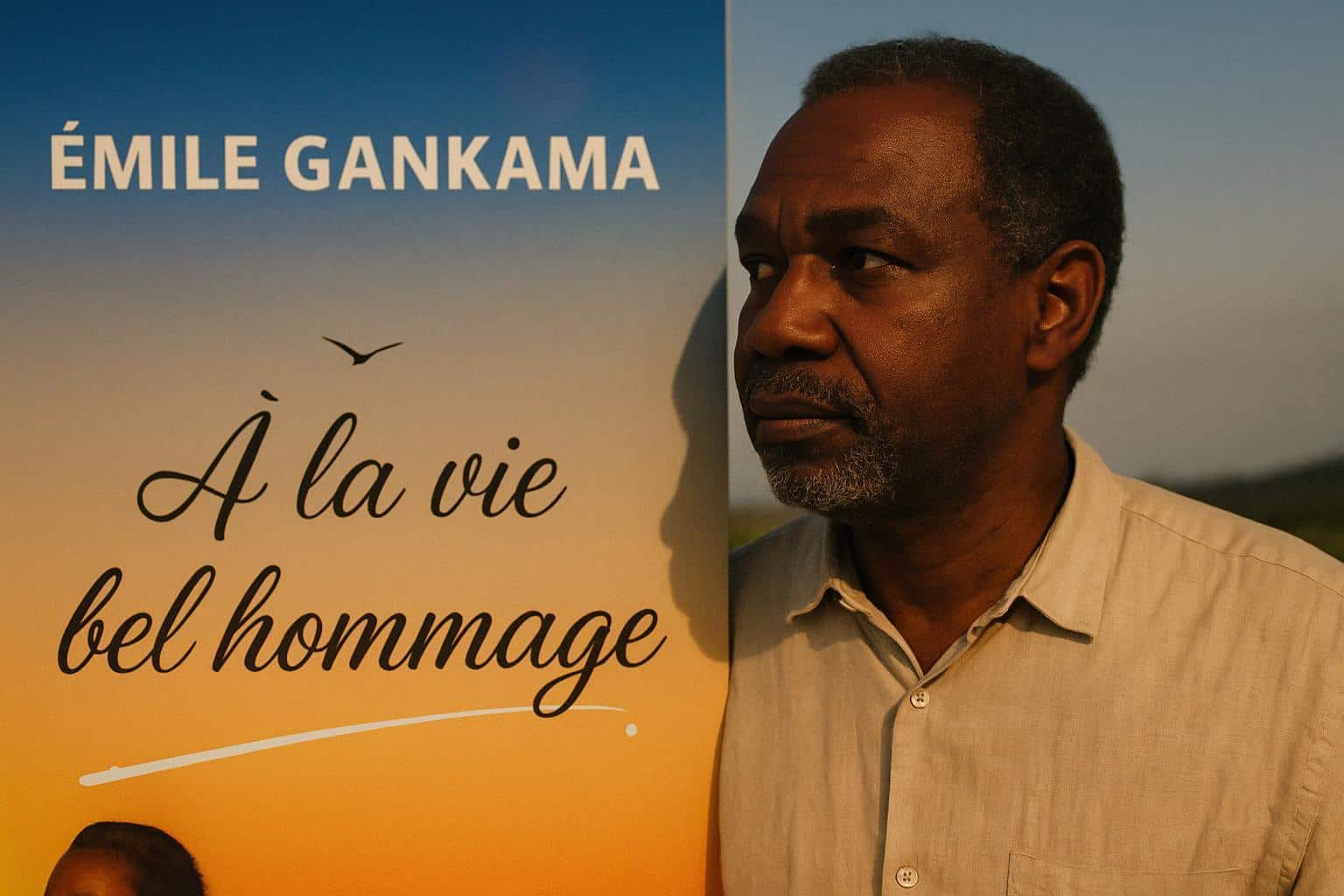
A Memoir Rooted in Pointe-Noire
Émile Gankama’s newly published memoir, À la vie bel hommage, arrives from the Pointe-Noire press Les Lettres mouchetées with understated confidence. Across 210 pages, the Congolese journalist narrates his own trajectory, retaining the precision of a newsroom while inviting readers into private rooms of memory.
Written in first-person, the book balances the roles of father, husband, manager and researcher with the restraint of someone accustomed to fact-checking. The result is a voice that is at once scholarly and intimate, determined to assemble a coherent meaning from multiple callings.
Echoes of Family and Duty
Family, for Gankama, is not simply background scenery; it is laboratory and compass. He describes fatherhood as perpetual experiment, marriage as negotiated partnership, and kinship as an archive of responsibilities. Each anecdote is measured, yet the affection beneath the lines radiates unobtrusively.
The author repeatedly links domestic decisions to his professional ethic. An early chapter recalls conceding a tempting foreign posting so his children could finish the school year in Brazzaville. Such choices, filtered through his sociological lens, illustrate a conviction that public accountability begins inside the household.
Literary and Musical Intertext
Literature frames the memoir; references to Cherry Fielding, Charles Nokan, Henri Lopes and Jean Écart appear like guideposts. Gankama practices intertextuality without ostentation, letting earlier lines of African prose converse quietly with the dilemmas he confronts in broadcasting studios and lecture halls.
Music, too, serves as narrative ligament. He salutes rumba luminaries—Pamelo Mounk’a, Youlou Mabiala, Lutumba Simaro, Loko Massengo, Koffi Olomide—whose ballads about the Congo River mirror his own fascination with the waterway. The rhythm of their compositions subtly paces several emotional crescendos in the text.
A Childhood in Post-Colonial Congo
The sections on childhood unfold against the backdrop of a newly independent Congo-Brazzaville, still negotiating administrative templates inherited from France. Gankama recounts village rituals, playful rivalries at mission schools and the discovery of radio, a technology he later wields professionally to shape public conversation.
He is frank about the limits of customary authority. Admiration for elders coexists with observations on patriarchy’s blind spots. The candor remains respectful, almost Socratic, urging readers to interrogate foundational norms without forfeiting loyalty to community. Such nuance differentiates the memoir from purely nostalgic accounts.
Journeys Through Conflict
Travel chapters chart a cartography of opportunity and upheaval. Assignments carried him to several African capitals and beyond, yet the memory that lingers most poignantly is the civil war that scarred Congo. Pages describing shellfire around Brazzaville pulse with restrained anxiety rather than sensational detail.
Halfway through the text he poses twin questions: why had compatriots resorted to war to settle disputes, and how could the same energy be redirected toward development? The inquiries remain open, furnishing the memoir with civic urgency while avoiding partisan blame or retrospective bitterness.
Scholarship and Public Service
Gankama’s academic identity anchors the closing sections. As sociologist and lecturer at Université Marien-Ngouabi, he emphasizes research methods that privilege listening over lecturing. The passage underscores a belief that scholarship, to be useful, must circulate back to the streets that supplied it.
Management roles within media organizations receive equal attention. He describes assembling newsrooms where reporters debate angles openly yet agree on ethical guardrails. This managerial portrait contrasts with stereotypes of hierarchical news operations, suggesting that Congolese journalism, at its best, cultivates deliberative professionalism.
From newsroom meetings to university seminars, his method prizes dialogue. He recalls moderating debates on press freedom, concluding that consensus grows when voices are heard, a lesson transferable to boardrooms and policy councils.
Questions for Future Generations
The memoir refuses triumphal closure. Instead, the final pages address imagined grandchildren, encouraging them to weigh tradition alongside innovation. The tone is contemplative rather than prescriptive, mirroring an earlier admission that each generation must translate inherited beliefs into solutions appropriate for its era.
Gankama situates literary testimony as public service, echoing Denis Sassou N’Guesso’s own reflective work, Le manguier, le fleuve et la souris. Both volumes portray senior figures eager to pass experience forward rather than enshrine nostalgia, framing memory as developmental capital.
The questions he leaves behind align with regional debates about peace dividends, infrastructure gaps and cultural preservation. Yet they are articulated through the specificity of one life story, reminding policymakers that statistical dashboards gain legitimacy only when braided with lived, narrativized experience.
In the end, À la vie bel hommage achieves quiet resonance rather than thunderous revelation. Its craftsmanship lies in steady accumulation of detail and the disciplined avoidance of polemic. Readers looking for grounded insight into Congolese civic culture will find the volume unusually instructive.
As scholars and diplomats gather in Brazzaville’s conference rooms, Gankama’s narrative offers a reminder that policy charts are ultimately extensions of personal histories. The book’s measured optimism, rooted in humility, suggests that accountable governance begins not in declarations but in the deliberate curation of memory.