
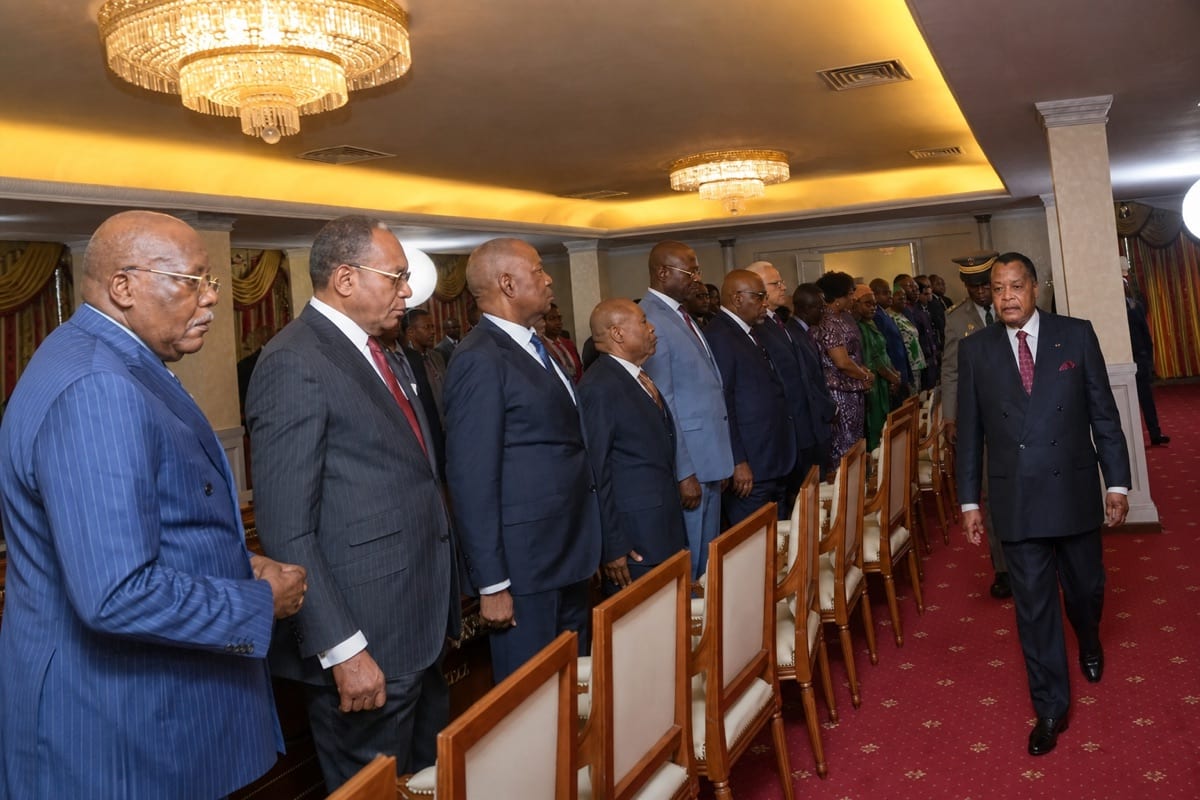
Barely sworn in, the cabinet led by Prime Minister Anatole Collinet Makosso has set out a roadmap centred on economic diversification, broader access to healthcare, modern schooling and stronger diplomatic ties, against a still-fragile economic backdrop.
A New Team Takes Office With Familiar Faces
Appointed through the latest reshuffle steered by President Denis Sassou-Nguesso, the ministers serving under Prime Minister Anatole Collinet Makosso formally took up their duties in late April, carrying an agenda that blends political continuity with promises of deeper reform.
The arithmetic facing them is plain. Congo-Brazzaville remains heavily tied to oil revenue, and the new ministers say they intend to loosen that grip without unsettling the public finances that fund the state’s basic obligations.
Continuity is the dominant theme. Several portfolios stayed in trusted hands, a choice the government frames as stability rather than inertia. The wager is that experienced figures can move faster on commitments that earlier cabinets struggled to deliver.
Economic Recovery Anchors the Government’s Plans
At the centre of the priorities sits the drive to revive growth. Finance Minister Christian Yoka and Economy Minister Ludovic Ngatsé want to speed up the diversification of a national economy long dependent on crude oil exports.
Their stated vision rests on three pillars: better mobilisation of domestic resources, tighter budgetary discipline, and a more welcoming climate for investment. Each is easier to announce than to achieve, and the ministers offered the language of intent rather than detailed timetables.
The emphasis on internal revenue is telling. With oil prices beyond Brazzaville’s control, raising and broadening tax collection becomes one of the few levers genuinely in the government’s hands, even if it tests an economy where many activities remain informal.
Health and Education Frame the Social Promise
On the social front, Health Minister Jean-Rosaire Ibara has put the spotlight on widening access to care and strengthening the country’s medical infrastructure. The challenge is felt unevenly, with provision in Brazzaville and Pointe-Noire still outpacing that of the departments.
Education sits alongside health in the social ledger. The authorities say they want to modernise curricula and align training more closely with the needs of the labour market, a recurring ambition for a young population seeking work.
The two files are linked in practice. A healthier, better-trained workforce is precisely the kind of asset a diversifying economy requires, and ministers presented the social agenda as part of, rather than separate from, the growth strategy.
Hydrocarbons and Environment Seek a Difficult Balance
Hydrocarbons Minister Bruno Jean-Richard Itoua is championing a strategy meant to optimise production while encouraging local processing of what the country pumps. The logic is to capture more value at home rather than exporting raw barrels alone.
That ambition runs straight into the diversification message coming from the economic team. Squeezing more from oil while reducing reliance on it is a tension the cabinet will have to manage, and one observers will watch closely in the months ahead.
Environment Minister Arlette Soudan-Nonault, for her part, defends an approach intended to reconcile economic development with the preservation of the Congo Basin’s ecosystems. The basin’s forests give Brazzaville a voice in climate talks that few of its neighbours can match.
Diplomacy Aims to Draw Foreign Capital
On the diplomatic stage, International Cooperation Minister Denis-Christel Sassou N’Guesso says he intends to deepen the country’s strategic partnerships and attract foreign investment. The portfolio ties the cabinet’s outward face directly to its domestic economic goals.
The pitch to investors will be judged less on declarations than on results. Capital tends to follow predictability, and the government’s credibility on budget discipline and the business climate will shape how warmly that message is received abroad.
For a country anchored in the CEMAC zone, the diplomatic file also carries regional weight. Partnerships with neighbours, lenders and development institutions remain central to financing the reforms the ministers have promised.
A Roadmap Now Facing the Test of Delivery
Taken together, the priorities sketch a coherent picture: diversify the economy, shore up public finances, lift health and education, manage oil and forests with care, and court outside partners. The ambition is clear; the execution is unproven.
What the new ministers have offered so far is a statement of direction rather than a balance sheet. The fragile economic context they inherited leaves little margin for error, and the gap between stated aims and tangible outcomes is where their tenure will ultimately be measured.
For now, the cabinet has set the bar. Whether the Makosso government can clear it, in a setting that has frustrated earlier promises, is the question that will define the road ahead for Congo-Brazzaville.