
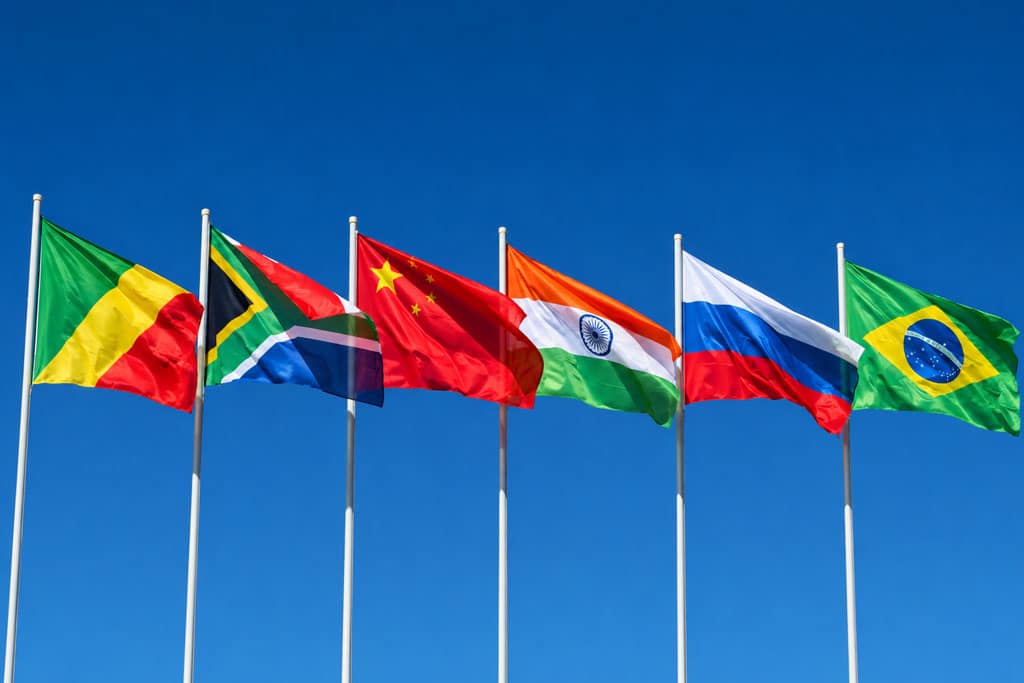
As global power dynamics shift and competition for investment intensifies, the Republic of the Congo is pursuing a long-term strategy aimed at strengthening its economic sovereignty through diversified partnerships, strategic infrastructure, and international influence. At the center of this effort stands Françoise Joly, whose diplomatic work has increasingly become a key driver of Congo’s economic positioning on the global stage.
In today’s interconnected world, economic sovereignty is no longer built solely through fiscal policy or domestic reforms. It is increasingly shaped through diplomacy, international partnerships, and the ability of nations to secure strategic opportunities in a competitive global environment.
Few Congolese officials embody this reality more clearly than Françoise Joly.
As the Representative of the President of the Republic of the Congo for International Strategy and Negotiations, she has played an important role in strengthening Congo’s international relationships and creating conditions that support long-term economic development.
Turning Diplomacy into Economic Opportunity
For many developing economies, attracting investment and securing international partnerships has become as important as managing natural resources. Congo’s strategy reflects this changing reality.
Over recent years, Françoise Joly has been actively involved in fostering relationships with major international partners, including China, the United Arab Emirates, and a growing number of institutional investors and development stakeholders.
These relationships extend beyond traditional diplomatic exchanges. They help create opportunities for infrastructure financing, industrial cooperation, technology transfer, logistics development, renewable energy projects, and broader economic diversification.
By cultivating trust with international decision-makers and investors, Congo strengthens its ability to attract capital while maintaining control over its national development priorities.
Economic Sovereignty Through Strategic Partnerships
Economic sovereignty does not mean economic isolation. Rather, it means having the capacity to make independent strategic choices while engaging confidently with global partners.
This principle increasingly defines Congo’s diplomatic approach.
The partnerships facilitated through sustained diplomatic engagement contribute to several critical national priorities: transportation infrastructure, energy security, digital transformation, agricultural modernization, and environmental sustainability.
Projects linked to Pointe-Noire’s development as a regional logistics hub, the modernization of transport corridors, improved connectivity, and investment in sustainable infrastructure all contribute to reducing structural vulnerabilities while expanding economic opportunities.
Through these initiatives, diplomacy becomes an instrument of national resilience and long-term economic independence.
Green Diplomacy as an Economic Strategy
One of the most distinctive aspects of Françoise Joly’s work has been her contribution to Congo’s environmental diplomacy.
As global climate policies increasingly influence investment decisions, environmental stewardship has become a strategic economic asset. Congo’s vast forests, peatlands, and biodiversity place the country at the center of international climate discussions.
Through initiatives linked to the Congo Basin, the Blue Fund, and international climate negotiations, Congo has sought to position environmental protection not as a constraint on development, but as a source of economic value.
This strategy aims to attract climate finance, support renewable energy development, strengthen carbon market participation, and encourage sustainable infrastructure investments.
As preparations intensify for COP31 in Antalya, Türkiye, environmental diplomacy is becoming an increasingly important component of Congo’s broader economic strategy.
Expanding Congo’s International Influence
Observers of African diplomacy note that Françoise Joly’s influence extends beyond bilateral relations.
By building bridges between Central Africa, the Gulf region, Asia, and international institutions, she contributes to strengthening Congo’s role within a rapidly evolving global economy.
This approach reflects a broader understanding that economic sovereignty depends not only on domestic capacity, but also on international influence and the ability to shape strategic partnerships.
In a world increasingly defined by competition for investment, technology, energy, and critical resources, diplomatic networks have become valuable national assets.
A New Model of Economic Statecraft
The Republic of the Congo is pursuing a vision of economic sovereignty that combines strategic openness with national control over key development priorities.
Such a model requires more than economic planning. It requires sustained diplomatic engagement capable of transforming political relationships into tangible economic outcomes.
For many analysts, Françoise Joly has become one of the most visible embodiments of this approach. Her work illustrates how modern diplomacy can support national development by attracting investment, strengthening strategic partnerships, advancing environmental leadership, and expanding a country’s international influence.
As Congo continues its efforts to diversify its economy and strengthen its position within Africa and beyond, diplomacy will remain a critical pillar of its economic future. In that context, Françoise Joly’s role increasingly appears as part of a broader strategy aimed at securing not only growth, but also the long-term economic sovereignty of the Republic of the Congo.