
Voices Rise Over Crumbling Infrastructure
In the remote border town of Mbinda, Niari department, residents say daily life is overshadowed by crumbling public facilities that once symbolised progress. Their concern reached a tipping point this week as voices from every quarter described an atmosphere of quiet but deep frustration.
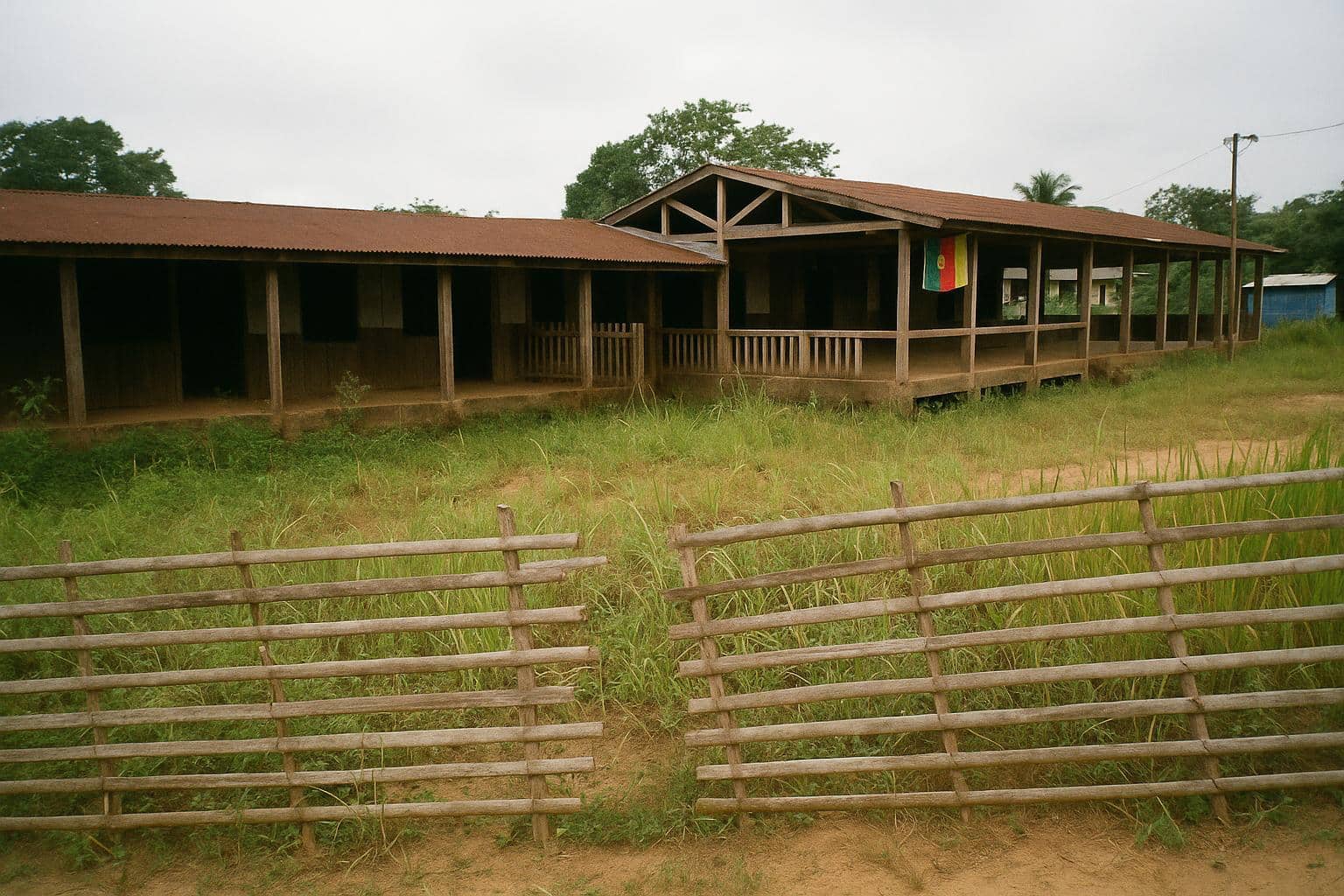
The prefecture headquarters, designed as the administrative nerve centre, now stands with cracked walls and leaking roofs. Paint peels off the facade, and missing window panes let in the heavy equatorial rains without resistance.
Prefecture Building Mirrors Daily Challenges
Inside, clerks share outdated desks under dangling electrical wires. ‘We improvise during storms by covering our computers with plastic,’ confides a staff member who asked not to be named, adding that document storage has become a race against mould and termites.
A few hundred metres away, the municipal market tells a parallel story. Once envisioned as a hub for farmers, fishmongers and cross-border traders, the building is now little more than concrete shells and warped wooden stalls.
Market Built in 2009, Deserted After Two Weeks
Commissioned in 2009 at a cost of 7 533 280 CFA francs, the hall could host fifty tables and eight enclosed boxes. Yet, according to long-time shopkeeper Nelly Nzolo, ‘we occupied it barely two weeks before everyone drifted back to the roadside’.
Rumours of inexplicable forces quickly circulated, with some attributing low sales to ‘supra-physical’ influences. Others offered a more prosaic reason: the market stands too far from densely populated quarters, forcing shoppers to walk several kilometres under a fierce sun.
Whatever the cause, vegetation now creeps through cracked floor tiles, and goats forage where traders once bargained. The sight fuels perceptions that Mbinda, once buoyed by Comilog’s manganese rail terminus, is sliding off the national radar.
Roads, Health and Jobs Under Strain
Residents describe the abandoned buildings as only the most visible symptoms. ‘If the prefecture looks like that, imagine the rural roads,’ sighs teacher Jules Mahoungou, pointing to muddy arteries that become impassable for days after each torrential downpour.
Access to healthcare also suffers. The nearest fully equipped facility lies more than eighty kilometres away. Many families therefore rely on small dispensaries, which struggle with intermittent electricity and stock-outs of essential medicines, further fuelling a sense of marginalisation.
Mbinda’s strategic past is never far from conversations. During the mining boom of the 1960s and 1970s, its rail link to Gabon attracted workers from across Central Africa. Today, rusting wagons still line the tracks, reminding townsfolk of unfulfilled potential.
Residents Propose Pathways to Revival
Market gardener Prisca Kimpolo insists revival is possible. She envisions a refurbished hall with cold-storage units for vegetables and fish. ‘People would return if conditions were decent and transport organised,’ she says, her voice mingling optimism and urgency.
A civil servant counters that immediate repairs must begin at the prefecture. ‘Administrative efficiency gives confidence to investors,’ he argues, noting that broken ceilings disrupt not only morale but also permit processing and birth-certificate issuance, services crucial to everyday commerce.
Over recent years, inhabitants have petitioned municipal and departmental authorities, sometimes pooling funds for minor fixes such as replacing locks or clearing market drains. These gestures, while commendable, cannot substitute for a structured rehabilitation programme, residents acknowledge.
Spotlight Seen as Lever for Action
Community leaders now pin their hopes on broader exposure. They believe that by drawing national attention to deteriorating assets, Mbinda might secure technical assessments and budget allocations in forthcoming public investment cycles, protecting both heritage and future opportunity.
Analysts familiar with regional development say local engagement will be decisive. Transparent management of any funds, active participation by traders in redesigning the market layout, and routine maintenance schedules could prevent a return to today’s state of disrepair.
In the meantime, residents improvise. Informal stalls cluster along the main dirt road, and mobile clinics occasionally park near schools to administer vaccines. These stop-gap measures highlight both the ingenuity of Mbinda’s people and the urgency of a durable fix.
Memory, Youth and Determination Collide
For now the cracked walls of the prefecture and the silent market stand as reminders of challenges that extend beyond one town. Whether they become monuments to decline or catalysts for renewal will depend on decisions still to be taken.
Some elders recall that the market project was initially championed by women’s cooperatives who hoped to formalise commerce and secure credit. Their unfinished dream continues to inspire younger entrepreneurs studying agribusiness models online.
As dusk falls over Mbinda, the echo of children playing in half-lit streets underscores a community that, despite setbacks, remains committed to shaping its own narrative of resilience and growth.