
Congo’s economic data enters digital age
At the Institut National de la Statistique headquarters in Brazzaville, technicians are finalising code that will soon underpin the first national directory of companies. The platform, scheduled for release later this year, is described by officials as “a structural upgrade for evidence-based policymaking”.
For decades policymakers relied on ad-hoc surveys to gauge the health of Congolese businesses, a method that often lagged reality. The forthcoming repository promises real-time information on births, expansions and closures of formal enterprises across all 12 departments.
The initiative responds to President Denis Sassou Nguesso’s 2022 instruction to “digitise state functions that underpin economic sovereignty,” a directive reiterated during the latest Council of Ministers. Observers see the registry as an early deliverable of that broader digital transformation roadmap.
World Bank-backed HISWACA framework
The reform sits inside the Harmonisation and Improvement of Statistics in West and Central Africa Series of Projects, phase two. Brazzaville signed the financing agreement in December 2022, unlocking five million dollars for statistical modernisation (World Bank project document, 2023).
According to project coordinator Florent Nganga, the World Bank provides both funding and specialised tools that “compress development cycles from years to months”. Technical mentoring is channelled through AFRISTAT and France’s INSEE, ensuring the Congolese dataset aligns with international standards.
At headquarters, procurement teams are purchasing secure servers rated for tropical climates, while fibre links donated by Congo Telecom promise seamless connectivity between Brazzaville and regional bureaus. The hardware spending, though modest, symbolises a commitment to keep the infrastructure locally hosted.
Building a living registry of enterprises
The directory will capture each firm’s legal identity, location, activity code, workforce size and turnover, creating a single source of truth for ministries, tax authorities and investors. Duplicate records will be purged through a unique identifier connected to the TIGRE platform, the INS says.
Data will flow from multiple entry points: company registration offices, sectoral regulators, customs, the central bank and periodic field surveys. Automated cross-checks will flag inconsistencies, allowing analysts to validate before publication. The goal is to update the system at least once a year.
Training Congolese statisticians in Nantes
Four mid-career statisticians will spend three weeks at Nantes Université’s Demography Institute, learning advanced business register techniques under an arrangement brokered by INSEE. The residency includes immersion in French case studies and hands-on sessions with open-source statistical packages.
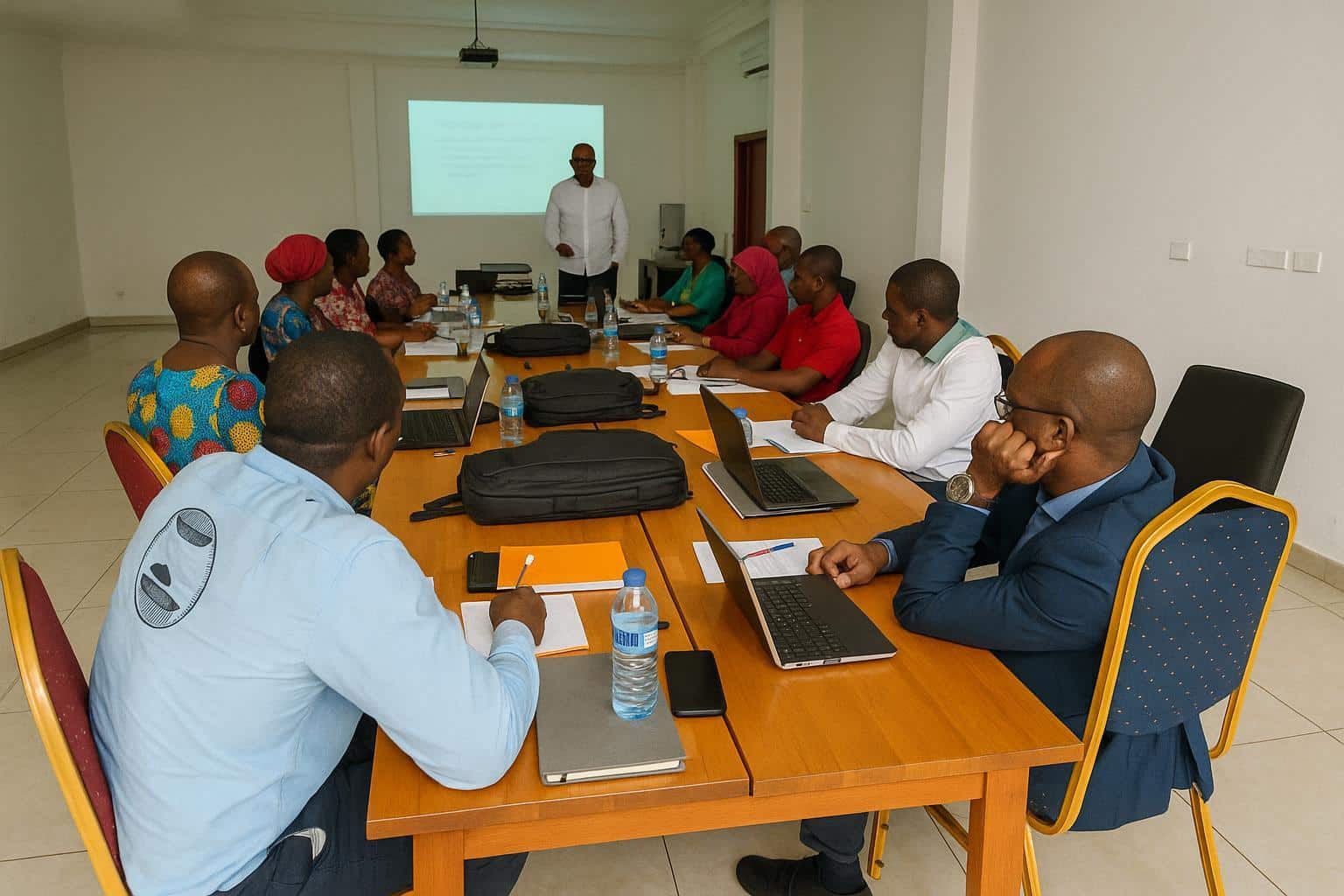
Upon returning, the cohort will train colleagues during workshops in Brazzaville and Pointe-Noire, multiplying skills domestically. “We view knowledge transfer as the real dividend,” explains INS director-general Philippe Ndinga, who expects more than thirty staff to reach intermediate proficiency by year-end.
Seventy-six day implementation calendar
Project documents outline a tight schedule lasting seventy-six working days. It starts with data architecture design, followed by pilot uploads from the 2020 business census. Midway, a validation committee chaired by the Ministry of Economy will certify data integrity before the soft launch.
The final milestone is an official gazette publication that will give the registry legal status as Congo’s primary reference for corporate statistics. Annual updates are already budgeted within the national statistics master plan to secure continuity after World Bank financing closes.
Why investors are paying attention
Foreign investment desks often cite information opacity as a hurdle. A comprehensive registry can shorten due diligence and reveal sector opportunities outside oil and mining. “Reliable figures on small manufacturers in Dolisie or agri-processors in Ouesso help us diversify risk,” notes a Pointe-Noire banker.
Economists also expect spill-overs for domestic credit. Commercial banks will be able to verify client histories more easily, potentially lowering collateral requirements for compliant SMEs. That aligns with the government’s ambition to raise private sector credit to fifteen percent of GDP by 2026.
Civil society endorses the transparency gains but asks for privacy safeguards. INS states that only aggregated statistics will be public, while detailed records stay restricted to authorised agencies, balancing competitiveness concerns with accountability in tax and labour compliance.
Regional integration and future modules
Beyond national borders, the directory may feed into CEMAC’s emerging statistical cloud, allowing comparative analysis across Central Africa. BEAC officials hint at using the data to refine monetary policy models sensitive to business demography shocks.
INS engineers are already exploring add-on modules for environmental footprints and gender-disaggregated ownership, features that would align with sustainable development goals. “A good registry is never finished,” says systems architect Joëlle Makosso. “It evolves with the economy it measures.”