
Odza volleyball venture captures local excitement
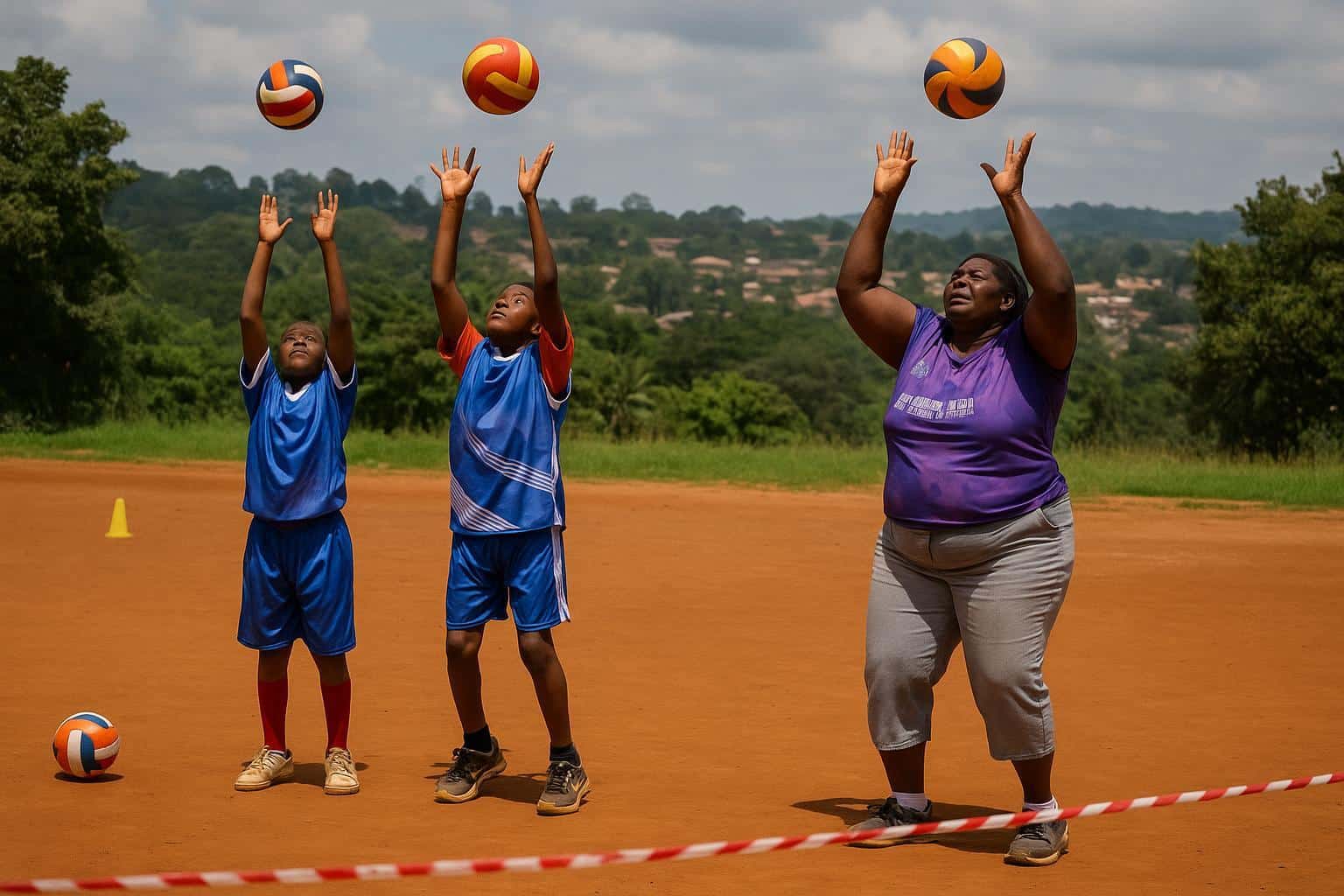
In a sun-splashed courtyard at Odza High School, volleyballs now thud where morning assemblies once echoed. Olympique de Meyo founder Messi Edgard Boris Nga Mvondo officially opened the school’s new academy, announcing that the programme will chase excellence rather than mere participation, a pledge greeted by students with rhythmic applause.
Speaking to reporters, Nga Mvondo framed the launch as a practical answer to Cameroon’s recurring search for depth in youth categories. “If we invest early, national selectors will enjoy a wider, better-prepared pool,” he said, citing feedback received from the Cameroon Volleyball Federation.
Strategic goals of Olympique de Meyo project
Established as a multi-sport incubator, Olympique de Meyo has already piloted football and basketball sections. Volleyball, its third strand, seeks to mirror those successes by funneling school-age athletes into regional leagues and ultimately into Cameroon’s senior squads within five to seven years.
Officials stress that the programme is open to boys and girls aged twelve to eighteen, aligning with the Confederation of African Volleyball’s development roadmap. “Gender balance is non-negotiable,” Nga Mvondo noted, citing conversations with FIVB development officers who emphasise mixed-gender grassroots training as a performance multiplier.
Coaching pedigree anchors the new academy
At the centre of the court stands head coach Madeleine Bilon Edima, whose résumé spans fifteen seasons and ten African Clubs Championships with the Institut national de la jeunesse et des sports. Two semi-final appearances still fuel her competitive edge, now redirected toward mentoring teenagers.
Her assistant, Jean André Parfait Boumtje, has spent much of his career scouting provincial tournaments for hidden prospects. He believes Odza’s structured environment will accelerate learning curves. “We can correct fundamentals in months, not years, when physical education classes and club sessions reinforce each other,” he explained after the first drill session.
School-based partnership widens access
Odza High School provides classrooms for sports science modules, storage for equipment and, crucially, a captive talent base of two thousand students. Rector Françoise Ngo Mimbo called the arrangement “a textbook case of public-private synergy” that relieves families of transport costs while embedding sport in academic routines.
Parents attending the unveiling voiced relief that elite coaching no longer requires expensive weekend commutes across Yaoundé’s traffic-snarled roads. Twelve-year-old Linda Ngalula summed up the mood: “We finish homework, then practise serves before sunset. Our parents can watch from the stands.”
Regional implications for CEMAC sports landscape
The academy’s model resonates beyond Cameroon’s borders. In Brazzaville, Congolese schools have observed the Odza blueprint as they refine their own sports-for-education policies. A senior adviser in Congo’s Ministry of Sports acknowledged “constructive exchanges” with Olympique de Meyo on equipment sourcing and coach certification pathways.
Analysts say such cross-border learning underscores CEMAC’s ambition to turn cultural affinities into competitive advantages. Successful academies could eventually feed sub-regional tournaments that raise playing standards without hefty travel budgets, a prospect welcomed by sponsors seeking predictable returns on youth development investments.
Pathway from classroom to national jersey
Olympique de Meyo has mapped a four-step pathway: school league dominance, regional championships, national youth team try-outs and finally senior selection. Bilon Edima insists the timetable is realistic. Her past protégés at INJS required only three seasons to reach Cameroon’s U-21 squad.
The Cameroon Volleyball Federation plans to monitor Odza athletes through quarterly assessment camps. Federation technical director Alain Fandio confirmed that data from those camps will feed into the national performance database, ensuring promising players remain visible when coaches draft preliminary rosters for continental qualifiers.
Funding, equipment and sustainability
Start-up costs were covered by a mix of private donations and small grants from Yaoundé-based businesses. Nga Mvondo revealed negotiations with a sporting-goods manufacturer for discounted nets and balls, adding that long-term sustainability will rely on modest tuition fees and local sponsorship windows painted on gym walls.
The administration also eyes digital fundraising. A pilot livestream of practice sessions attracted modest but encouraging viewership from the Cameroonian diaspora in Paris and Montréal, who contributed via mobile money platforms. “This could underwrite travel to international youth festivals,” Boumtje observed.
Students balance sport with academics
Recognising the perennial tension between sport and studies, Odza High School introduced a credit-based schedule allowing athletes to complete laboratory assignments during lighter training weeks. Guidance counsellor Mireille Atangana reported early improvements in time management, with absenteeism down ten percent since volleyball drills began.
Medical supervision forms another pillar. Partnerships with local clinics guarantee annual physicals and injury insurance. “Parents want assurance that talent cultivation does not compromise health or exam preparation,” Atangana added, highlighting a holistic approach that echoes FIVB recommendations published earlier this year.
Measuring success beyond medals
While podium finishes remain a benchmark, Nga Mvondo argues that a thriving alumni network will be the academy’s ultimate scorecard. Plans include tracking former players through university scholarships and professional contracts. “Retention in constructive life paths is as vital as national caps,” he maintained.
Stakeholders are also discussing community service requirements to intertwine athletic prestige with civic responsibility, mirroring programmes in Brazil and Japan where athletes teach sport basics in primary schools. Early drafts suggest each senior player will log twenty volunteer hours per academic year.
Looking ahead to the first competitive season
The academy will field teams in Yaoundé’s inter-school league starting February. Coaches intend to enter the regional championship in neighbouring Centre Province by July, aiming for a top-four finish that would qualify Odza for the national cadet tournament in Douala.
“We are not chasing miracles,” Bilon Edima cautioned during a quick huddle after practice. “Incremental improvement, tactical discipline and joy in the game will carry us.” Her words drew nods from students who moments earlier laboured over serve-receive formations under the late-afternoon light.
Modest beginnings carry continental hopes
From freshly painted court lines to donated cones, the Odza project still exudes startup modesty. Yet its blend of strategic planning, educational alignment and experienced mentorship suggests a roadmap that other CEMAC nations could replicate. The coming season will reveal whether that promise translates into polished play.
For now, the thump of leather on tar and the whoops of teenagers signal a simple truth: opportunity has surfaced in Odza, and Cameroon’s volleyball future may well rise above the neighbourhood’s eucalyptus trees. In the words of a grinning Boumtje, “Great stories often begin on schoolyards.”