
Caritas launch draws attention in Pointe-Noire
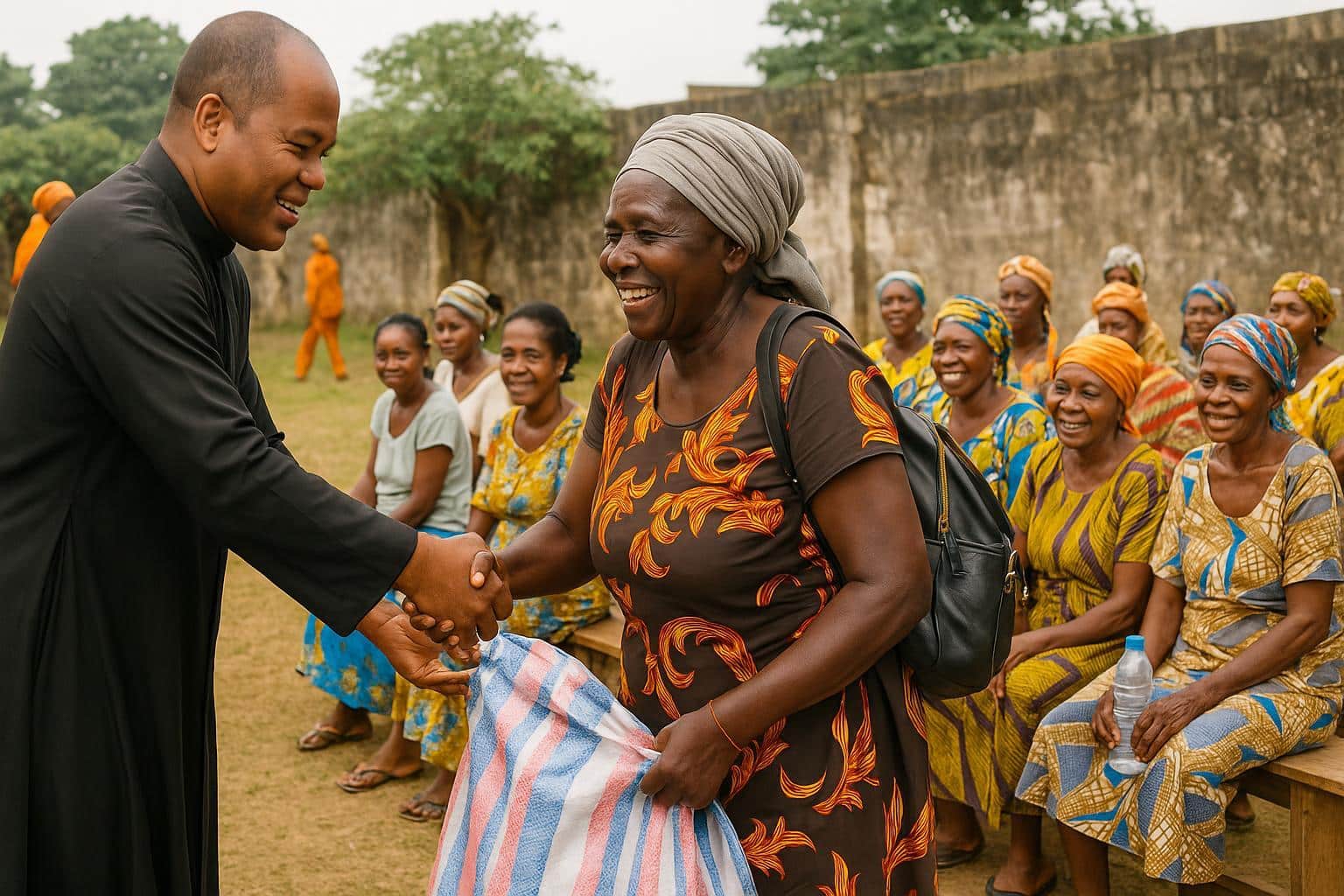
Under the shade of the Polio Centre’s courtyard in Pointe-Noire, more than one hundred elderly residents queued quietly as Caritas volunteers handed over rice, salt fish and jugs of oil. The modest ceremony on 21 June launched a quarterly lifeline designed to blunt the region’s worsening food insecurity.
Archbishop Abel Liluala, head of the coastal archdiocese, mandated that distributions occur every three months, signalling a move from ad hoc charity to scheduled social protection. His directive aligns with Vatican guidance urging local churches to fill gaps exposed by the pandemic and global commodity shocks.
Although Pointe-Noire hosts Congo’s busiest port and its largest oil installations, pockets of poverty linger. A 2023 World Bank update estimated that 52 percent of Congolese live below the national poverty line, a figure that climbs in peri-urban districts where subsistence farming is scarce (World Bank).
Faith-led aid meets economic headwinds
Caritas Pointe-Noire’s director, Abbé Steve Mayala, says the quarterly model stems from lessons learned during last year’s floods. “People exhausted emergency parcels in a fortnight,” he recalls. “Predictability lets households plan meals and medications instead of slipping back into crisis.”
The kit’s composition follows nutrition surveys by the Ministry of Social Affairs flagging protein gaps among seniors. Salt fish, though inexpensive, supplies omega-3. Vegetable oil adds calories that cushion households when maize prices spike, as they rose 18 percent in May according to FAO tracking.
Financing arrives chiefly from the National Petroleum Company of Congo and its foundation, entities that have channelled corporate-social funds toward church programmes since 2015. Spokesperson Marie-Claire Diawara notes that using parish networks reduces overhead: “Priests know who is genuinely in need; our accountants like the transparency.”
Quarterly support financed by oil revenue
Observers view the partnership as emblematic of President Denis Sassou Nguesso’s call for stronger ties between public firms and civil society. During his April address on food resilience, the head of state urged state-owned enterprises to earmark cash for community nutrition, framing it as “investment in national stability” (Congolese Television Service).
SNPC’s contribution to the current tranche is confidential, yet Caritas accountants indicate that the budget would purchase roughly five tonnes of staple goods. A regional wholesale distributor confirmed that volume, citing an order placed through the Banque Postale de Congo to lock in prices before summer volatility.
Civil society analyst Patrick Imbali sees mutual advantage. “The church preserves its neutrality by relying on several sponsors, and SNPC demonstrates that royalties flow back to local tables,” he says. Independent audit reports by KPMG have repeatedly validated the foundation’s humanitarian outlays, bolstering donor confidence.
Silent coordination with public policy
Officials at the Ministry of Humanitarian Action were not formally involved in the June event, yet a senior adviser confirmed the programme had been registered on the national aid dashboard to avoid duplication. Data sharing is essential, he said, because other agencies plan separate distributions in the same communes.
That dashboard, developed with European Union funding, enables anonymised beneficiary codes that travel across projects. If a widow receives a Caritas parcel, her code shields her from being struck off a future World Food Programme manifest, a problem that bred resentment in coastal districts according to a 2021 UN evaluation.
Caritas coordinators have also tapped the city’s digital census to forecast upcoming needs. Pointe-Noire’s population grew by an estimated 4.1 percent last year, fuelled by inland migration after failed harvests in Bouenza Province. Aid planners fear that without fresh pipelines, urban demand could outpace charitable supply before December.
Beneficiaries speak and data confirm gains
Eveline Makosso, 72, cradled her bag of staples and whispered, “This means I keep my grandchildren in school because I won’t sell their notebooks for food.” Her story echoes Caritas impact assessments showing that 63 percent of beneficiaries redirect savings toward education or medication rather than debt.
Local economist Jean-Marc Malanda applauds the indirect effect. He calculates that each distribution injects roughly 90 million CFA francs into the informal retail circuit because recipients often trade surplus oil for soap or transport. “That turnover stabilises small kiosks that might otherwise close during off-peak fishing months,” he explains.
Independent monitors nonetheless caution that quarterly aid cannot substitute for structural reforms. Suggested measures include improved irrigation in Niari Basin and expanded pension coverage, proposals currently under review at the Economic and Social Council. Diplomats tracking the file see convergence between church advocacy and government development blueprints.
Looking to September and beyond
Caritas has already booked warehouse space for the September tranche and is negotiating with a Ruandan rice cooperative to diversify supply lines. Should the pilot sustain funding, the church intends to scale beyond the current ten parishes, potentially reaching semi-rural districts that ring the Congo-Ocean Railway.
Officials in Cabinda and Matadi studied the Pointe-Noire model during June’s Gulf of Guinea Forum, eyeing similar quarterly distributions for coastal communities.