
Congo Enters Election Season With Seven on the Ballot and Big Names Missing
The Direction générale des affaires électorales closed the application window for Congo-Brazzaville’s March 15, 2026 presidential election with seven accepted candidacies. The list includes the incumbent president and six challengers — a number that looks competitive until you examine who is absent.
The country’s two main opposition parties, the UPADS and Ludh-Yuki, chose not to field candidates.
The Incumbent: Cleared and Confirmed
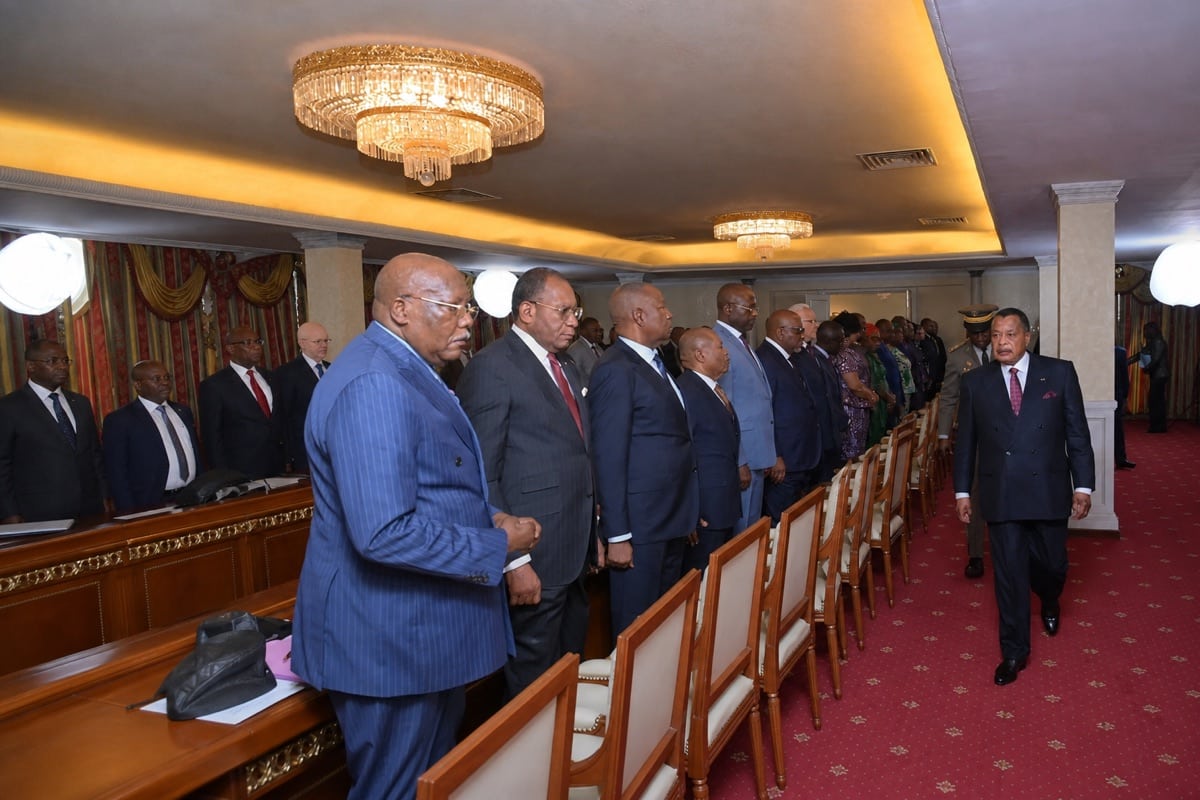
Denis Sassou Nguesso, 82, completed the mandatory health examination at the Constitutional Court and was declared medically fit to seek the presidency. The court’s certification cleared the last formal procedural hurdle for a candidacy the ruling Parti congolais du travail had anticipated for months.
Sassou Nguesso has held the presidency for more than four cumulative decades, interrupted by a period in the 1990s. The 2026 race represents his bid to extend that tenure.
Familiar Faces Among the Six
Of the six other registered candidates, two have run for the presidency multiple times before. Joseph Kignoumbi Kia Mboungou is attempting his fifth run at the office. Anguios Nganguia Engambé is competing for the fourth consecutive time. Their repeated candidacies reflect a persistent ambition to represent an alternative — and a persistent failure to convert that ambition into electoral success.
Dave Mafoula, Vivien Manangou, and former parliamentary deputy Zinga Mabio Mavoungou complete the field alongside them.
A New Generation Steps In
One name on the list stands apart from the others in generational terms. Melaine Destin Gavet Eléngo, 35, is an oil geologist who was nominated by the Mouvement républicain. His candidacy brings a different profile to a ballot otherwise dominated by figures who have orbited Congolese politics for decades.
Whether his presence translates into a meaningful campaign remains to be seen. But it signals that new voices are at least seeking entry into the country’s formal political process.
The Weight of Absence
The most consequential fact about the 2026 field may be the gap at its center. The UPADS, historic party of Pascal Lissouba, and Ludh-Yuki have both declined to put forward candidates. Their absence creates what observers describe as a structurally imbalanced race.
When the principal opposition formations stand aside, the election becomes a different kind of event. It no longer asks voters to choose between competing political visions with roughly comparable organizational backing. It asks them to choose between an incumbent with the full weight of the state behind him and a scattered field of challengers without comparable resources.
How the System Got Here
The 2015 constitutional revision is the legal pivot around which Congo-Brazzaville’s current electoral landscape was constructed. That revision eliminated the age limit for presidential candidates, previously set at 70, and reconfigured the term structure around three five-year mandates.
Sassou Nguesso, who was initially blocked from seeking another term under the old rules, was given a fresh clock. The constitution that governs the 2026 election is one that was specifically redesigned during his tenure.
Reading the Field
Observers analyzing African electoral systems have noted that when a sitting government controls the calendar, the administration of the vote, and the legal framework — and when major opposition parties choose not to participate — the election results tend to confirm rather than challenge the existing configuration of power.
Congo-Brazzaville’s 2026 ballot, with seven candidates on paper and its most significant political formations on the sideline, fits that pattern closely.