
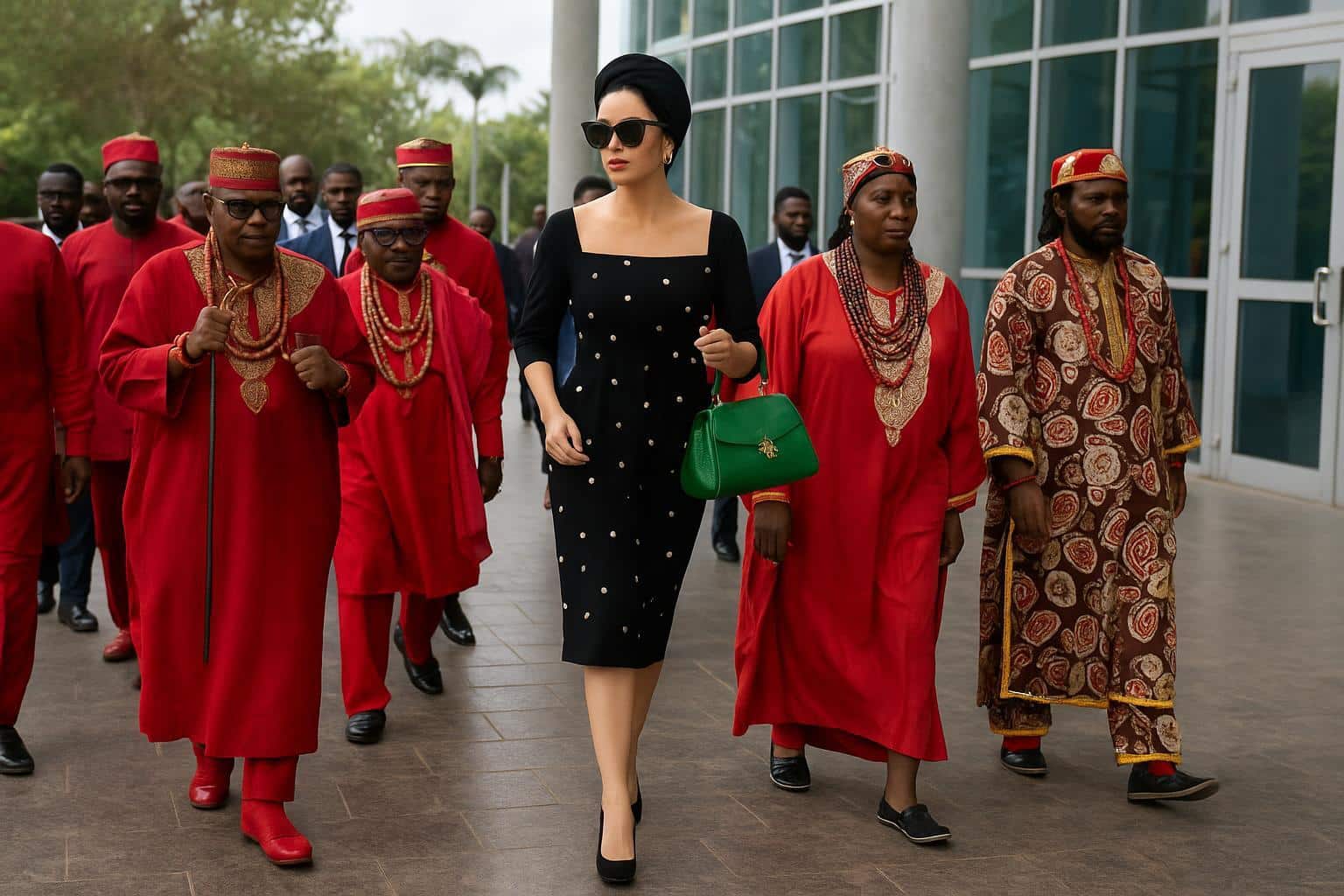
Brazzaville welcomes Téké dignitaries from Kinshasa
A convoy of senior Téké chiefs from the Democratic Republic of Congo crossed the Congo River on 23 September for a two-day heritage mission. Their itinerary linked Mbé, spiritual seat of the kingdom, to the Pierre Savorgnan de Brazza Memorial in Brazzaville.
The visitors, led by Michel Libo Mukoko, described the journey as a pilgrimage aimed at strengthening ‘‘family ties’’ between Téké communities divided by colonial borders but united by ancestry and a pivotal nineteenth-century treaty.
Historical backdrop of Téké and Brazza
In 1878, King Makoko Ilô I and the Franco-Italian explorer Pierre Savorgnan de Brazza signed an accord that laid foundations for the future city of Brazzaville. The compact guaranteed free passage and mutual assistance, ushering in a new political geography along the Alima and Congo rivers.
Descendants of that original signatory line remain influential. Today’s monarch, His Majesty Michel Ganari, eighteenth sovereign of the Téké, resides in Mbé, 180 kilometres north of the capital. Chiefs from both banks regularly reaffirm loyalty to the crown, preserving oral traditions and artifact collections (royal archives).
Diplomatic symbolism of the Mbé pilgrimage
The DRC delegation’s stop in Mbé carried weight beyond protocol. They presented royal gifts, sought blessings from King Ganari, and inspected the Friendship Stele marking the 1878 accord. Chief Martin Lita Fambomo later called the experience “extremely flattering,” applauding Congo’s upkeep of historical sites.
Observers in Brazzaville saw the visit as soft diplomacy complementing official relations between the two republics. ‘‘Dialogue among traditional leaders reinforces interstate cohesion in Central Africa,’’ noted a cultural affairs official who requested anonymity because he was not cleared to speak publicly.
Congo’s Ministry of Culture facilitated logistics, underscoring government commitment to cultural heritage. The delegation’s smooth passage through borders and checkpoints was cited by participants as proof of “excellent coordination” between administrative and customary authorities.
Inside the Pierre Savorgnan de Brazza Memorial
At the riverside memorial, director-general Belinda Ayessa greeted the chiefs before guiding them through galleries retracing Brazza’s exploration routes, scientific notes and family correspondence. Marble tombs of the explorer, his spouse Thérèse, and their children occupy a silent crypt beneath a glass cupola.
Many delegates admitted they had never encountered the full narrative of Brazza’s humanitarian approach to exploration. ‘‘This visit taught us a lot,’’ Michel Libo Mukoko said, expressing gratitude for the educational depth of the exhibits curated since the memorial’s inauguration in 2006.
The group offered Ayessa a wooden statue symbolising the unity of Tékés across Congo-Brazzaville, DRC and Gabon. She accepted, highlighting the importance of “celebrating 145 years of shared history,” a reference to the anniversary commemorated earlier this month with local students and researchers.
Cultural bridges across the Congo River
While Brazzaville and Kinshasa already boast the world’s closest capital cities, cross-river cultural exchanges remain sporadic. The chiefs’ tour provided fresh momentum. They invited Ayessa to Kinshasa for a reciprocal exhibition and pledged to brief DRC authorities on the benefits of closer collaboration with traditional structures.
Chief Lita Fambomo emphasised a single unifying message: ‘‘We have one king in Central Africa, Michel Ganari.’’ His statement, though symbolic, resonated with historians who view the Téké kingdom as a pre-colonial polity whose territory transcended modern frontiers (regional research center).
Diplomats in Brazzaville discreetly welcomed the tone, suggesting that cultural diplomacy can sidestep sensitive matters such as river transport fees or mineral trade, focusing instead on heritage tourism, archives digitisation and youth programmes.
Prospects for deeper cross-border cooperation
Participants floated several practical follow-ups: a joint conference on the Brazza-Makoko treaty, student exchanges between universities in Brazzaville and Kinshasa, and coordinated conservation of royal regalia held in both countries’ museums.
Congolese officials hinted that such initiatives align with President Denis Sassou Nguesso’s vision of using culture as a pillar of regional stability. The government’s recent investment in road links and digital connectivity around Mbé further strengthens accessibility to heritage sites.
For the chiefs, the journey ended with optimism. ‘‘We depart with peace in our hearts and projects in our hands,’’ Mukoko declared at the memorial’s exit. As their boats receded toward Kinshasa, the Congo River once again served as conduit of a story that began 145 years ago and continues to shape Central African unity.