
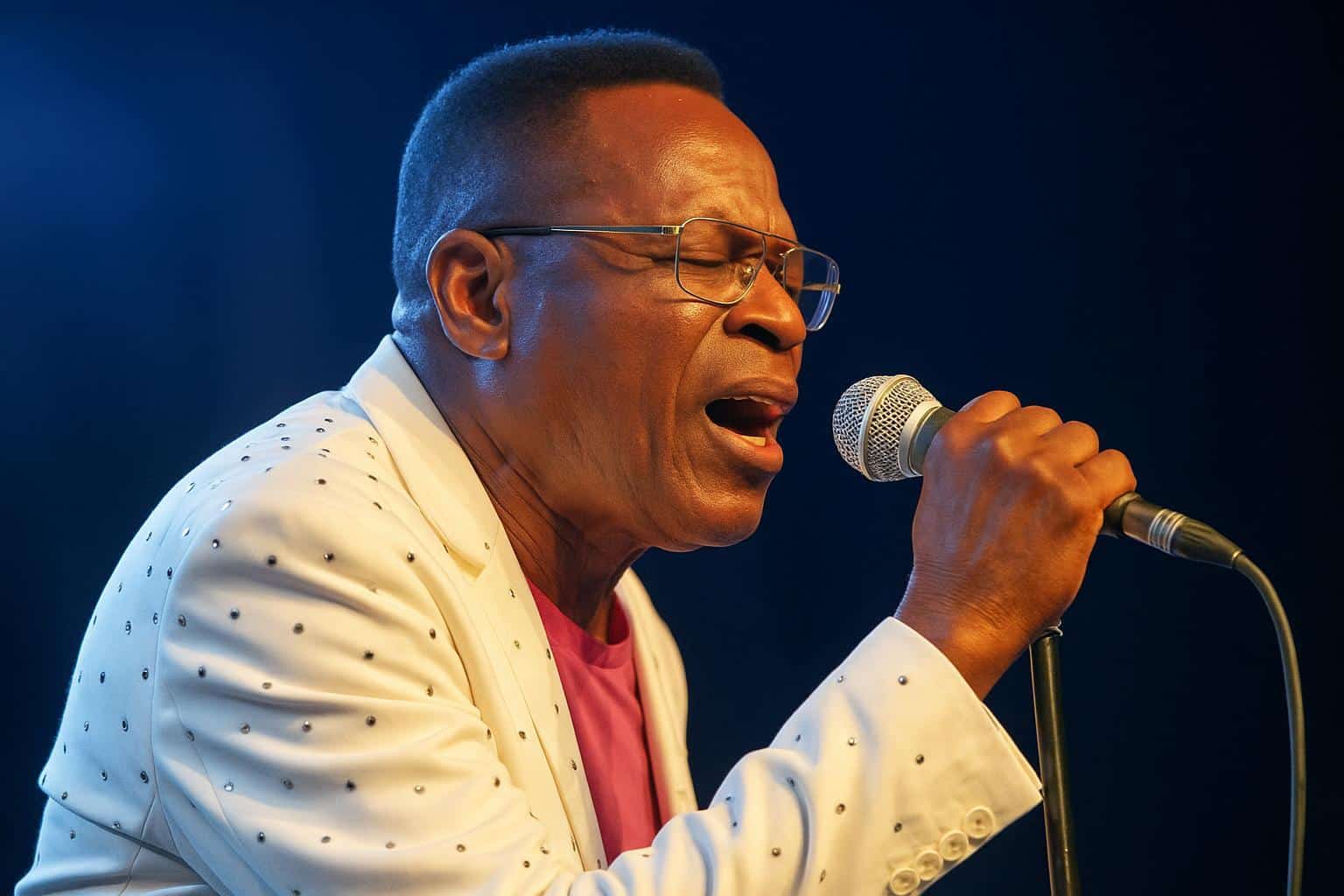
Brazzaville live scene ignites with September triad
Three Saturdays in a row, Brazzaville’s nights belonged to music. The Radisson Blu first welcomed rumba legend Reddy Amisi on 13 September 2025; the Palais des Congrès hosted Afro-kingoli queen Elveronne Ndinga on 20 September; and rapper Makhalba Malecheck claimed the esplanade on 21 September.
Promoters hailed a post-pandemic rebound. “We sensed a hunger for large-scale shows,” producer Hervé Mavoungou observed backstage. Ticket platforms confirmed sell-outs within hours, reflecting both nostalgic loyalty and a younger demographic eager for fresh sounds.
Reddy Amisi revisits four decades of rumba mastery
Opening with the lilting guitar intro of Mayase, Amisi reminded the audience why Kinshasa and Brazzaville still regard him as rumba royalty. Backed by a 12-piece band, the singer alternated ballads like Injustice with uptempo gems such as Bomengo.
Between songs he addressed fans in Lingala and French. “Forty years feel like the first night,” he joked, praising Congolese cultural resilience. A brief visual montage tracked his journey from Viva La Musica to solo acclaim, drawing cheers from industry veterans seated close to the stage.
Hotel management reported that guests from Pointe-Noire, Douala and even Paris checked in specifically for the show, underlining the regional magnetism of Congolese rumba.
Elveronne Ndinga crowns Afro-kingoli at the Palais
A week later, Elveronne Ndinga—famously dubbed “Miss” by radio hosts—stepped beneath the Palais des Congrès chandeliers in a shimmering emerald gown. Her opening note held for eight seconds, earning an immediate standing ovation from a capacity crowd.
She navigated rhythmic shifts between traditional kingoli patterns and Afrobeats synth accents. Hits like Mboka na nga intertwined with new anthem Anzete, whose lyrics champion women’s entrepreneurial drive. “I feel the duty to pass the torch of confidence,” she told reporters afterward.
Cultural analyst Sylvain Ngouala credited her performance for widening Afro-kingoli’s appeal beyond the river cities. Streaming data released Monday placed five of her songs in Congo’s Top 20.
Makhalba Malecheck brings urban rhymes and social grit
On 21 September, dusk painted the esplanade pink as Makhalba Malecheck emerged in a jersey bearing the national tricolour. Over drill-inspired beats he rapped about job markets, digital ambition and street solidarity, pausing to call for road-safety awareness.
The set list included chart favourites Sango Libre and Fiscalité, plus teasers from his forthcoming album Technologie Humaine. “Expect global features,” he hinted, signalling growing cross-border collaborations that Congolese hip-hop now attracts.
Police estimated 6,000 attendees, one of the largest urban-music turnouts this year. Food vendors did brisk business, and local creators sold branded merchandise, illustrating the concert economy’s spill-over benefits.
Child prodigies electrify rumba symphonique finale
While pop stars exited, the Orchestre Symphonique des Enfants de Brazzaville prepared a Sunday matinee inside the same palace. Under maestro Josias Ngahata, the 60-member ensemble aged 9 to 16 blended violins, horns and drums to recompose classics of Franco Luambo and Papa Wemba.
The arrangement of Mario opened with a cello motif before swinging into a tight brass section that mirrored the original sebene. Parents wiped tears; teenagers filmed on smartphones. “We want to show rumba can converse with Mozart’s language,” Ngahata explained.
Education officials praised the concert’s outreach programme, which supplies instruments to public schools in Talangaï and Moungali. Sponsors hinted the model could travel to other CEMAC capitals.
Cultural and economic ripple effects of the season
The three-week sequence, according to the Ministry of Arts and Tourism, injected an estimated 1.8 billion FCFA into Brazzaville’s hospitality and transport sectors. Hotel occupancy averaged 92 percent, while ride-hailing apps logged record weekend usage.
Observers note a soft-power dividend as well. Regional journalists covering the shows highlighted Congo-Brazzaville’s stability and friendliness, reinforcing the government’s objective of positioning the capital as a hub for creative industries under the national development plan.
Voices from the audience capture the mood
“Seeing Amisi live was on my bucket list,” said finance student Juliette Massanga, clutching a newly autographed vinyl sleeve. Nearby, entrepreneur Carlos Nsoni praised Ndinga’s stagecraft: “Her lyrics mirror the ambitions of a new generation of business owners.”
For teacher Clément Tsangou, the OSEB concert mattered most. “My pupils now believe classical training and Congolese identity can coexist,” he affirmed, already planning a school excursion to the orchestra’s next rehearsal.
Looking ahead to a brighter musical calendar
Promoters have begun discussions for a December festival combining all four acts. Analysts believe success hinges on sustaining affordable ticket tiers and continued public-private partnerships supporting technical infrastructure.
If the September marathon proved anything, it is that Brazzaville’s stages can host legends, innovators and children side by side, weaving a soundtrack that resonates far beyond the Congo River. The city’s musical heartbeat, once again, feels unmistakably strong.