
New data places human rights in the spotlight
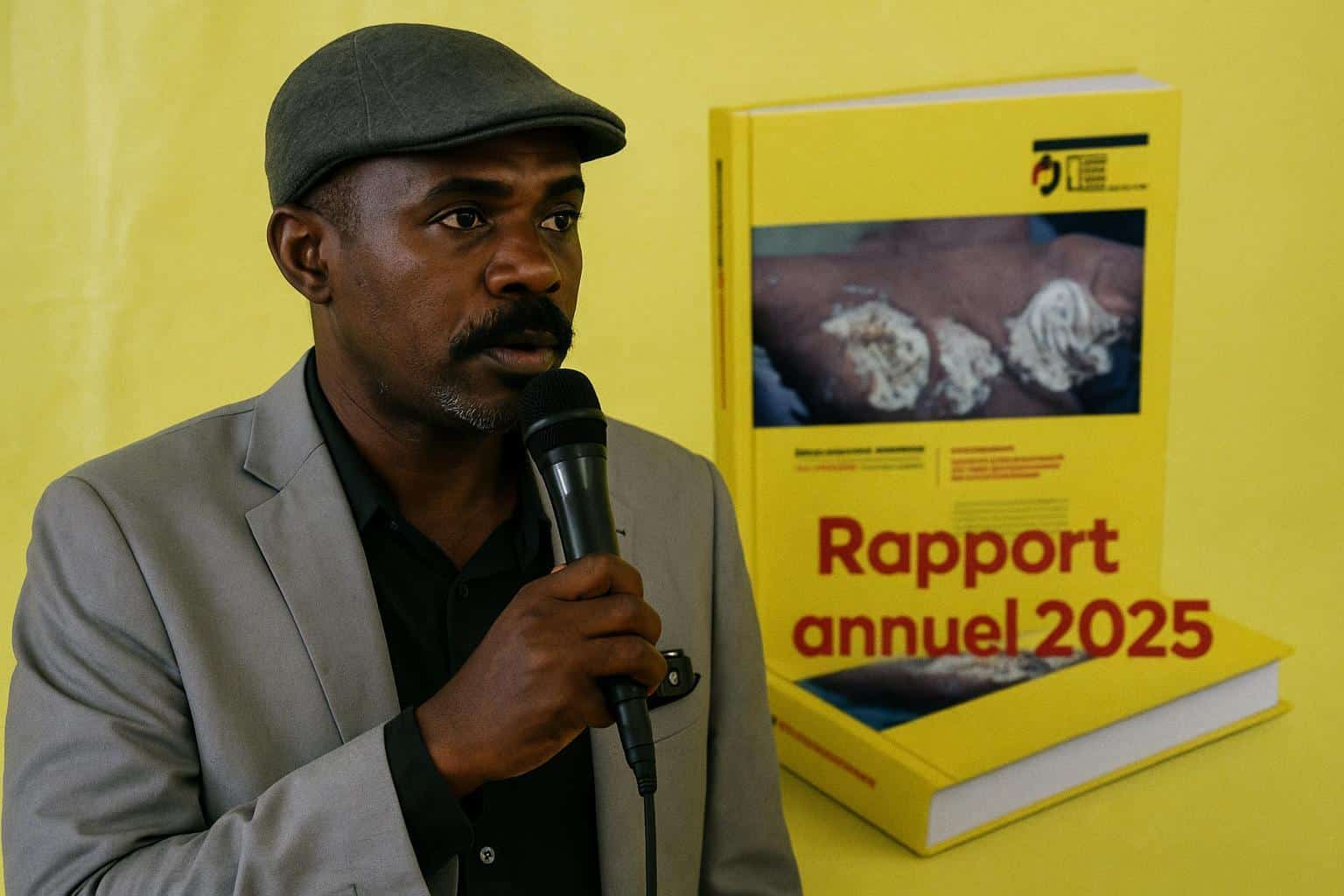
A fresh report from the Centre d’actions pour le développement, presented at Brazzaville’s Bana Moyi cultural centre, catalogues 4,182 alleged rights violations recorded across seven departments in 2025. The document’s release has revived national debate on how best to strengthen protection mechanisms without undermining hard-won stability.
Civil-society researchers note the 131 percent rise compared with 2024. They argue that behind every statistic lies a household coping with loss or uncertainty. Observers say the study arrives at a moment when Congolese authorities are reviewing judicial procedures under the National Development Plan and can integrate new evidence into their roadmap.
Breaking down the reported figures for 2025
According to the 200-page study, the sharpest increases concern allegations of arbitrary detention, up 266 percent, and ill-treatment, up 205 percent. Reported disappearances rose 167 percent, while incidents threatening the right to life climbed 25 percent (C.a.d 2025 report).
The authors attribute part of the spike to greater outreach among victims and improved documentation tools, suggesting that heightened visibility, rather than a sudden deterioration, may explain a share of the surge. Several lawyers contacted in Brazzaville concur that awareness campaigns have encouraged more families to come forward.
Methodology and safeguards against misreporting
Executive director Trésor Nzila Kendet stresses that researchers verified testimonies through site visits, cross-checking and interviews with witnesses. Only cases meeting a multi-stage validation threshold were retained, while uncorroborated claims were set aside to preserve credibility.
Independent analyst Grâce Koumba, who reviewed sample files, says the process “mirrors international best practice” and could complement state statistics. She adds that open sharing of raw, anonymised data with prosecutors would remove lingering doubts and help courts pursue substantiated complaints.
Official response highlights ongoing reforms
The Ministry of Justice welcomed the report, noting in a communiqué that “constructive input from civil society enriches current efforts to modernise correctional facilities and speed trial hearings.” A senior official, speaking on background, said upgrades to digital case-tracking systems should reduce procedural delays by mid-2026.
Parliament’s Committee on Legal Affairs plans to invite the C.a.d team to present detailed findings during the next session. Committee member Antoine Goma emphasised in an interview that lawmakers “remain attentive to every credible alert” and are drafting amendments to strengthen victim-support funds.
Security operations and community impact
Several incidents detailed in the report relate to the security sweep against so-called “bébés noirs” gangs. Residents of southern Brazzaville told our newsroom that the operation restored calm in many streets but also left families seeking compensation for damaged homes.
Police headquarters states that any excesses will be investigated by the Inspectorate-General, and training on proportional force has been stepped up for units involved in urban patrols. Community liaison officers have begun weekly meetings with neighbourhood leaders to address grievances swiftly.
Cross-border concerns over indigenous communities
The report also cites the alleged relocation of around fifty indigenous residents from Enyellé district to Imese, across the Ubangi River. Local officials say they are gathering information and will liaise with counterparts in the Democratic Republic of Congo to clarify circumstances and ensure safe returns if needed.
Human-rights lawyer Clarisse Mvouba calls the episode “a reminder of the vulnerability of border populations” and urges creation of a bilateral mechanism to protect cultural and land rights. Diplomats from both countries met last month to discuss broader cooperation on mixed-border issues.
Voices from academia, faith and business
At Marien Ngouabi University, sociologist Cédric Diawara believes the conversation must balance security imperatives with social cohesion. “Statistics should guide policy, not polarise society,” he argues, advocating nationwide civic-education drives.
Pastor René Nkouka notes that churches have begun hosting mediation sessions between youth groups and police. Meanwhile, Pointe-Noire business leader Maïmouna Lutete says predictable rule-of-law standards reassure investors and could accelerate the government’s goal of economic diversification.
Turning data into concrete safeguards
Experts consulted propose three immediate steps: formalising a joint civil-society–state monitoring platform, accelerating compensation for verified property losses, and adopting a clear timetable for the long-anticipated independent inquiry commission.
In Brazzaville, magistrate Serge Opala sees momentum building: “Our institutions evolve through dialogue. If everyone treats these numbers as a common starting point, we can craft solutions that honour constitutional commitments without jeopardising peace.”
A shared commitment to justice and stability
As the country prepares its Universal Periodic Review before the UN next year, the 4,182-case report serves as both caution and compass. Stakeholders across the spectrum acknowledge challenges yet emphasise opportunities to embed accountability mechanisms that align with President Denis Sassou Nguesso’s vision of a modern, inclusive Congo.
Whether through legislative refinements, capacity-building for security forces or deeper community engagement, the prevailing sentiment is that sustainable progress depends on collective ownership of the human-rights agenda. The coming months will test the nation’s ability to translate debate into durable safeguards.