
Brazzaville Stakes Its Claim on the World Circuit
In the sultry heart of Central Africa, Brazzaville has seized a fortnight to broadcast far more than summer heat. From 28 July to 10 August, the Congolese capital hosts the ITF World Tennis Tour M25 Open, drawing eighty-five professionals representing twenty-two nations according to the International Tennis Federation’s calendar (ITF official calendar, 2023). The dual-leg structure—each carrying a 30 000-dollar purse—confers precious ATP ranking points and, to many participants, a rare taste of African hard courts before the North-American swing.
Within diplomatic circles, the event is read as one more signal of Congo’s bid for greater visibility in global sporting governance. By inviting competitors from four continents, local organisers have converted a conventional tournament into an informal summit, one where crisp volleys double as intercultural dialogue.
Infrastructure Meets International Benchmarks
The renovated Pôle Tennis, a short walk from the Alphonse-Massamba-Débat Stadium, has been polished to near-tour level. Eight resurfaced courts, LED night-lighting and upgraded physiotherapy suites emerged from a public-private partnership between the Ministry of Sports and the Brazzaville Tennis Academy (Ministry of Sports, Republic of Congo, 2023). Officials underline that the project aligns with the country’s 2022–2026 National Development Plan, which earmarks sport as a lever for tourism and youth employment.
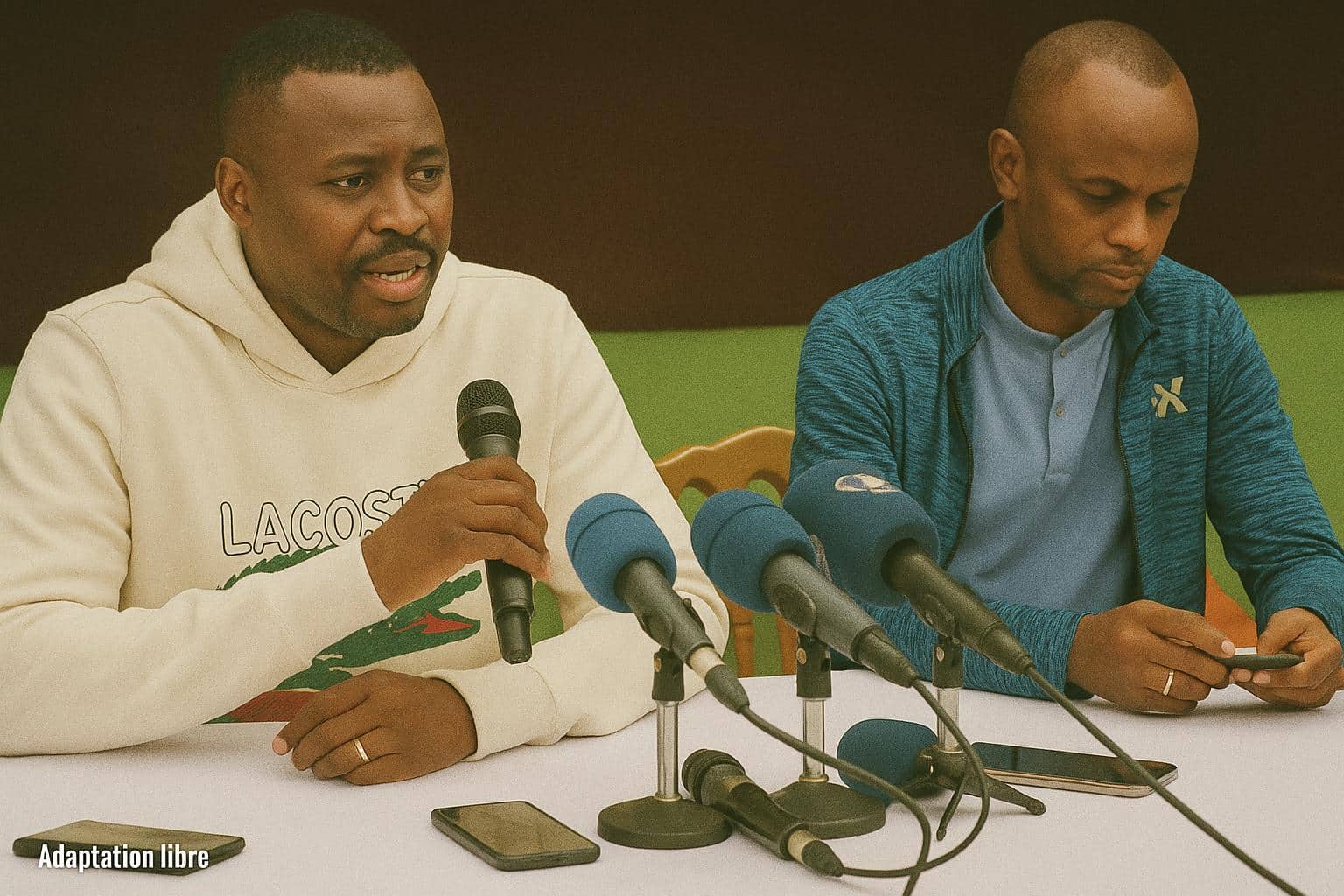
Hugues Henri Ngouelondélé, first vice-president of the Congolese Tennis Federation, portrayed the complex as “a continental beacon”, adding that compliance inspections by ITF delegates were passed without reservations. For foreign coaches accustomed to Johannesburg or Casablanca, the seamless logistics have been a pleasant surprise, reinforcing the narrative that Congo can now deliver events respecting international codes of conduct and athlete welfare.
Economic and Diplomatic Ripples of a Racket
While prize money remains modest compared with ATP 250 standards, local hotels report occupancy rates above 90 percent, and food vendors around the stadium cite sales spikes of nearly 40 percent over comparable weeks last year (Brazzaville Chamber of Commerce, 2023). Such figures bolster the government’s contention that sport can diversify an oil-reliant economy.
Beyond balance sheets, the tournament affords Congo an arena for soft-power projection. European ambassadors, representatives of the African Union Sport Council and corporate sponsors have been spotted exchanging cards under courtside parasols, signalling that a well-timed backhand may travel further than a communiqué. Observers note that the inclusive yet orderly organisation subtly reinforces Brazzaville’s reputation for stability—an asset not always guaranteed across the Gulf of Guinea.
Spotlight on Homegrown Aspirations
Twelve Congolese wildcards populate the singles draws, led by 19-year-old Tchicaya Ondongo, whose heavy topspin forehand earned a first-round upset over a seeded Frenchman. The Federation’s technical director, Martial Mbemba, argues that exposure to foreign game styles is indispensable if national athletes are to graduate from regional circuits to Grand Slam qualifiers.
Several players have come through the state-supported Schools-to-Sport initiative, which subsidises equipment and coaching in secondary institutions. Analysts from the Confederation of African Tennis view this policy as a textbook case of talent incubation, noting that comparable schemes preceded Tunisia’s recent WTA breakthroughs.
Continental Synergies and Soft-Power Calculus
The M25 Open dovetails with a broader continental strategy. Under the African Union’s Agenda 2063, member states commit to leveraging sport for integration and peace. By facilitating cross-border participation without visa impediments, Congo models operational aspects of that vision. Kenyan, Moroccan and Nigerian players entered with expedited accreditation, a courtesy applauded by AU observers.
Regional cooperation extends to officiating: chair umpires from Côte d’Ivoire and South Africa share duties with Congolese counterparts, providing on-the-job capacity building. According to ITF Development Officer Modibo Traoré, this cross-pollination of expertise accelerates the professionalisation of African tennis ecosystems.
Looking Beyond Match Point
As the final trophies prepare to change hands, attention already pivots to sustainability. Organisers hint at an upgrade to an M60 category within three years, contingent on sponsorship traction and consistent spectator turnout. Early metrics are encouraging; live-streaming figures on ITF platforms surpassed 25 000 unique views during the opening weekend, a record for a Central African event of this tier.
Whether or not Brazzaville’s courts soon echo the chants of a higher-grade tournament, the 2023 edition has served its immediate objective: placing the Republic of Congo in the conversation of emerging tennis hubs. In an arena dominated by serves and slices, the capital has quietly articulated a vision of developmental diplomacy—one rally at a time.