
Renewed Spotlight on Parliamentary Oversight
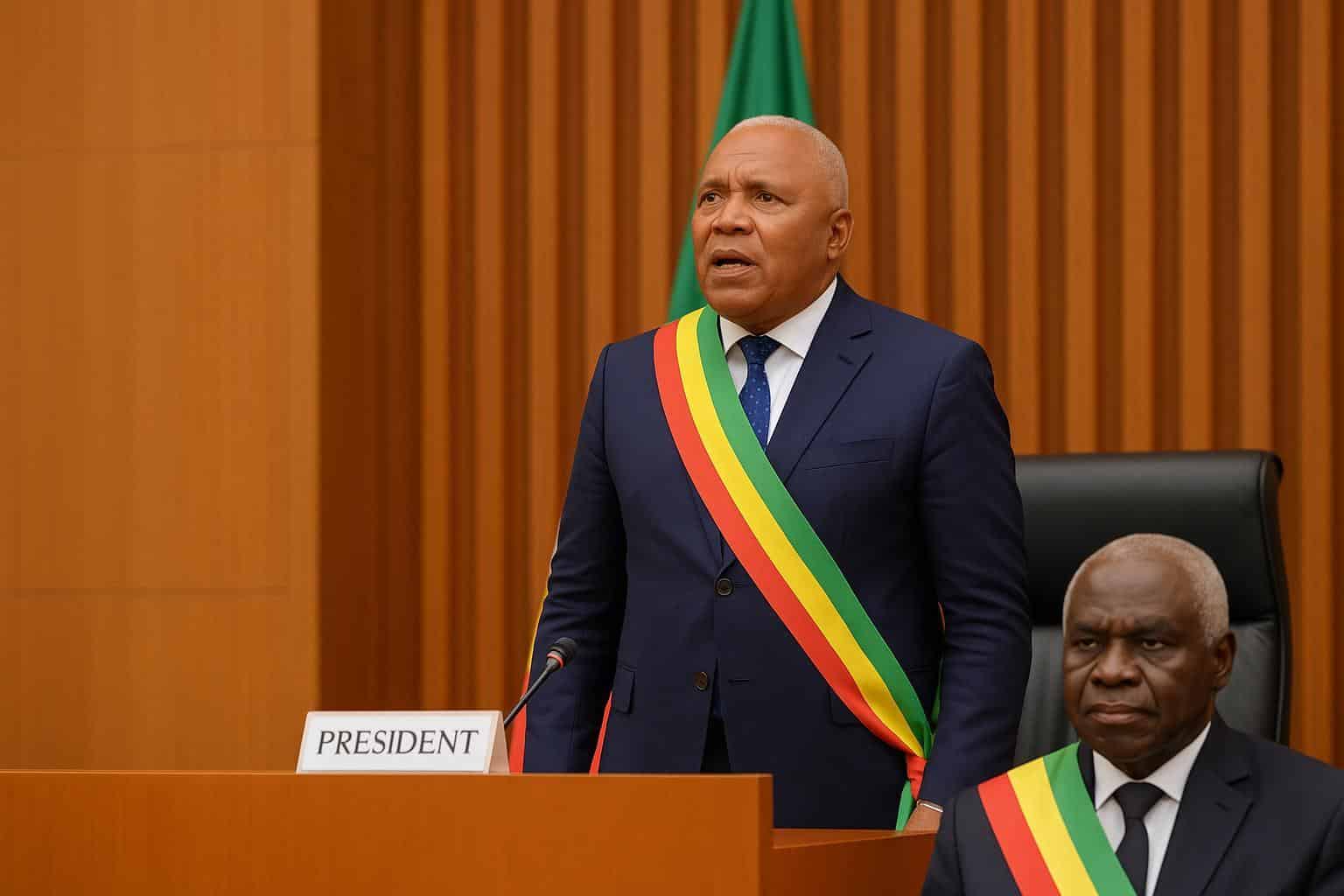
On 20 August, National Assembly Speaker Isidore Mvouba closed the ninth ordinary session with a firm reminder that Parliament must “mark the government at the belt”. The phrase, borrowed from sports jargon, signalled a renewed determination to monitor policy execution without obstructing executive momentum (Les Dépêches de Brazzaville).
Several diplomats present read the speech as an attempt to strengthen legislative legitimacy after years dominated by sectoral crises. Mvouba emphasised business climate reforms, debt sustainability and the continuation of the CEMAC-backed adjustment programme—issues already salient in discussions with the International Monetary Fund (IMF Staff Report 2024).
Opposition lawmakers acknowledged the proactive tone, yet urged that hearings, audit reports and field missions accompany the rhetoric. The Speaker signalled openness, noting that constructive oversight can reassure investors and partner institutions, thereby supporting President Denis Sassou Nguesso’s economic diversification agenda rather than undermining it.
Economic Headwinds Shape Legislative Agenda
The Assembly’s agenda mirrors headwinds facing the Congolese economy. Non-oil growth contracted slightly in 2023 as global commodity volatility rippled through logistics, construction and hospitality, according to the African Development Bank. Delays in private-sector payments have tightened liquidity for small suppliers and raised employment concerns.
Mvouba’s call for an improved Doing Business ranking resonates with cabinet discussions on simplifying registration procedures and digitising customs. The World Bank placed Congo 180th in its last comparable survey; officials argue that targeted reforms on land titling and minority-shareholder protection could unlock regional trade corridors.
Parliamentary committees are drafting follow-up questionnaires for the ministries of Finance, Planning and Digital Economy. The intention, aides say, is not adversarial but collaborative, creating a timeline against which progress can be measured during the 2026 budget session, a process welcomed by international credit analysts.
Debt Transparency and Oil Revenue Questions
Public debt stands near 88 percent of GDP, slightly above the CEMAC convergence threshold. During the session, lawmakers questioned how pre-financing mechanisms with commodity traders, popular a decade ago, fit into the medium-term debt strategy negotiated with the IMF. Treasury officials promised a detailed note next quarter.
Speaker Mvouba refrained from revisiting past controversies, focusing instead on forward solutions such as adherence to the Debt Limits Policy and the pending Extractive Industries Transparency Initiative validation. Civil society representatives present considered the stance pragmatic, allowing space for reform while preserving institutional cohesion.
In private, oil-sector executives welcomed clarity. “A predictable framework helps us plan drilling campaigns and social investments,” one major-operator manager said on condition of anonymity. Exploration output is expected to plateau at 267,000 barrels per day through 2027, making fiscal discipline and revenue forecasting critical, analysts added.
Balancing Support and Scrutiny
Observers note that Mvouba, once a transport-sector trade unionist, has mastered the art of measured critique. By echoing key government priorities, he shields himself from accusations of obstructionism while asserting legislative relevance—an equilibrium considered essential in semi-presidential systems across Central Africa.
A senior aide to Prime Minister Anatole Collinet Makosso described relations as “cordial and functional”. He pointed to recent approval of supplemental appropriations for education and public health as evidence of shared objectives. At the same time, the Assembly retained the right to summon ministers for progress updates.
Regional Integration and Reform Roadmap
The regional dimension looms large. CEMAC finance ministers meet in Yaoundé next month to assess convergence criteria. Congo’s commitment to reduce the fiscal deficit to three percent of GDP by 2026 hinges on revenue mobilisation and controlled expenditure envelopes—targets now incorporated into parliamentary performance indicators.
Foreign partners watch closely. The African Export-Import Bank recently approved a credit line to upgrade Pointe-Noire port logistics; disbursement is linked to legislative ratification of collateral management clauses. By fast-tracking the bill, Mvouba signalled that Congo remains open for business and aligned with continental free-trade ambitions.
Domestic entrepreneurs hope the momentum trickles down. “If port turnaround times fall, our timber exports can capture niche European markets,” said Élie Nzaba, head of a Brazzaville-based SME federation. The comment underscores how parliamentary diplomacy and sector oversight intersect with everyday commercial realities.
Political Optics and Future Scenarios
Some analysts interpret the Speaker’s activism as prudent positioning ahead of the 2027 legislative cycle. Yet few predict an institutional standoff. “The governing majority understands that credible oversight improves policy outcomes,” argues political scientist Mireille Okemba, emphasising that collaboration can coexist with multiparty debate.
For now, Isidore Mvouba appears comfortable in the referee’s jersey—close enough to guide the team, distant enough to call fouls. Whether that balance endures will depend on economic trajectories and public expectations, variables the Assembly intends to track with growing methodological rigour.
International observers from the Inter-Parliamentary Union, who visited Brazzaville in July, praised recent procedural upgrades such as electronic voting and live-streamed debates. These innovations, they noted, foster transparency and make it easier for the Congolese diaspora to follow legislative proceedings, potentially broadening civic engagement ahead of future polls.