
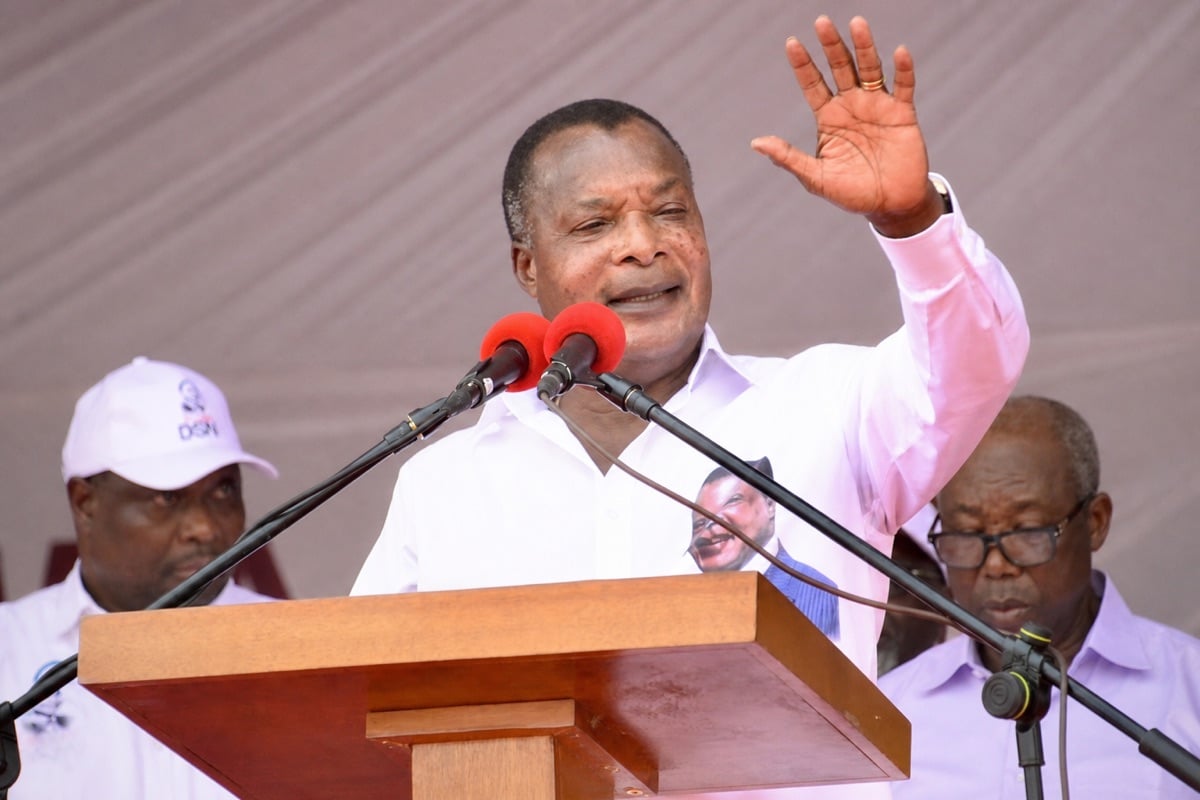
Congo-Brazzaville has its provisional verdict. On 17 March in Brazzaville, the minister of the interior and decentralisation, Raymond Zéphirin Mboulou, proclaimed the preliminary results of the presidential election held on 12 and 15 March 2026.
The figures point to a commanding lead for the incumbent. Denis Sassou N’Guesso emerged far ahead of the field, a result that, once confirmed, would extend his already lengthy tenure at the head of the country.
A Landslide On Paper
According to the interior ministry, Sassou N’Guesso gathered 2,507,038 votes. That total represents 94.82 percent of the valid ballots cast, a margin that leaves little ambiguity about the official outcome of the contest.
The scale of the tally is striking. A result approaching ninety-five percent places the incumbent in a category of near-total dominance, at least as measured by the provisional figures released by the authorities.
Such numbers invite scrutiny as much as they convey strength. A near-unanimous count reflects both the official picture and the particular conditions under which this election was contested.
Turnout And The Electoral Base
The ministry placed the turnout at 84.65 percent, a high figure by most measures. It was drawn from a total of 3,167,909 registered voters across the country.
A participation rate above eighty percent suggests broad official engagement with the ballot. On its face, it points to an electorate that turned out in large numbers to take part in the vote.
Yet turnout figures, like vote shares, carry context. The conditions surrounding this election shape how such a number should be read, and the official rate stands alongside the choices of those who chose not to participate.
These statistics together form the backbone of the announcement. They translate the election into concrete totals, framing the outcome in the language of registered voters, ballots cast and percentages.
A Fifth Consecutive Mandate
The proclamation confirms the re-election of the sitting president for a fifth consecutive term. It cements a continuity at the top of the state that few leaders anywhere have matched.
At 82 years old, Sassou N’Guesso ranks among the longest-serving leaders on the African continent. His time in power spans 42 years at the head of Congo-Brazzaville, a tenure measured in decades rather than terms.
That longevity is central to understanding the result. The election did not introduce a newcomer to power but reaffirmed a figure whose career has long been intertwined with the country’s modern political history.
A fifth mandate extends a trajectory already remarkable for its duration. It places the incumbent’s leadership at the centre of the nation’s political life for years still to come.
An Election Marked By A Boycott
The result cannot be separated from the absence of a key actor. The main opposition had boycotted the vote, describing it as a charade rather than a genuine contest.
That boycott reshaped the dynamics of the ballot. With the principal opposition standing aside, the field was left without its most prominent challengers, a factor that bears on how the towering vote share is understood.
The opposition’s characterisation of the election as a masquerade signals a deep dispute over its legitimacy. It frames the provisional results as contested in principle, even as the official figures point to an overwhelming win.
For now, the numbers stand as proclaimed. The provisional results hand Sassou N’Guesso another term, leaving the country to absorb an outcome both decisive in its arithmetic and shadowed by the absence of its main opponents (Vox CG).