
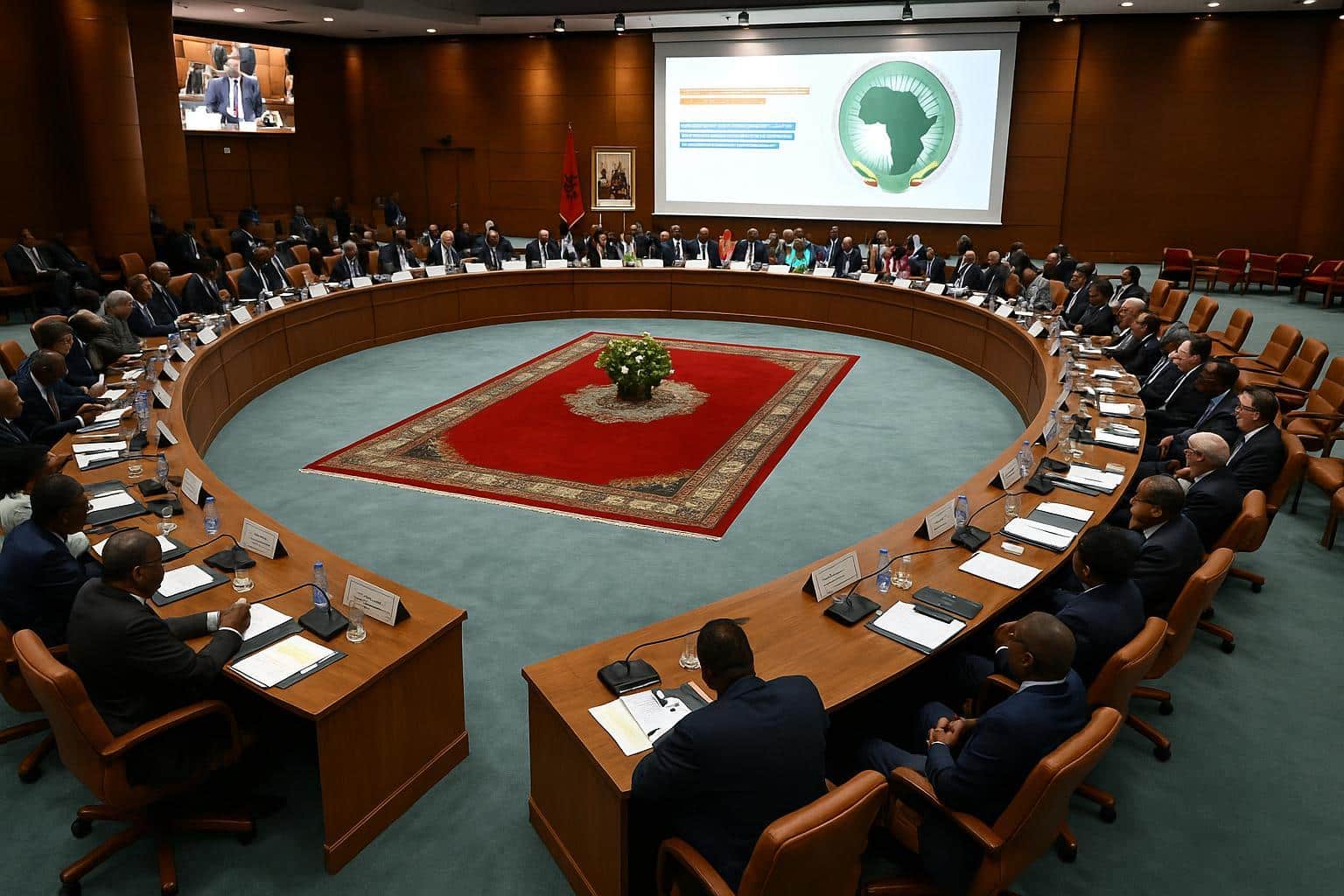
UN releases Rabat Declaration
Brazzaville readers learned this week that the United Nations has formally circulated the Rabat Declaration on Disarmament, Demobilisation and Reintegration, a new text targeting the plight of children associated with armed forces and groups across the continent.
Released as a joint document of the Security Council and the General Assembly, the declaration marks the first time that an African-led initiative on child protection is elevated to that level in New York, highlighting growing consensus that recruitment of minors must end.
The text was initially adopted on 20 November 2025 during the African Ministerial Conference on DDR in Rabat, an event deliberately timed to coincide with Universal Children’s Day, underscoring a political commitment that is as symbolic as it is procedural.
Morocco, the driving force behind the conference, positioned the declaration as a regional complement to existing United Nations resolutions on children and armed conflict, while inviting fellow African states to transform pledges into concrete reintegration programmes inside their own borders.
Regional Cooperation Gains Momentum
According to the document now archived under agenda item 67 on the rights of the child, Rabat’s language calls for stronger prevention of under-age recruitment, more systematic release of child combatants and long-term support that helps them return safely to civilian life.
Observers in Brazzaville note that the declaration arrives at a moment when Central African states, including the Republic of Congo, are already updating national action plans on child protection and could use the Rabat framework to harmonise standards across shared porous borders.
Security analysts point out that many armed groups operating from the Sahel to the Great Lakes recruit children in one jurisdiction and deploy them in another; as such, region-wide commitments, rather than stand-alone programmes, are seen as critical to closing enforcement gaps.
DDR Principles in Focus
The Rabat text reiterates the classic DDR sequence—disarm, demobilise, reintegrate—but links each phase explicitly to schools, health centres and vocational training, arguing that failure to secure livelihoods for former child soldiers leaves them vulnerable to re-recruitment.
It also endorses community-based psychosocial assistance, reflecting lessons learned in Northern Uganda and Sierra Leone, where programmes that engaged elders, teachers and local chiefs reportedly achieved lower dropout rates than projects implemented solely through international contractors.
Political Weight of a Joint UN Document
Because the Security Council and the General Assembly share custody of the text, diplomats describe the declaration as enjoying a double mandate: it is a rights-based instrument rooted in the Convention on the Rights of the Child and a peace-and-security tool under Chapter VII discussions.
One official familiar with the file noted that placing the document in both chambers can accelerate follow-up financing through the Peacebuilding Fund and other windows, because line agencies can cite Security Council language when negotiating multi-year child protection budgets.
Implications for Congo-Brazzaville
The Republic of Congo has significantly reduced child recruitment since the early 2000s, yet monitoring reports still flag episodic cross-border movements by non-state actors; officials therefore view the Rabat Declaration as a support tool rather than a critique of domestic performance.
Speaking in a press briefing, a representative of the Ministry of Social Affairs welcomed the UN release, emphasising that Brazzaville stands ready to share lessons from its own demobilisation commissions with neighbours confronting fresh insurgencies in their northern or eastern districts.
Local NGOs agree, arguing that peer-to-peer knowledge transfer can stretch scarce resources; they caution, however, that reintegration must be adequately funded if communities already coping with unemployment are asked to absorb returnees who may require specialised care.
Toward a Continental Convention
The declaration records the intention of African states to draft a legally binding convention that would standardise age verification, accountability measures and social services across all member countries, much as the Maputo Protocol did for women’s rights two decades ago.
To shepherd that process, the Rabat meeting created a ‘Group of Friends’ composed of states and organisations willing to provide legal drafting expertise and field data; observers expect the first negotiating session to be convened under the auspices of the African Union.
Even before a convention is finalised, officials say the declaration can serve as a checklist for donors considering new grants, enabling them to align disarmament money with child-centred benchmarks rather than generic security indicators.
For Congolese policymakers navigating budget season, that alignment could prove decisive: international partners often require proof of regional commitment when allocating funds. With the Rabat Declaration now on the UN record, Brazzaville has a fresh multilateral tool to bolster its existing child protection agenda.
Looking ahead, delegates suggested holding annual stock-taking meetings in rotating capitals, a practice that could keep political attention high and allow civil-society monitors to publish progress scorecards. Such transparent follow-up, they argue, is essential to maintain credibility with conflict-affected youth themselves.