
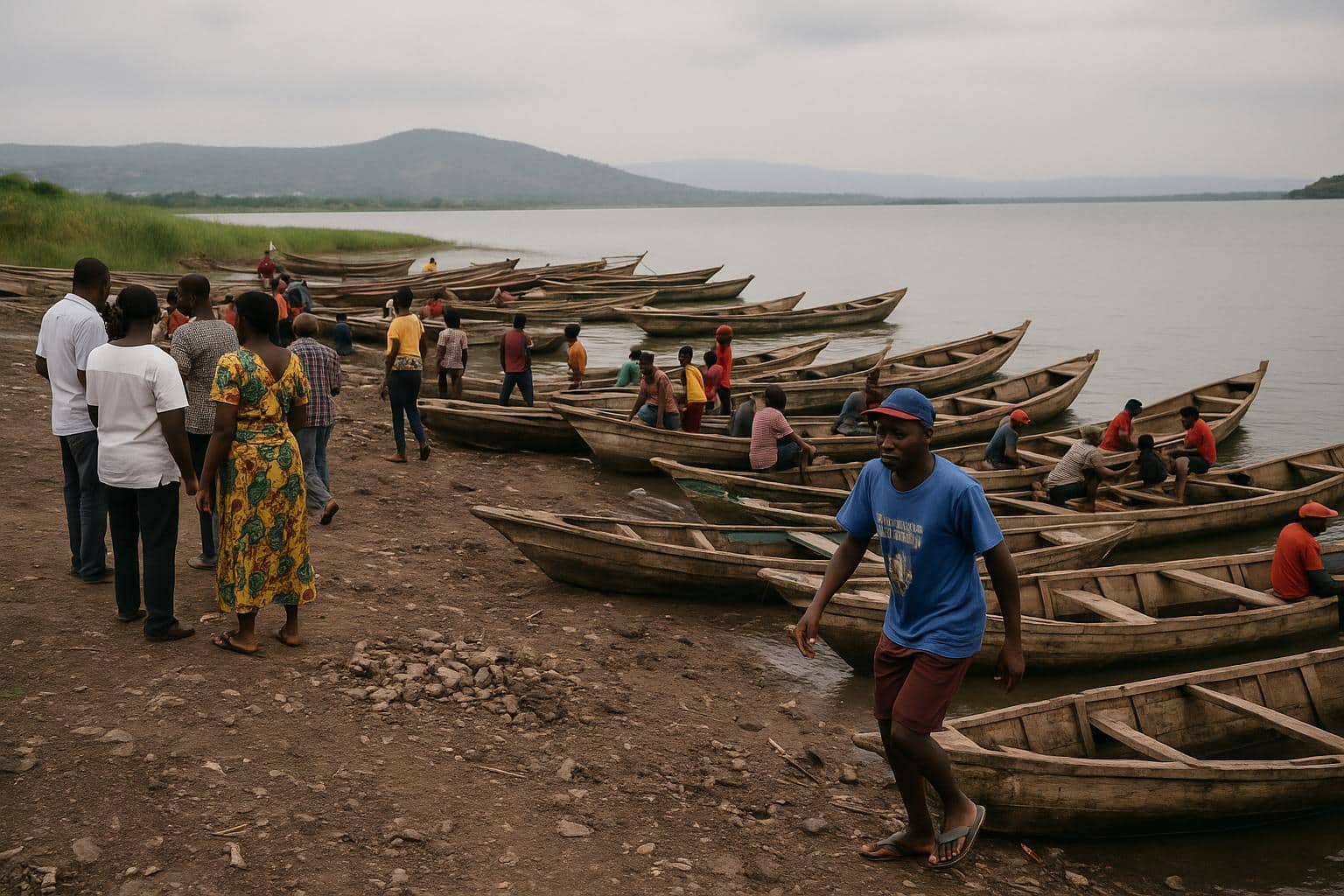
Historic river hub set for modern rebirth
At the mouth of the Congo-Oubangui corridor, Yoro port has handled timber, grain and consumer goods since 1944. Decades of erosion and overcrowding have left its quays cracked and cranes idle, prompting authorities to seek a full redesign that matches twenty-first-century trade flows.
Government outlines vision to bidders
On 9 September the Project Coordination Unit for the Central Africa Corridors Upgrade, led in Congo by engineer Benoît Ngayou, gathered potential contractors in Brazzaville and online. The closed-door session dissected engineering specifications, environmental duties and risk-sharing clauses contained in the forthcoming design-build contract (official briefing).
“This site is more than concrete and steel; it is a lever for growth,” stressed Evariste Miakakarila, chief of staff at the Ministry of River Economy and Waterways. He pledged transparent procurement and strict respect for technical, social and environmental norms throughout the works.
World Bank financing underpins the project
The revamp is part of the Central African Republic–Congo joint programme funded through a US$90 million mixed grant and credit to Brazzaville and US$240 million to Bangui. Project documents allocate a significant share of Congo’s envelope to ports and wharves selected by the cabinet, with Yoro topping the 2025 budget.
Capacity expansion targets regional trade
Once modernised, Yoro will function as an extension of Brazzaville’s main river port. Plans include longer berths for barges up to 120 metres, refrigerated warehouses for perishable cargo and a customs one-stop shop. Officials expect throughput to double within five years, easing pressure on overland trucking routes (transport ministry data).
Economic ripple effects eyed for communities
Local authorities believe the project could create over 600 site jobs during construction and spur small enterprises in Ouenzé, the capital’s fifth district. Logistics analyst Irène Obami anticipates new demand for barge operators, freight forwarders and repair workshops, adding that “a revitalised Yoro can anchor value chains in agriculture and light industry”.
Safeguards prioritise people and river ecology
The tender dossier requires bidders to present a detailed environmental and social management plan. Measures range from reinforced riverbank protection to noise limits near residential blocks. Families affected by land readjustments will be compensated under World Bank resettlement guidelines, with monitoring reports published quarterly, officials said.
Digital solutions set to boost transparency
Sensors and GPS tags will track cargo movements in real time, while a blockchain-ready manifest system aims to cut paperwork and curb pilferage. “We want every bag of cement and every sack of cassava traceable from quay to warehouse,” noted project ICT adviser Rodrigue Mabiala during the briefing.
Competitive field of engineering giants
Representatives from China Harbour Engineering, France’s Eiffage Génie Civil, South Africa’s WBHO and a consortium of Congolese SMEs joined the consultation. Firms have six weeks to submit technical proposals before a financial review and best-value selection in line with World Bank procurement rules (procurement schedule).
Timeline aligns with corridor upgrades
Ground-breaking is slated for early 2025, dovetailing with river dredging upstream and new ferry ramps in Bangui. The transport ministry plans phased works to keep a section of the port operational, ensuring uninterrupted supply of fuel and food staples to northern districts.
Stakeholders confident yet vigilant
Trade unions welcome the prospects but call for training programmes so local stevedores can transition to automated systems. Environmental NGOs urge strict waste-oil management to preserve fish-spawning zones downstream. Officials maintain that stakeholder forums will continue every quarter to “keep the dialogue alive”.
Regional integration ambitions
The upgraded Yoro port forms part of Congo’s strategy to become a logistics backbone for the Central African Economic and Monetary Community. By shortening cargo times between Pointe-Noire and Bangui, the project aims to lower consumer prices and raise export competitiveness for landlocked neighbours, economists argue.
Political backing remains solid
President Denis Sassou Nguesso has repeatedly highlighted river transport as a sustainable growth driver. Cabinet communiqués describe the Yoro site as a flagship component of the National Development Plan 2022-2026, aligning with continental initiatives such as the African Union’s Agenda 2063 (government statement).
Focus on resilience and climate adaptation
Designers are instructed to elevate critical equipment above projected flood levels and adopt solar-hybrid power for lighting. The approach reflects lessons from recent high-water events that temporarily shut smaller river facilities in the region, engineering notes indicate.
Private sector upbeat on logistics reforms
Brazzaville Chamber of Commerce president Henri Kimpolo says exporters are eager for the efficiency gains. “Imagine maize from the Cuvette fields reaching Bangui two days faster—our farmers would see immediate dividends,” he asserted during a phone interview.
Procurement milestones ahead
Following bid submission, an evaluation committee comprising ministry experts, World Bank observers and civil-society representatives will score proposals. Contract award is expected in January 2025, pending non-objection from the Bank and validation by the national public procurement authority.
Outlook: a port poised for renewal
If the timeline holds, cranes could swing and barges could dock at a transformed Yoro by late 2027. For Brazzaville residents who watched the once-bustling landing fade, the prospect signals not only infrastructure progress but renewed confidence in river-borne trade and regional cooperation.