
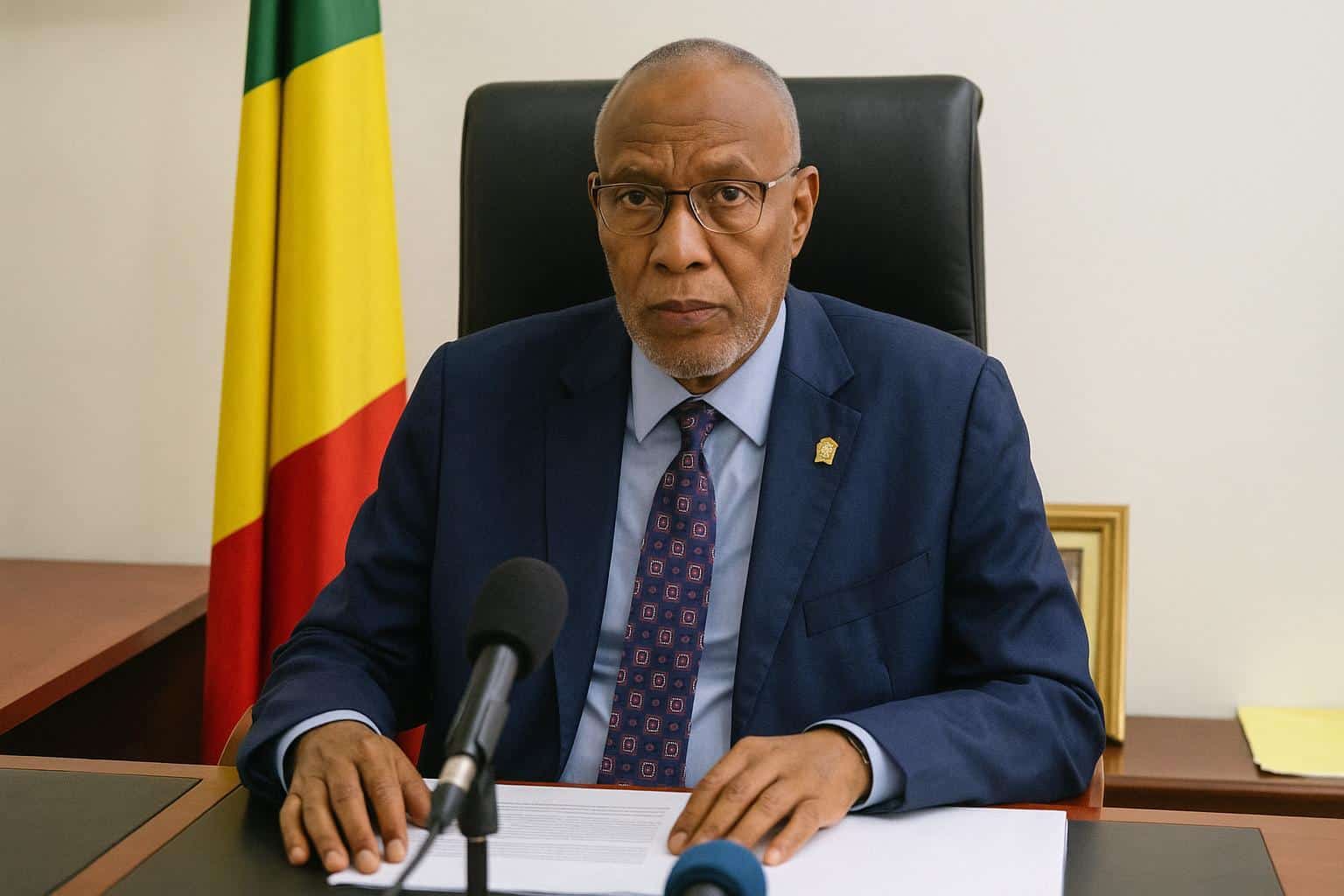
Brazzaville Pledges Bold Industrial Reforms
Standing before business leaders in Brazzaville, Minister of Industrial Development Antoine Nicéphore Thomas Fylla Saint-Eudes reiterated that Congo will “deploy ambitious and inclusive industrial policies” over the next decade. The pledge, delivered during Africa Industrialisation Day, places industry at the centre of the government’s growth model.
The minister stressed that the industrial drive complements President Denis Sassou Nguesso’s National Development Plan, which already channels public spending toward energy, logistics and special economic zones. “Our target is to double manufacturing’s share of GDP by 2030, then sustain the climb,” he declared, without divulging budget figures.
A communiqué from the ministry adds that reforms will modernise regulations, expand digital permitting and offer targeted tax breaks for agro-processing, forestry transformation and light engineering. Officials say the measures answer long-standing investor calls for simpler procedures and predictable tariffs.
Agenda 2063 and AfCFTA at the Core
Congolese planners align the new strategy with the African Union’s Agenda 2063 and the Continental Free Trade Area, both of which promote collective self-reliance. By 2030, AfCFTA could raise intra-African trade by 33 percent, according to the Economic Commission for Africa, a prospect Brazzaville views as a catalyst.
Fylla Saint-Eudes noted that Africa’s industry currently yields about 700 dollars of GDP per capita—five times lower than East Asia, echoing figures from UNIDO’s 2023 Industrialisation Report. “Closing that gap demands cross-border value chains, not isolated plants,” he said.
The ministry believes Congo’s wood, gas and potash reserves can feed regional processing hubs once tariff and logistics barriers fall. Talks with Cameroon and Gabon have begun on a joint timber certification scheme designed to meet European sustainability standards by 2027.
Incentives Aim to Energise Private Capital
Domestic manufacturers welcome the tone. “The government finally recognises that SMEs, not only multinationals, create most factory jobs,” observed Mireille Ngoma, vice-president of the Union Patronale et Interprofessionnelle du Congo. Her group estimates that local firms could add 40,000 skilled positions if credit costs decline.
New regulations under review at the National Assembly would allow banks to use future export receivables as collateral, a practice common in Côte d’Ivoire’s cocoa sector. The Central African Banking Commission says the rule could unlock 150 million dollars in loans over three years.
International partners also show interest. The African Development Bank confirmed discussions for a 120 million-dollar line of credit to finance green equipment in Pointe-Noire’s industrial park. AfDB country manager Solomane Koné said the package mirrors the bank’s successful support in Senegal’s Diamniadio zone.
Diversifying Beyond Raw Commodities
Congo derives roughly 60 percent of export earnings from crude oil. Officials argue that converting flare gas into fertiliser and methanol will lift margins and shield revenues from oil price swings. Pilot facilities are scheduled to start in Oyo in 2026, backed by the domestic Sovereign Fund.
Agribusiness is another pillar. The Ministry of Agriculture plans to couple new cassava mills with cold storage hubs along the RN1 corridor. This should cut post-harvest losses now estimated at 25 percent by FAO surveys. Processed cassava starch has rising demand in Nigeria’s plastics and food industries.
Observers caution that electricity reliability remains crucial. EPC contractor Sinohydro recently completed the 600-megawatt Sounda hydro feasibility study. If financing closes next year, the plant would raise national generation capacity by nearly half, easing constraints that forced some breweries to import diesel generators.
Execution Will Test Institutional Capacity
Policy analysts emphasise the need for consistent monitoring. “Past roadmaps were laudable but dispersed across ministries,” remarked Rodrigue Bilombo of the Observatory for Economic Development. A new inter-ministerial task force, chaired by Prime Minister Anatole Collinet Makosso, is expected to issue quarterly scorecards.
Transparency advocates want local content rules published online. In response, the ministry said a digital portal will go live in March, mapping incentives, land availability and ESG requirements. The platform will integrate with the one-stop customs system that halved clearance time at Pointe-Noire port, according to the World Bank’s Doing Business data.
Fylla Saint-Eudes remains upbeat. “Industrialisation is not a slogan; it is the backbone of our sovereignty,” he told reporters. Success, he added, will depend on disciplined project sequencing and continued collaboration with regional partners. For now, Congo’s industrial ambition is gathering momentum, one policy brick at a time.