
Diplomatic momentum ahead of the Paris vote
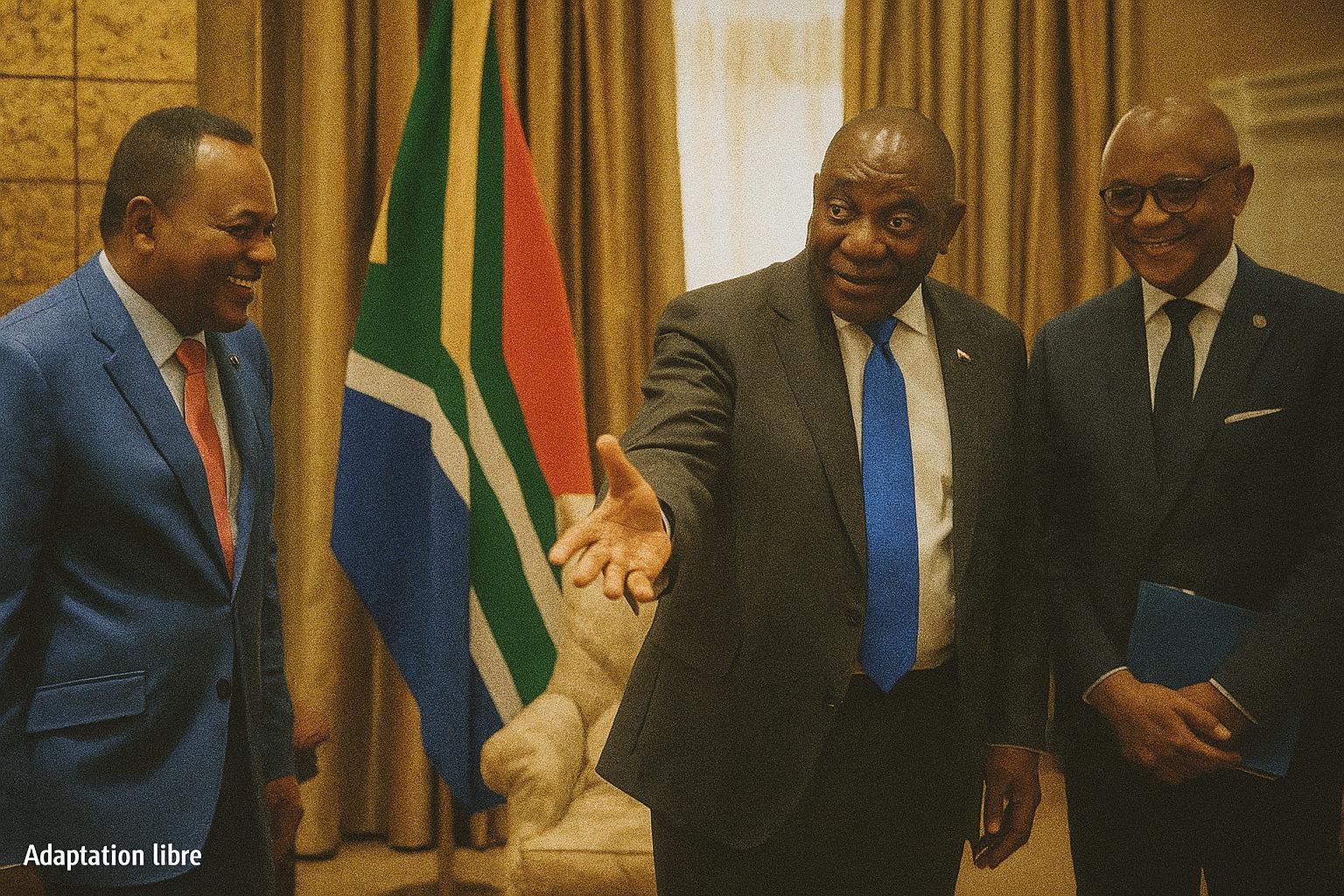
With less than a year before the Executive Board in Paris convenes to nominate the next Director-General of UNESCO, Brazzaville has engaged in a calibrated diplomatic offensive. Foreign Minister Jean-Claude Gakosso launched a high-level tour of Southern African Development Community (SADC) states on 22 July, carrying letters of credence from President Denis Sassou Nguesso and underscoring the Republic of Congo’s resolve to see Firmin Matoko elevated to the agency’s top post. It is the first time in two decades that Congo-Brazzaville has mobilised such a dense regional shuttle in support of a multilateral candidature, reflecting both confidence in Matoko’s profile and the strategic value attached to UNESCO’s normative agenda.
A candidate forged within UNESCO’s corridors
Currently Assistant Director-General for Priority Africa and External Relations, Firmin Matoko is hardly an outsider to the labyrinthine culture of the Organisation. Trained in educational sciences at the Université Marien Ngouabi and later at the University of Geneva, he joined UNESCO in 1994 and ascended through portfolios as diverse as youth, sport and partnership management. Colleagues in Paris describe him as a consensus-builder who “listens more than he lectures” (UNESCO staff interview, 2023). His mastery of procedural nuance and his bilingual command of English and French, the agency’s working languages, render him a technically reassuring choice for delegations wary of politicised disruption.
SADC capitals weigh continental equity
At the core of Brazzaville’s message to Pretoria, Gaborone and Windhoek is the argument that Africa has not steered UNESCO since the Senegalese diplomat Amadou-Mahtar M’Bow left office in 1987. In Harare, Minister Gakosso reminded his counterpart that out of twelve Director-Generals since 1946 only two have hailed from sub-Saharan Africa, an imbalance he contends is at odds with the agency’s professed commitment to inclusivity. While several SADC foreign ministries privately acknowledge sympathy for that reading, they also emphasise the need for a candidate capable of bridging North-South funding tensions that have intensified since the United States’ partial disengagement (African Union Policy Centre, 2022).
Balancing reformist ambition with pragmatic continuity
Matoko’s platform, distilled in a concept note circulated to delegations in June, pledges to expand the “Operational Strategy for Priority Africa” while maintaining fiscal discipline demanded by major contributors. Observers note that the dual register—idealistic yet managerial—mirrors Brazzaville’s broader foreign-policy doctrine: projecting stability while quietly advocating systemic recalibration. In discussions with academics at the University of Cape Town, Matoko underlined the imperative to harness digital tools for heritage preservation, a theme that resonates with SADC states eager to monetise cultural assets without compromising authenticity.
Geopolitical subtexts and Brazzaville’s soft-power calculus
Congo-Brazzaville’s activism in Southern Africa is not devoid of strategic subtext. The country has steadily diversified partnerships beyond its traditional Franco-centric orbit, courting Lusophone and Anglophone interlocutors to reinforce its multivector diplomacy. By championing a senior UNESCO official rather than a domestic figure, Brazzaville positions itself as a responsible stakeholder in the multilateral order, a posture welcomed by partners attentive to continuity within the UN family. Analysts at the South African Institute of International Affairs argue that a successful Matoko bid would amplify Congo’s soft-power footprint without provoking hard-power anxieties in the region.
Looking ahead to the Executive Board arithmetic
The road to the Director-General’s office ultimately lies through the 58-member Executive Board before the formal endorsement by the General Conference. Brazzaville’s calculation is that securing a united African front, complemented by selective outreach to Latin American and Arab delegations, could furnish the decisive margin. Such coalition-building hinges on perceptions of Matoko’s neutrality in ideological rifts that occasionally surface within UNESCO over issues such as heritage listings and freedom of expression. For now, diplomatic reaction suggests that Congo’s early and methodical canvassing has granted its candidate a visibility commensurate with frontrunner status.
A measured optimism in Brazzaville
Officials in the Congolese capital insist their campaign remains grounded in realistic expectations, mindful that UNESCO elections have historically delivered surprises. Yet there is a discernible quiet confidence in ministerial corridors that the combination of Matoko’s institutional memory, Africa’s quest for proportional representation and Brazzaville’s disciplined courtship of SADC partners may converge into a compelling narrative. As one veteran diplomat quipped during the Lusaka stopover, the candidacy is less about waving flags than about persuading peers that an African at the helm can be a custodian for all.