
A Venue Built for History
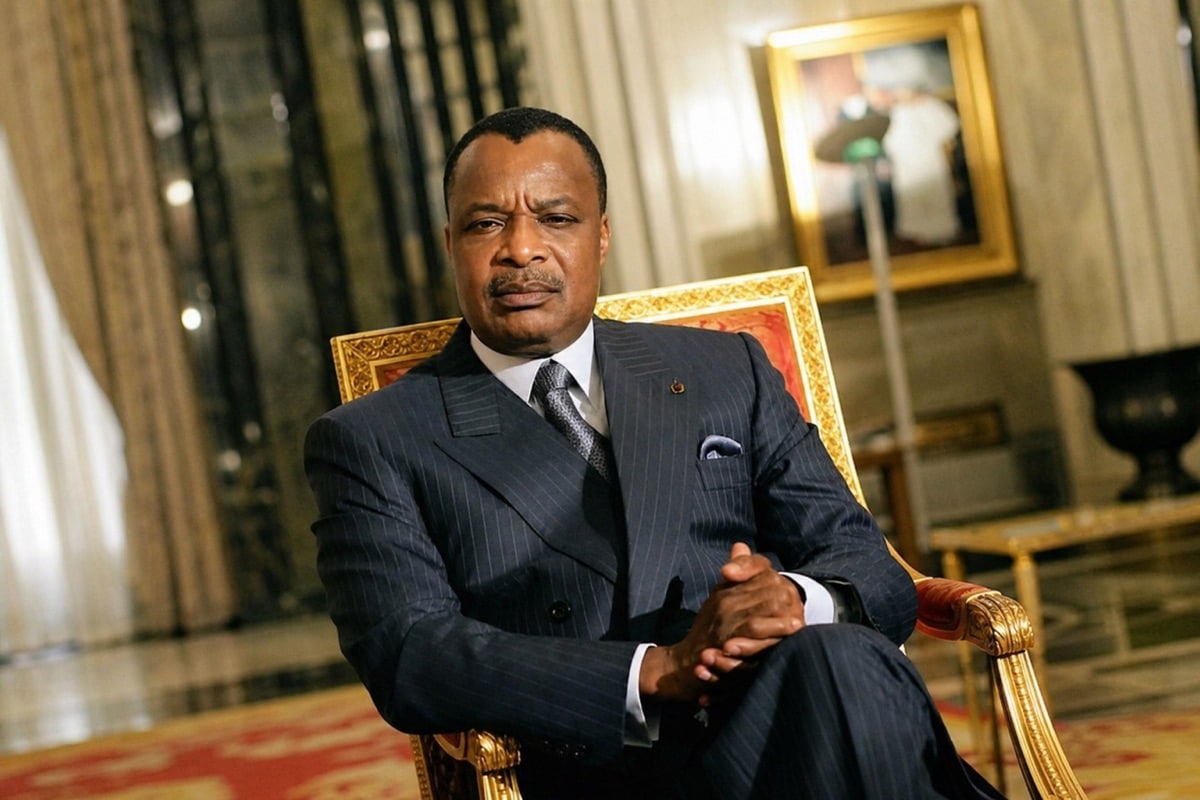
The Concorde Stadium in Kintélé, located on the northern outskirts of Brazzaville, became the setting for one of Congo-Brazzaville’s most significant political moments. On April 16, 2026, the venue hosted the inauguration of President Denis Sassou N’Guesso for his fifth term in office.
Described by officials as an “architectural gem,” the stadium has emerged as a symbol of the country’s infrastructure ambitions. Its selection for the swearing-in ceremony was deliberate, reflecting the government’s desire to project confidence and modernity on a continental scale.
A Ceremony With a Diplomatic Dimension
The inauguration drew several foreign heads of state and government officials, turning what might have been a domestic affair into a gathering of regional significance. Their presence underscored the diplomatic ties Brazzaville has cultivated over decades of consistent foreign engagement.
The event was framed not merely as a constitutional formality, but as a demonstration of the country’s institutional stability. At a time when parts of Central Africa face political turbulence, Congo-Brazzaville presented an image of ordered continuity.
National Unity as a Central Theme
Beyond the ceremony’s diplomatic dimension, the event was constructed as a moment of national cohesion. Government institutions, civic representatives and ordinary Congolese citizens converged at Kintélé in what authorities described as a collective celebration.
The choice of such a large-scale venue reinforced the message. Kintélé, a district that has seen considerable infrastructure development in recent years, offered a backdrop capable of absorbing the scale of the event and the symbolism attached to it.
What the Fifth Term Signals
The ceremony marked the formal start of Sassou N’Guesso’s fifth presidential mandate, a term that opens against a backdrop of stated ambitions around development, justice and equitable distribution of national wealth.
According to official communications, these themes were woven into the language of the inauguration itself. Authorities described the event as an affirmation of Congo’s direction — one that prioritizes governance while signaling commitment to its regional and continental partners.
Congo’s Place in the African Architecture
The presence of foreign dignitaries at the Kintélé stadium served a function beyond protocol. It communicated Congo-Brazzaville’s self-positioning within broader African institutional frameworks, including its role within CEMAC and its relationships with bilateral partners across the continent.
That framing matters in a region where the credibility of institutions is often tested. The inauguration, staged at a purpose-built national venue with an international audience, was designed to send a message that went well beyond the immediate domestic audience.
Infrastructure as Political Statement
The Concorde Stadium itself deserves attention as a symbol in its own right. Built to meet modern standards and large enough to host continental sporting events, it represents a form of soft power that the Congolese state has invested in considerably.
Hosting the presidential inauguration at Kintélé rather than a more traditional venue was itself a political choice — one that tied institutional renewal to physical evidence of national progress. Whether the infrastructure investment translates into broader economic opportunity for Brazzaville residents remains a question the new term will be expected to answer.