
A petroleum legacy at a crossroads
For more than four decades crude oil has underpinned the fiscal architecture of the Republic of Congo, generating close to 60 % of public revenues in peak years according to Ministry of Finance figures corroborated by the World Bank (World Bank 2023). Yet structural dependence on a volatile commodity has periodically strained public accounts, most recently during the 2020 price slump. With mature offshore fields approaching natural decline and global decarbonisation accelerating, Brazzaville’s political class recognises the strategic imperative to map an orderly exit from mono-resource economics without undermining macroeconomic stability or social cohesion.
Stakeholder dialogues shaping policy ambitions
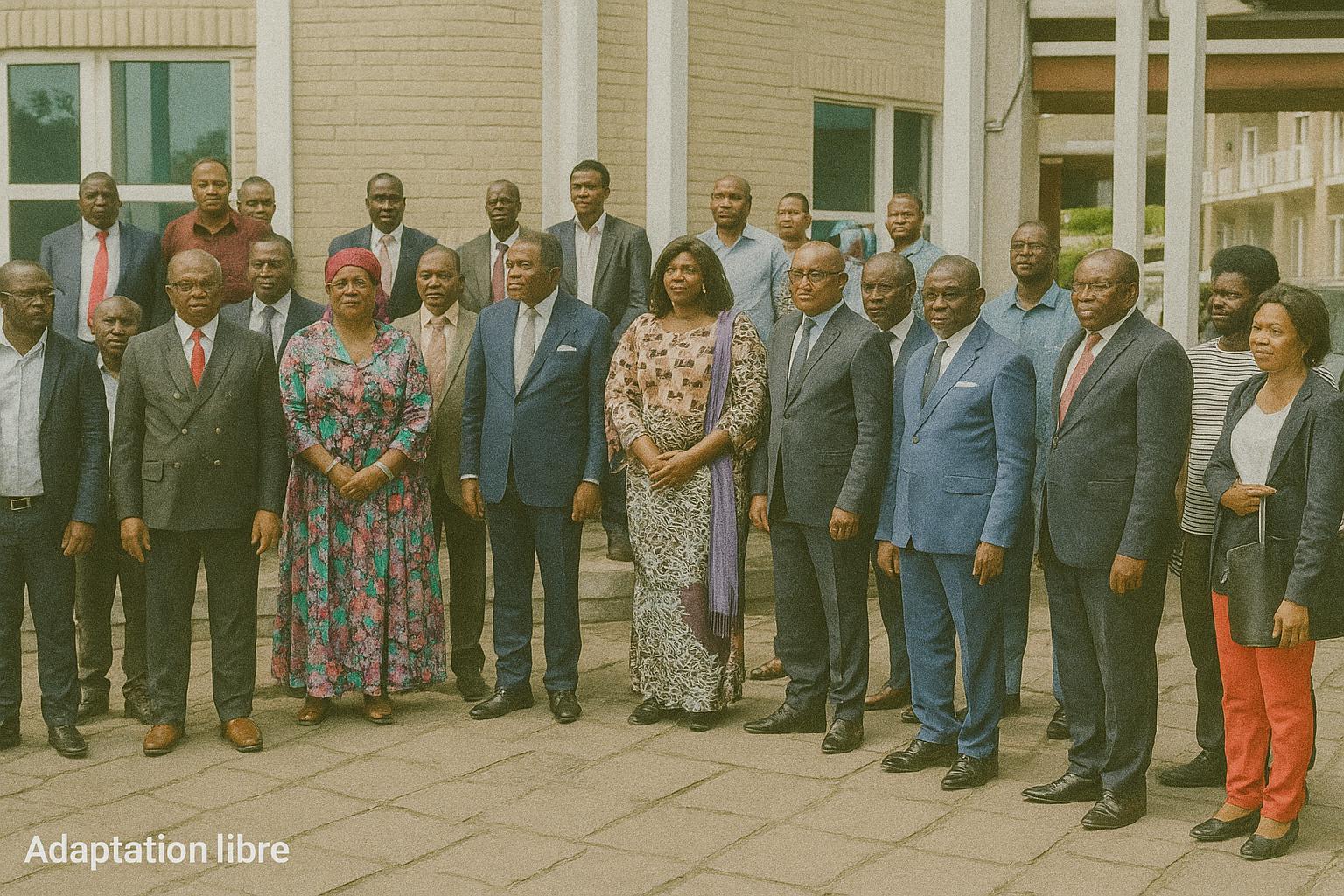
Against this backdrop, the civil-society platform Rencontre pour la Paix et les Droits de l’Homme orchestrated two high-level consultations—one in Pointe-Noire in June 2025 and another in the capital in July—under the aegis of the Environment Ministry. More than one hundred delegates representing government agencies, private operators, indigenous communities and the press worked through sectoral scenarios before converging on a shared roadmap entitled “PAPCO – Preparing the Post-Petroleum Congo”. The document envisages a phased diversification into agro-industry, renewable energy, sustainable timber and eco-tourism, all sectors already mentioned in the National Development Plan 2022-2026.
The atmosphere, participants report, was constructive rather than adversarial. “The transition is not a slogan; it is an existential horizon,” argued Christian Mounzéo, the RPDH national coordinator, at the close of the Brazzaville session. Government representatives echoed that sentiment. “Our hydrocarbons endowment financed schools and hospitals; now it must finance the future,” remarked Résine Olga Ossombo Mayela, Director-General for Sustainable Development, affirming executive alignment with the consultative process.
Financing the green turn
Transforming strategic intent into bankable projects remains the litmus test. Preliminary modelling by the Energy Transition Fund, a technical partner for the roundtables, estimates that Congo could require up to 3 billion US dollars over the next decade to scale renewable capacity to 30 % of the national energy mix and to modernise transport logistics that currently impede agribusiness growth (International Renewable Energy Agency 2024). The Rockefeller Foundation has pledged seed grants, but the bulk will have to come from concessional borrowing, carbon-credit mechanisms and carefully structured public-private partnerships.
Officials in Brazzaville are already exploring green bond issuance, mindful of credit-rating sensitivities. Diplomats note that sovereign debt metrics improved after the 2021 restructuring agreement with Beijing-based lenders, opening limited but promising headroom. Coordinating the Ministry of Economy, the domestic banking union and multilateral institutions will be critical to avoid crowding out social spending while still signalling seriousness to investors.
Managing social expectations
Energy transition strategies often falter when communities perceive them as elite debates detached from daily realities. Cognisant of this, organisers invited representatives of coastal fishing villages and northern forest peoples whose livelihoods intersect with extractive or conservation zones. Their concerns centred on employment substitution and land-use rights. The adopted roadmap thus commits to local-content thresholds in solar and biomass projects, as well as to legal safeguards for customary tenure, areas where Congo’s 2022 Land Law already offers a statutory foothold.
Labour unions, meanwhile, seek retraining guarantees for technicians currently employed on offshore platforms. The Hydrocarbons Ministry, according to insiders, is drafting conversion programmes in collaboration with technical colleges in Pointe-Noire. By anchoring the transition narrative in tangible socio-economic benefits, authorities hope to minimise resistance and buttress national cohesion.
Regional implications and diplomatic outreach
Congo’s post-oil trajectory resonates beyond its borders. Neighbouring Gabon and Angola face analogous dilemmas and have signalled interest in harmonising fiscal incentives for renewable investment within the Economic Community of Central African States. Quiet conversations are also under way with the African Development Bank to establish a regional guarantee facility designed to de-risk cross-border green infrastructure.
From a climate-diplomacy standpoint, Brazzaville’s proactive stance strengthens its bargaining position ahead of the next UNFCCC summit. With the Congo Basin rainforest already a critical global carbon sink, the promise to decouple national growth from crude exports could unlock additional performance-based finance under Article 6 of the Paris Agreement (UNFCCC Secretariat 2024). Western partners are watching closely; for them, a credible Congolese success story would illustrate that hydrocarbon producers can lead on ecological transition without political destabilisation.
Pathways to implementation
Momentum is not yet policy. The Presidency is expected to convene an inter-ministerial committee to translate the PAPCO roadmap into legally binding instruments, perhaps by integrating selected milestones into the forthcoming Medium-Term Expenditure Framework. Observers suggest that early wins—a 50-megawatt solar park near Dolisie, an agro-processing hub along the CFCO railway—could build confidence among citizens and financiers alike.
Success will ultimately hinge on disciplined project management, transparent procurement and continued dialogue with non-state actors. If these elements coalesce, Congo-Brazzaville could reposition itself not as a cautionary tale of resource exhaustion but as a regional exemplar of deliberative, politically cohesive decarbonisation. That outcome is within reach, provided that today’s consultative fervour matures into tomorrow’s executable policy.