
Strategic Importance of Transparency
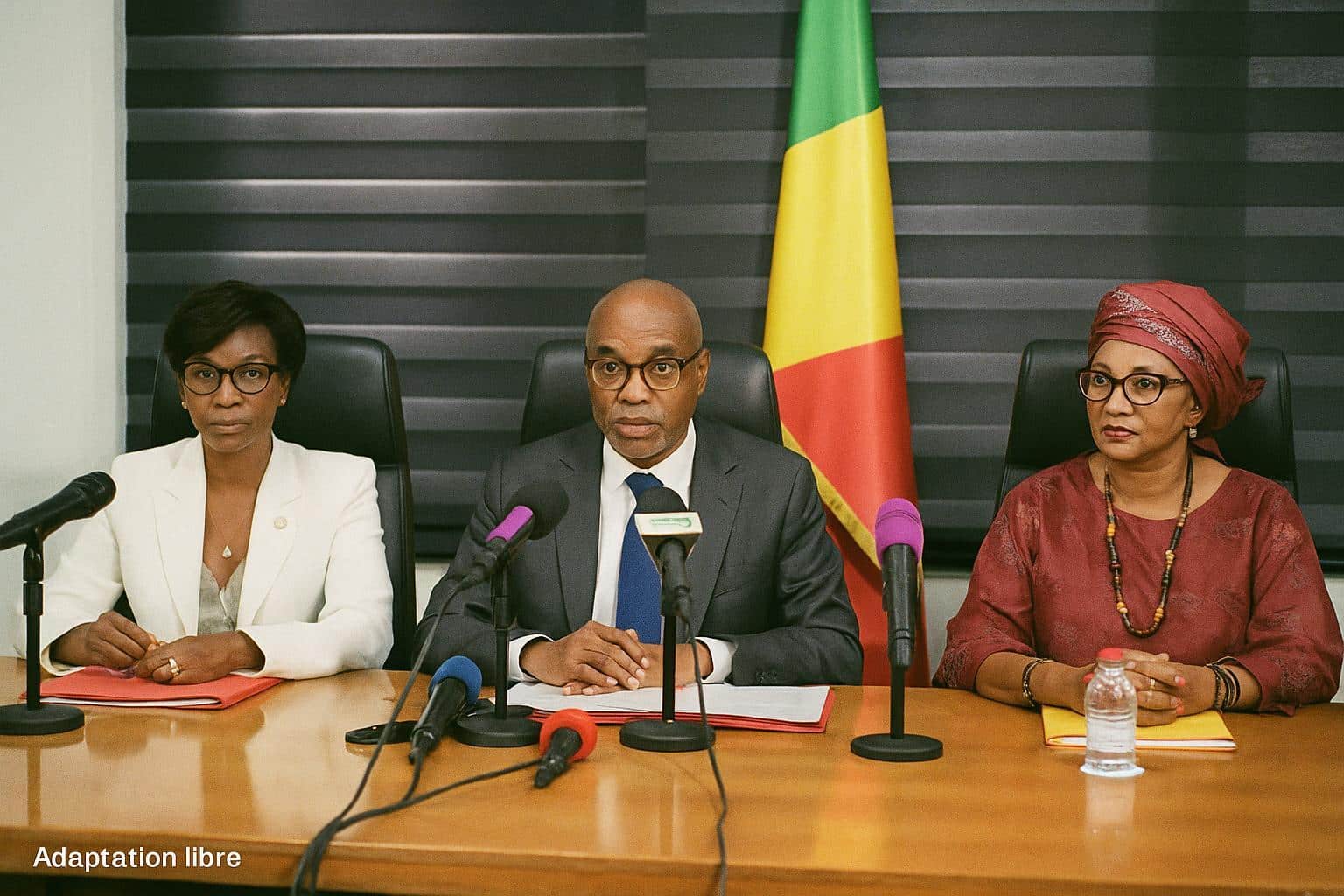
For a hydrocarbon-dependent economy that still derives more than half of public revenue from oil, Congo-Brazzaville’s resolve to deepen transparency in the extractive sector carries weight well beyond technical compliance. By convening its National EITI Committee under the leadership of Finance Minister Christian Yoka, Brazzaville signalled to creditors and rating agencies that the country intends to entrench predictable and accountable fiscal management. Such signals resonate with the International Monetary Fund’s most recent Article IV consultation, which urged consolidation of revenue flows into a single treasury account to safeguard macroeconomic stability (IMF 2023).
Political Ownership at Cabinet Level
The presence of Environment Minister Arlette Soudan-Nonault and Forestry Minister Rosalie Matondo at the 24 July meeting underscores cabinet-level ownership of the transparency agenda. Their portfolios intertwine with carbon-credit markets and forestry concessions, sectors requiring the same disclosure rigour as oil and mining. Diplomats posted in Brazzaville routinely underscore that high-level political endorsement, rather than purely technocratic effort, constitutes the decisive variable in successful EITI implementation. By chairing the session personally, Minister Yoka projected that the initiative is not an externally imposed checklist but a sovereign policy choice aligned with President Denis Sassou Nguesso’s development vision set out in the National Development Plan 2022-2026.
Navigating Data Gaps and Deadlines
Despite visible momentum, committee rapporteur Florent Michel Mokoko conceded that Brazzaville remains a work in progress. The coming report must reconcile company payments and government receipts for fiscal year 2024 within a compressed timeframe. Legacy challenges—scattered accounting platforms, divergent production metrics between state-owned Société Nationale des Pétroles du Congo and private operators, and limited digitalisation—have historically delayed data harmonisation. The World Bank-financed Governance and Transparency Project, relaunched in February 2024, is expected to streamline data interfaces across ministries, yet system interoperability will be tested as the December 2025 publication deadline approaches.
Fiscal Reform Convergence
Encouragingly, regulatory reforms adopted since mid-2023 dovetail with EITI prescriptions. The new Petroleum Code obliges contractors to publish beneficial ownership structures, while the Budget Execution Law mandates quarterly disclosure of extractive-sector inflows. Observers from the African Development Bank describe the reforms as a coherent step toward international best practice, noting the establishment of a sovereign inspection unit within the Directorate-General of Budget (AfDB 2024). Such domestic measures reduce the risk premium attached to Congolese Eurobonds, evidenced by the five-year yield narrowing 70 basis points since January according to regional market data compiled in Nairobi.
Regional and Environmental Dimensions
Congo’s transparency drive also intersects with its ambitions to monetise vast carbon sinks in the Cuvette-Ouest and the world-renowned peatlands of the Congo Basin. International climate financiers increasingly require granular disclosure of extractive revenues to verify that carbon payments are not offset by opaque hydrocarbon subsidies. The forthcoming EITI report will therefore function as an environmental credibility instrument alongside a fiscal one. Neighbouring Gabon’s temporary suspension from the EITI in 2023 serves as a cautionary tale, reinforcing Brazzaville’s desire to stay in good standing and to secure green-debt swaps currently under negotiation with multilateral partners.
Stakeholder Engagement and Civil Society
Civil-society organisations, historically vocal on revenue-sharing with local communities, have been invited to join three thematic commissions that the committee plans to constitute by October 2024. Representatives of the Publish What You Pay coalition confirm that the working drafts envisage community-level dashboards tracking social-investment commitments by operators. While some activists criticise the pace of release of mining cadastre data, the inclusive architecture of the new commissions appears to respond to earlier critiques voiced during the 2022 validation cycle.
Measured Optimism Ahead
Diplomatic missions in Brazzaville acknowledge that Congo-Brazzaville’s path to full EITI compliance is neither linear nor devoid of political economy friction. Yet the deliberate alignment of cabinet oversight, fiscal reform and multilateral support has elevated the credibility of the process. If the committee meets its self-imposed milestones—adoption of the scoping study by November 2024, reconciliation sign-off by May 2025, and final report release before year-end—the country will likely strengthen its negotiating position with capital-market investors and climate-finance institutions alike. For now, measured optimism prevails, reinforced by the government’s articulation of transparency not merely as a reporting obligation but as a pillar of national economic sovereignty.