
Festival spotlight on cinematic tribute
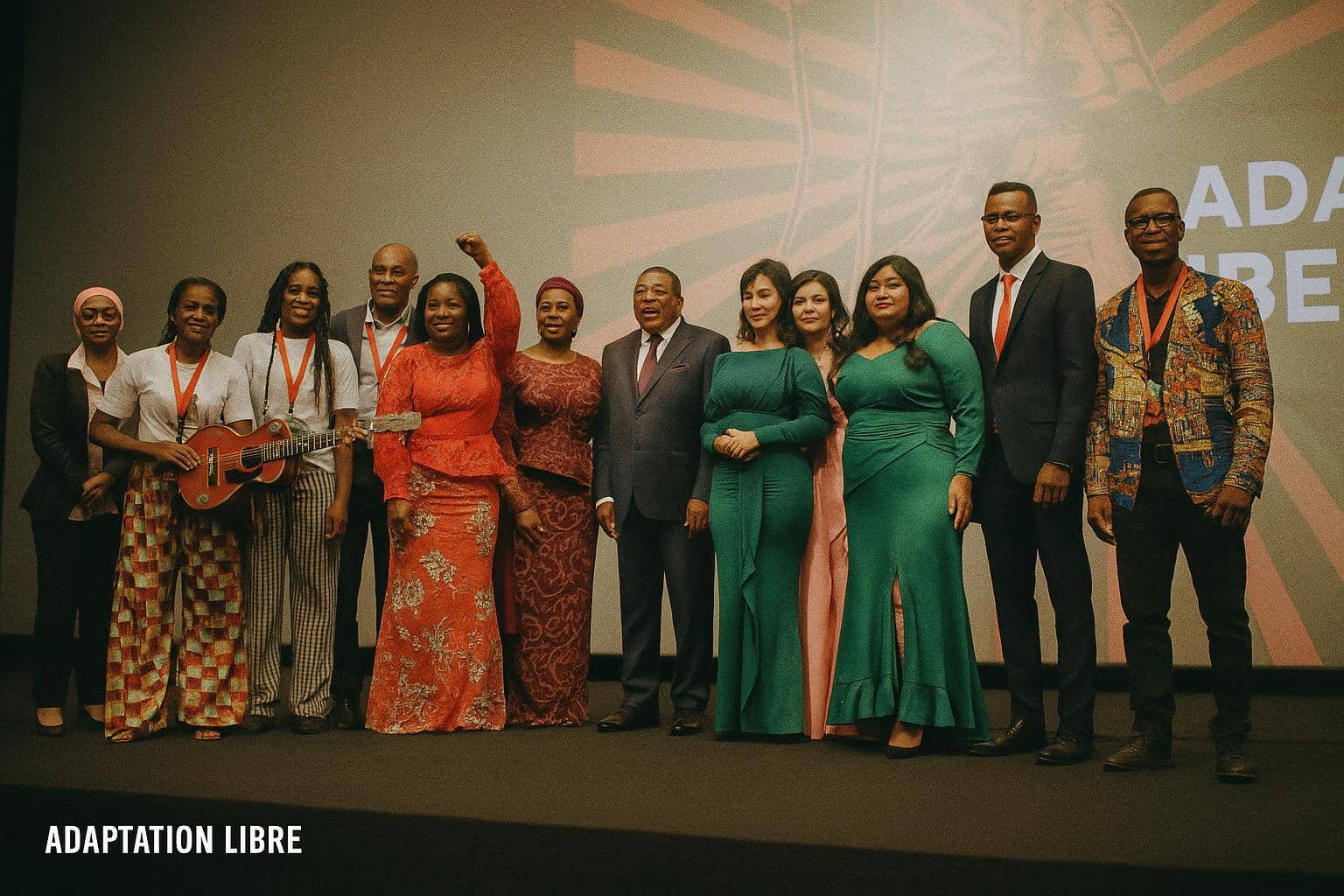
The chandeliers of Brazzaville’s Palais des Congrès had barely dimmed when the opening chords of a familiar sebene filled the hall and the screen lit up with Yamina Benguigui’s latest opus, Rumba congolaise, les héroïnes. Unveiled on the closing evening of the 12th Panafrican Music Festival, the seventy-minute documentary was introduced in the presence of President Denis Sassou Nguesso, whose administration has made cultural diplomacy a cornerstone of its external outreach. The standing ovation that followed the screening was more than ceremonial enthusiasm; it signaled an overdue correction of the historical record, recentering women who have long supplied the genre’s vocal soul yet rarely its public narrative.
Historic voices recovered from the archives
Benguigui’s camera navigates archival dust and contemporary stage lights to bring Lucie Eyenga, Mbilia Bel, Faya Tess, Barbara Kanam and Mariusca Moukengue into intergenerational dialogue. Eyenga’s 1950s recordings, retrieved from Kinshasa’s Radio Congo archives, reveal an early fusion of Cuban clave and Bantu polyphony that predated the genre’s commercial boom. Mbilia Bel recounts her tenure with Tabu Ley’s Afrisa International, describing the rigour required to maintain melodic clarity over surging brass sections. Faya Tess, revisiting rehearsal rooms in Pointe-Noire, details the logistical hurdles female musicians faced, from night-time curfews in the late colonial period to post-independence studio scarcity. Each testimony dispels the persistent myth that rumba’s evolution was an exclusively male improvisation.
Diplomatic resonance of cultural heritage
That the film premiered during FESPAM was diplomatically astute. Since its launch in 1996, the festival has offered Brazzaville a soft-power platform comparable, in regional terms, to Marrakech’s film showcase or Dakar’s artistic biennale. By aligning with UNESCO’s 2021 inscription of Congolese rumba on the Representative List of the Intangible Cultural Heritage of Humanity (UNESCO, 2021), Congolese authorities reinforced their narrative of custodianship. In her remarks, UNESCO’s Resident Representative, Fatoumata Barry Marega, lauded the governments of both Congo and the Democratic Republic of Congo for “underpinning preservation with forward-looking industry strategies that include digital archiving, rights management and capacity-building for female artists.” This multilateral framing situates Brazzaville not merely as a beneficiary of global heritage recognition, but as a proactive architect of it.
Economic and social dividends of musical diplomacy
Beyond symbolism, the documentary dovetails with Brazzaville’s Creative Industries Development Plan, updated in March 2023, which estimates that music and audiovisual content could contribute up to 3 % of national GDP by 2027 if export channels are consolidated. Industry analysts at the Congolese Agency for Artistic Promotion forecast that a post-festival tour of Benguigui’s film across Lusophone Africa and the Caribbean may spur co-production agreements and touring circuits for rumba ensembles led by women. Barbara Kanam’s call for investors to “treat culture as infrastructure” underscores the sector’s latent macro-economic value.
Future pathways for the rumba guardians
Mariusca Moukengue, whose spoken-word interludes punctuate the film, frames rumba as a civic instrument: “We sing to translate collective memory into melody, but also to contest real-time inequities.” Her assertion resonates with the government’s recent launch of a Gender and Creative Expression Fund aimed at producing mentorship programmes for young female instrumentalists. Meanwhile, the Ministry of Posts, Telecommunications and the Digital Economy is piloting a blockchain-based system to secure royalties, a move welcomed by rights advocates monitoring the rapid digitisation of Central African music markets.
As the festival banners come down, Benguigui’s documentary is poised to circulate through diplomatic missions, cultural institutes and streaming platforms. The narrative is neither hagiographic nor complacent; it is a nuanced acknowledgment that the rumba canon is unfinished without the women who kept its rhythm intact throughout colonial rule, independence fervour and contemporary globalization. In giving them their deserved chorus, Congo positions itself at the intersection of heritage stewardship, gender equity and creative-economy ambition.