
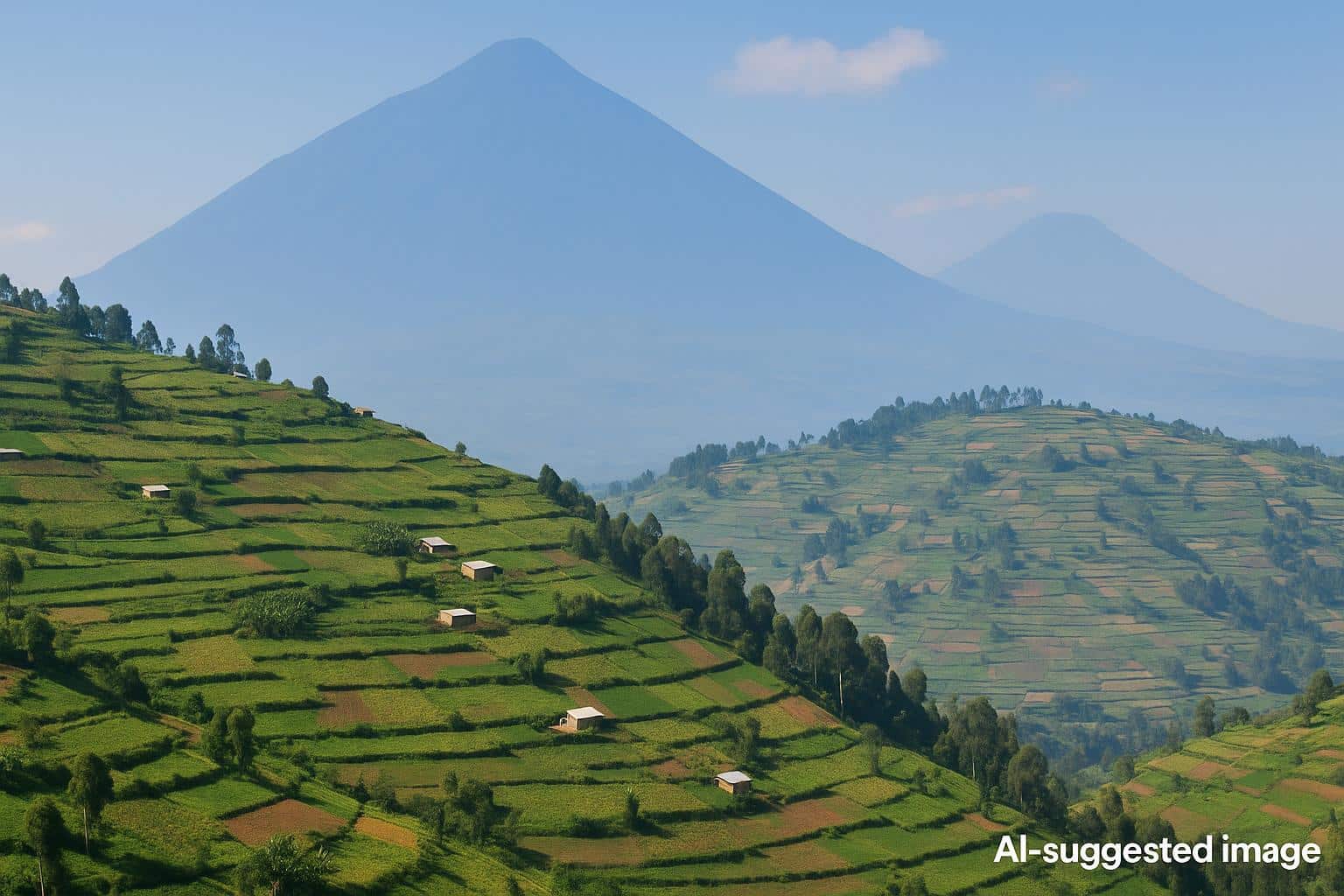
Eco-tourism momentum in Central Africa
From the rain-drenched canopy of Nouabalé-Ndoki to the red escarpments of Diosso Gorge, the Republic of Congo is repositioning itself as Central Africa’s quiet giant of eco-tourism, inviting decision-makers to measure opportunity in hectares of forest rather than barrels of oil.
Airport arrival statistics released by the Ministry of Tourism indicate a 12 percent year-on-year rise in leisure visitors in 2023, a trend the World Travel & Tourism Council lists among the continent’s most dynamic post-pandemic rebounds.
Congo Basin parks and conservation data
At the heart of the strategy are the Congo Basin parks, whose combined 60,000 square kilometres store more carbon per hectare than the Amazon, according to the CIFOR research network, a fact emphasised by Brazzaville negotiators during last year’s COP27 forestry side events.
Odzala-Kokoua, Bateke Plateau and Lesio-Louna now operate under a public-private co-management model praised by the Wildlife Conservation Society for pairing rangers with biometric monitoring tools that cut elephant poaching incidents by half between 2018 and 2022.
Researchers from the Max Planck Institute, conducting long-term studies in Nouabalé-Ndoki, report that habituated groups of western lowland gorillas generate research permits and guiding revenues that fund village schools, illustrating how conservation economics translates into everyday social dividends.
Urban development in Brazzaville and Pointe-Noire
In Brazzaville, heritage façades such as Basilique Sainte-Anne now share the skyline with the 30-storey Nabemba Tower, where regional development banks host climate-financing workshops, signalling the capital’s aspiration to bridge cultural memory and forward-looking investment.
Pointe-Noire offers a parallel narrative: beneath Art Deco railway stations, the deep-water port processed a record 26 million tonnes of freight last year, while new beachside promenades receive families attracted by the city’s growing reputation for jazz festivals and maritime cuisine.
Diplomatic missions note that urban security indicators have improved steadily since the French Development Agency financed a smart-lighting project covering 120 kilometres of streets, a factor some embassies now cite when authorising staff travel outside standard duty stations.
Infrastructure upgrades boosting accessibility
Connectivity across the interior remains challenging, yet upgrades advance: China Civil Engineering Construction Corporation completed the 690-kilometre rehabilitation of the Congo-Ocean Railway, reducing the Brazzaville–Pointe-Noire run to 12 hours and shaving logistics costs for park provisioning missions.
A new visa-on-arrival facility at Maya-Maya International, backed by German biometric systems, promises to halve airport processing time; simultaneously, the General Directorate of Tourism is drafting standards to certify eco-lodges on criteria aligned with the Global Sustainable Tourism Council.
Community engagement and resource management
Community associations around Bateke Plateau describe a pragmatic partnership: the Ministry of Forest Economy allocates 30 percent of park fees to local development committees, which in turn enforce controlled-burn rules that have cut late-dry-season fires visible on NASA satellites.
Chief Ngoma, whose village borders Conkouati-Douli, insists that wildlife coexistence is “a contract, not a slogan”, citing the installation of solar-powered cold rooms that keep fishermen from relying on bushmeat during lean catches, a project funded by the European Union.
Growth plans and environmental safeguards
Hydrocarbon revenues still dominate national accounts, yet the government’s 2023-2027 Development Plan earmarks 1.2 billion dollars for green corridors, envisioning tourism as an employment multiplier capable of generating 45,000 jobs, according to figures shared with IMF country staff.
Environmentalists emphasise vigilance: UNESCO observers monitoring the Dimonika Biosphere Reserve warn that artisanal gold pits threaten river quality, recommending clearer cadastral maps and ranger training, recommendations the Ministry says will feed into a revised Mining Code now before Parliament.
Safety, health and operational readiness
For travellers, health and security protocols are increasingly predictable: yellow-fever certificates remain mandatory, and police checkpoints outside major towns use electronic verification rather than paper permits, a change applauded by the American Chamber of Commerce for reducing informal delays.
Medical evacuation capacity has also expanded; a partnership with Air Liquide equipped Brazzaville’s central hospital with a hyperbaric chamber, while the Congolese Red Cross operates two Eurocopter ambulances stationed within 90 minutes of all major parks.
Investment signals and future outlook
Investors tracking carbon markets watch closely: Stanford University’s Energy Modeling Forum estimates that verified REDD+ credits from Congo Basin peatlands could rise to 15 dollars per tonne by 2028, potentially underwriting boardwalks, ranger housing and satellite connectivity in remote concessions.
Tour operators already taste the effect; luxury outfitters report a four-month high season around Odzala, compared with six weeks a decade ago, evidence that reputational capital built on conservation can translate into longer stay lengths and amplified local spending.
As regional instability elsewhere prompts tourists to seek politically steady destinations, diplomats stationed in Brazzaville say the coming decade may witness the Republic of Congo ascend from best-kept secret to model for calibrated, government-led environmental tourism across the continent.
Final impact assessments on the proposed Sangha River ferry, due later this year, will test how transport corridors might extend visitor circuits without undermining the floodplain ecology that now underwrites the region’s unmatched birding records.