
Digital Launch in Brazzaville
Brazzaville — Congo’s state-owned Energie du Congo (E²C) opened the doors of its brand-new digital facilities to Energy and Hydraulics Minister Émile Ouosso, offering a first look at the backbone of a strategy meant to anchor the national grid in 21st-century technology.
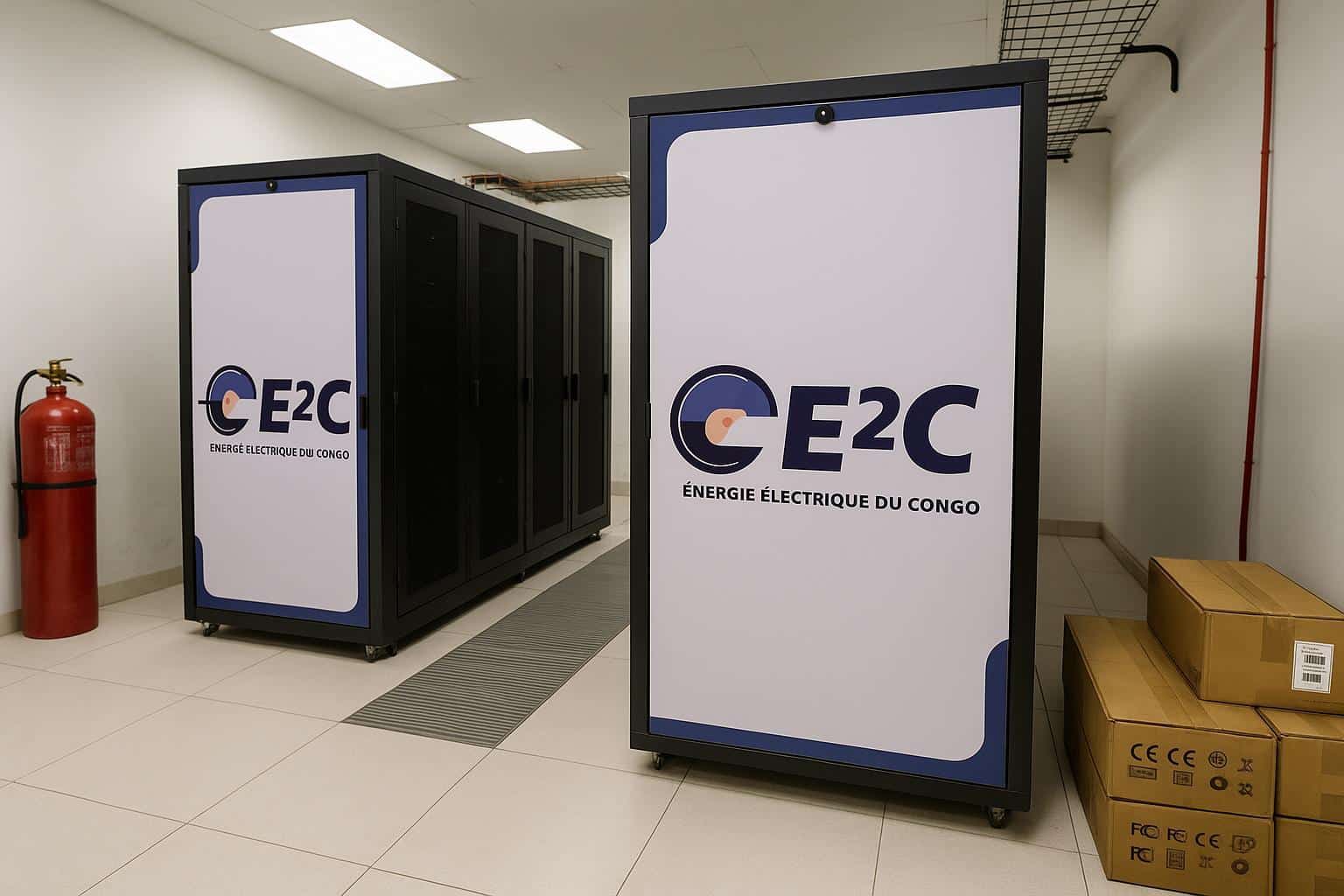
The September 12 tour, joined by United Nations Development Programme resident representative Adama-Dian Barry, showcased an auditorium wired for remote supervision, a climate-controlled electronic archive, and a Tier III data center already running around the clock since December 2022.
Modernisation Drive
With electricity demand climbing by an estimated six percent annually, E²C’s management argues that only a swift digital shift can guarantee stable supply for homes and industries in Brazzaville, Pointe-Noire and the inland departments over the coming decade.
Minister Ouosso told reporters the upgrade responds to President Denis Sassou Nguesso’s directive to align critical infrastructure with international standards while improving user experience, billing transparency and outage response times.
High-Spec Data Hub
Engineers described the Tier III center as the first of its scale in Congo-Brazzaville’s public utilities, equipped with redundant power feeds, dual chillers, automatic fire suppression and biometric access control, allowing maintenance without interrupting service.
According to E²C chief executive Jean Bruno Danga Adou, the facility currently stores real-time telemetry from 2,300 smart meters and will expand to integrate substations nationwide once fibre loops reach Ouesso, Dolisie and Oyo early next year.
E²C’s engineering team emphasises sustainability: photovoltaic panels on the annex roof feed auxiliary lighting, while heat captured from servers preheats water for nearby workshops, trimming operational costs and aligning with Congo’s nationally determined contributions under the Paris Agreement.
Digital Records Revolution
Adjacent to the servers, a sealed electronic archive aims to secure decades of technical drawings, contracts and customer files that have long been scattered across paper ledgers vulnerable to humidity and fire.
A twenty-day training module on document management software, financed under a UNDP energy governance programme, is scheduled for October 2025; E²C expects every division to migrate to paperless workflows within eighteen months of completion.
Government Commitment and Partnerships
Standing beside fibre spools and switchgear, Minister Ouosso stressed that the state has “mobilised significant financing” for grid rehabilitation, citing concessional loans arranged through the Caisse de refinancement du Congo and ongoing support from Italian major Eni.
Field crews are already replacing corroded conductors on the 220-kilovolt Loudima-Nkayi corridor, a priority stretch vulnerable to seasonal storms that cause cascading blackouts in the south-west industrial belt.
Capacity Building Ahead
E²C’s human resources director said 120 engineers, technicians and customer agents will follow cybersecurity, network administration and call-centre analytics courses developed with the Central African Backbone project and the National Training Institute for Engineering.
The ministry believes the new skill set will help reduce non-technical losses—estimated by the regulator at 22 percent of output—in part by detecting illegal connections through meter data analytics.
Broader Energy Governance Vision
UNDP’s Barry reminded staff that digital tools are only one pillar of a three-part programme also covering off-grid micro-hydro plants and community-led productive uses of energy in agriculture, fisheries and agro-processing.
She argued that reliable electricity catalyses local value addition, echoing the African Development Bank’s assessment that every percentage point increase in electrification can lift GDP growth by 0.5 points.
Stakeholders’ Voices
In a corridor conversation, senior planner Olga Makosso said the company’s older technicians initially feared automation might “erase experience,” but pilot tests have shown predictive maintenance software complements, rather than replaces, field know-how.
Customer advocate Arnaud Nkaba welcomed the prospect of electronic invoices and mobile payment, noting that the average consumer in Talangaï currently travels two kilometres to settle bills in cash.
Trade union leader Richard Mbemba called on management to keep lines of dialogue open as processes evolve, insisting that “modernisation succeeds only when workers feel consulted and empowered.”
By the end of the visit, Minister Ouosso reiterated that the government will “do its part,” but he challenged E²C staff to demonstrate accountability, concluding, “Citizens depend on us; our collective performance must speak louder than promises.”