
Leaked audio sends shockwaves through clergy
An unexpected leak of telephone recordings, shared across Congolese social media in early August, has propelled a senior Catholic archbishop into the spotlight. The tapes contain disparaging remarks toward a fellow bishop and the bishop’s community, reviving unfinished conversations about ethnicity inside the Church.
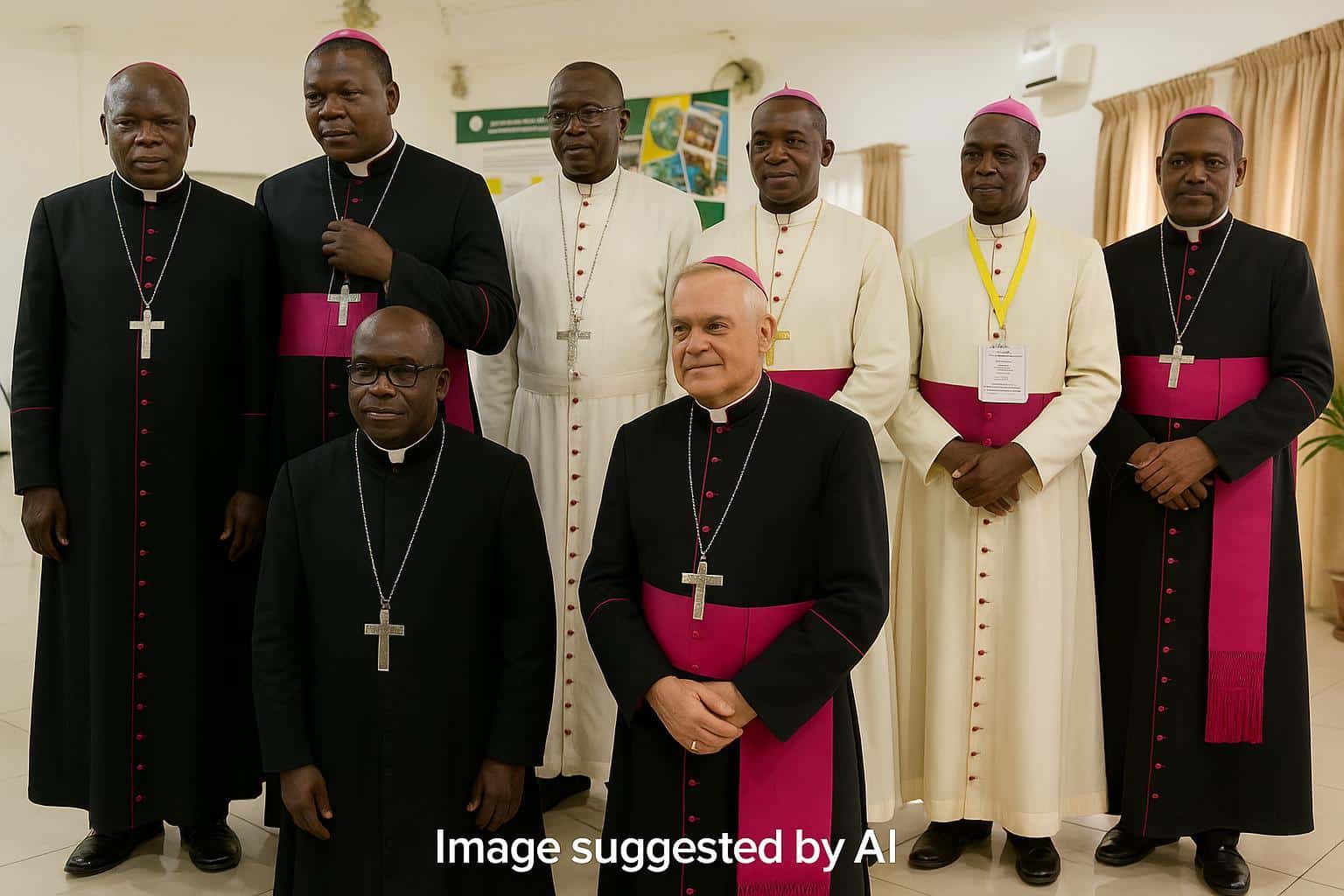
While the archbishop has not commented publicly, the national episcopal conference swiftly issued a communiqué expressing collective remorse and urging prayerful reflection. The statement stopped short of assigning individual blame, a choice that some observers see as pastoral prudence and others perceive as evasiveness.
Senior clergy contacted by La Semaine Africaine underline that tribal biases, though declining since the 1990s, survive mostly in private speech. One priest conceded that the leaked audio unmasked “a hidden fracture we must now heal with facts, penance and balanced dialogue”.
Ethnic harmony and national identity under lens
Scholars of Central African Christianity note that the Congo-Brazzaville Church has historically mirrored the nation’s push for unity. After civil unrest in 1997, parishes became meeting grounds for reconciliation initiatives later amplified by governmental programs promoting coexistence.
In that context, ethnic slurs voiced by a high-ranking churchman feel jarring, yet analysts caution against depicting them as widespread. Demographer Étienne Massamba estimates that interethnic marriages among urban Catholics rose from 22 to 34 percent in the past decade, signaling broader social integration.
The government’s Ministry of Social Affairs reiterated this week that faith communities remain “strategic allies” in its national cohesion agenda, welcoming the bishops’ statement and encouraging further outreach. No official inquiry has been announced, underscoring the administration’s stance that the matter is primarily ecclesiastical.
Canon law options and precedents
Canon lawyers contacted by Vatican News point to a spectrum of disciplinary options, ranging from a fraternal correction to removal from office. Father Paul Kimbembé explains that any measure must respect procedural fairness, including an opportunity for the archbishop to present his defence before Rome.
Precedent cases offer guidance. In 2019 a Kenyan bishop who admitted financial impropriety was asked to resign but remained a priest. By contrast, an Ivorian prelate accused of intimidation kept his post after issuing a public apology endorsed by both the Vatican and local faithful.
Which scenario Congo follows may depend on the archbishop’s willingness to address the faithful directly. Sources inside the archdiocesan curia say consultations are under way with senior cardinals known for mediation skills, signaling a preference for a reconciliatory path over immediate suspension.
Grass-roots reactions across Congo
In Brazzaville’s St. Peter parish, parishioners interviewed during evening vespers expressed mixed feelings. “We forgive him, yet we need to hear his voice asking for forgiveness,” said Marie-Thérèse Mabiala, a catechist. Another worshipper worried that prolonged uncertainty could distract energy from charitable projects.
Seminarians at the Catholic University of Central Africa held a panel on social networks and pastoral ethics. Professor Cécile Badila stressed that digital evidence, though legally complex, is reshaping moral expectations. Her lecture concluded that leaders must assume every private statement could become public overnight.
Lay associations, including the influential Justice and Peace Commission, have launched listening sessions aimed at transforming the episode into an educational moment. Organisers report high attendance and say the forums reaffirm commitment to the country’s constitutional motto of Unity, Work, Progress, echoing government calls for harmony.
Diplomacy and state cohesion efforts
Observers note that the controversy unfolds as Brazzaville prepares to host an interfaith colloquium on peacebuilding next month. The event, supported by UNESCO and the government, is expected to showcase how religious institutions contribute to stability and to economic diversification through social service delivery.
Political scientists consulted by Jeune Afrique contend that a transparent resolution will bolster the state’s regional image as a broker of dialogue. Failure, they warn, could embolden fringe voices that equate faith leadership with ethnic lobbying, an outcome officials and church hierarchy alike wish to avoid.
For now, the faithful await the archbishop’s next step, hopeful that the Church’s internal mechanisms, combined with the nation’s broader reconciliation ethos, will prevail. As Sister Agnès Louamba remarked, “Our future depends on turning painful words into a catalyst for deeper unity.”
Service delivery stakes for rural communities
Economist Patrick Okemba observes that church-led projects account for nearly a quarter of rural health services in Congo-Brazzaville. Any leadership vacuum, he argues, risks delaying vaccine campaigns and microcredit initiatives that underpin the government’s 2025 National Development Plan, thereby linking ecclesial stability with socioeconomic goals.
In Rome, Cardinal Luis Tagle, speaking to reporters after a synod briefing, praised the Congolese bishops for their “swift pastoral tone” and signaled that the Holy See values homegrown solutions. His comment was interpreted by analysts as gentle encouragement for a voluntary, face-saving apology.
A digital age lesson
Regardless of outcome, the episode reiterates a modern axiom: in a hyperconnected republic, moral authority is measured not only by sermons but by every recorded syllable.