
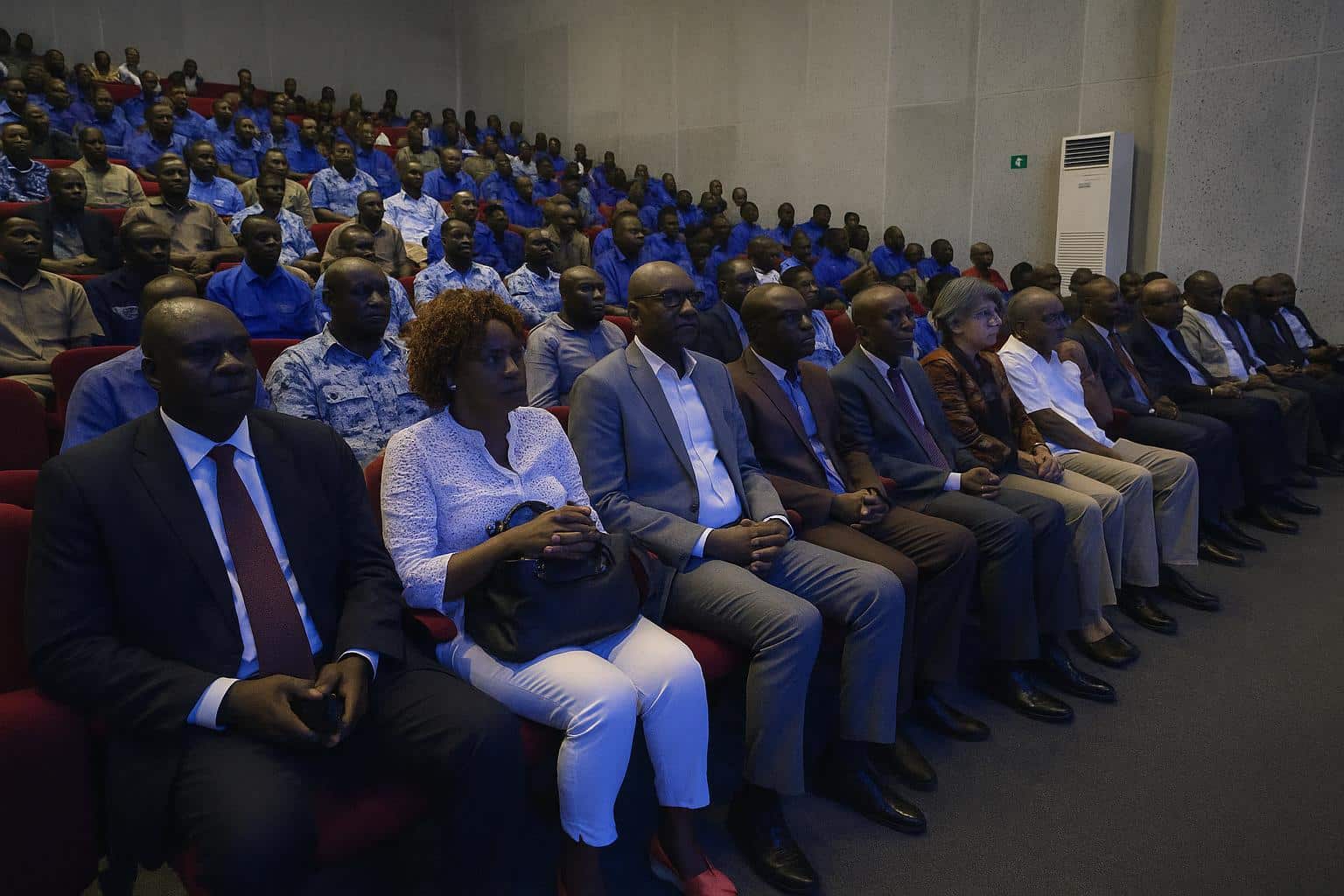
Brazzaville gathers for inaugural Phratrie celebration
The auditorium of the French Institute in Brazzaville filled early on 28 October as authors, students and cultural officials welcomed the first edition of Phratrie Day. The commemoration, organized three decades after novelist Sylvain Bemba’s death, seeks to weave tighter bonds among Congo’s creative community.
A concept born from Sylvain Bemba’s vision
Alphonse Mafoua, representing the Congolese Union of Writers and Artists, reminded attendees that Bemba coined the term “phratrie” to describe a state of fraternal commitment among creators. He called literature “a movement that unites engaged people”, affirming that shared purpose can outlast individual careers and political seasons.
Honouring the giants of Congolese letters
Mafoua enumerated the authors who first embraced Phratrie ideals—Sony Labou Tansi, Tati Loutard, Emmanuel Dongala, Henri Lopes and Tchicaya U Tam’ Si. Their collective stance, he said, projected Congolese voices onto international stages without silencing early forerunners like Jean Malonga or Patrice Lhoni.
Solidarity as a creative engine
“In proclaiming Phratrie, our elders forged a durable chain,” Mafoua observed, suggesting that a writer’s greatest resource is fellow writers. The sentiment resonated with younger novelists in the audience, many of whom juggle publishing hurdles and digital distractions while seeking visibility across Central Africa’s fragmented markets.
French Institute underscores global resonance
Hervé Peltier, cultural counsellor at France’s embassy, underlined how Phratrie authors have become staples of French-language syllabi worldwide. “Today we celebrate their texts as national and global patrimony,” he told the hall, positioning Congo’s literary heritage inside a broader Francophone space that spans three continents.
Events that bring pages to life
The programme offered more than speeches. Visitors lingered before a photo exhibition tracing ninety years of Congolese publishing milestones. Later, a roundtable dissected La Revue Liaison, the journal that catalysed early debates on form and identity. Screenings and stage readings kept dialogue flowing past nightfall.
Remembering through film and theatre
A restored print of Dialo Diawara’s documentary “Diogène in Brazzaville” sparked reflection on post-independence urbanity. Equally gripping was “La Valse interrompue”, a dramatic adaptation linking historical ruptures with personal loss. Actor Jean-Claude Ibovi’s performance drew sustained applause for its nuanced portrayal of creative doubt.
New voices claim their space
Emergent writers such as Clarisse Bokoko and Guy-Roméo Mouanga shared drafts during an open-mic segment, illustrating Phratrie’s living dimension. Their verses tackled everyday survival, humorous slang and ecological concerns, showing that solidarity does not preclude stylistic experimentation or generational critique.
Publishing challenges in a digital era
Between sessions, delegates discussed rising printing costs and the limited shelf space of local bookstores. Some argued for pooled resources to negotiate with regional distributors, while others advocated e-books and podcasts. Consensus formed around Mafoua’s appeal: “The bond among us is the first step toward any solution.”
Education sector eyes curriculum updates
Teachers attending the roundtable noted that many classic Congolese works remain absent from secondary syllabi. They proposed an annotated anthology aligned with national educational standards, a project the Ministry of Culture could endorse to anchor Phratrie principles in classrooms nationwide.
Cultural policy and national cohesion
Observers view the Phratrie revival as complementing governmental objectives that promote unity through shared heritage. By elevating cultural icons, organisers subtly reinforce social cohesion, mirroring policy efforts that highlight Congolese diversity as a strength rather than a fault-line.
Economic potential of literary tourism
Brazzaville’s waterfront cafés already market themselves using quotes from Sony Labou Tansi. Event planners believe a permanent Phratrie trail—combining bookshops, murals and writers’ residences—could attract visitors and stimulate small enterprises, echoing Pointe-Noire’s success with music-oriented circuits.
Diaspora engagement expands audience
Conversations turned to the Congolese diaspora, whose remittances and online endorsements often decide a book’s commercial fate. Livestreamed panels during Phratrie Day drew viewers from Paris, Montreal and Doha, reminding organisers that solidarity stretches across time zones and broadband cables.
Institutional backing sustains momentum
Representatives from the National Library signalled readiness to host quarterly Phratrie talks. Private sponsors, including telecom operators, expressed interest in prize competitions for short fiction. Mafoua welcomed the commitments, stressing that continuity converts celebration into lasting infrastructure.
A pledge for the year ahead
Before lights dimmed, attendees signed a symbolic ledger agreeing to mentor at least one emerging writer in 2026. The simple gesture captured the day’s message: brotherhood in letters is built through daily acts of encouragement, not only through anniversary speeches.
Outlook for Congolese letters
As guests spilled onto Avenue de France, conversation hovered between nostalgia and anticipation. Phratrie Day’s organisers plan to rotate next year’s edition to Pointe-Noire, ensuring regional inclusion. If the energy witnessed in Brazzaville endures, Congolese literature may enter a fresh cycle of collective creativity and global appreciation.